
The Ultimate Guide to Clear Aligners
What Are Clear Aligners and How Do They Work?
Clear aligner home treatment has become one of the most searched topics in dentistry — and for good reason. More people want straighter teeth without the hassle of frequent office visits or the look of metal braces.
Here's a quick answer to what most people want to know:
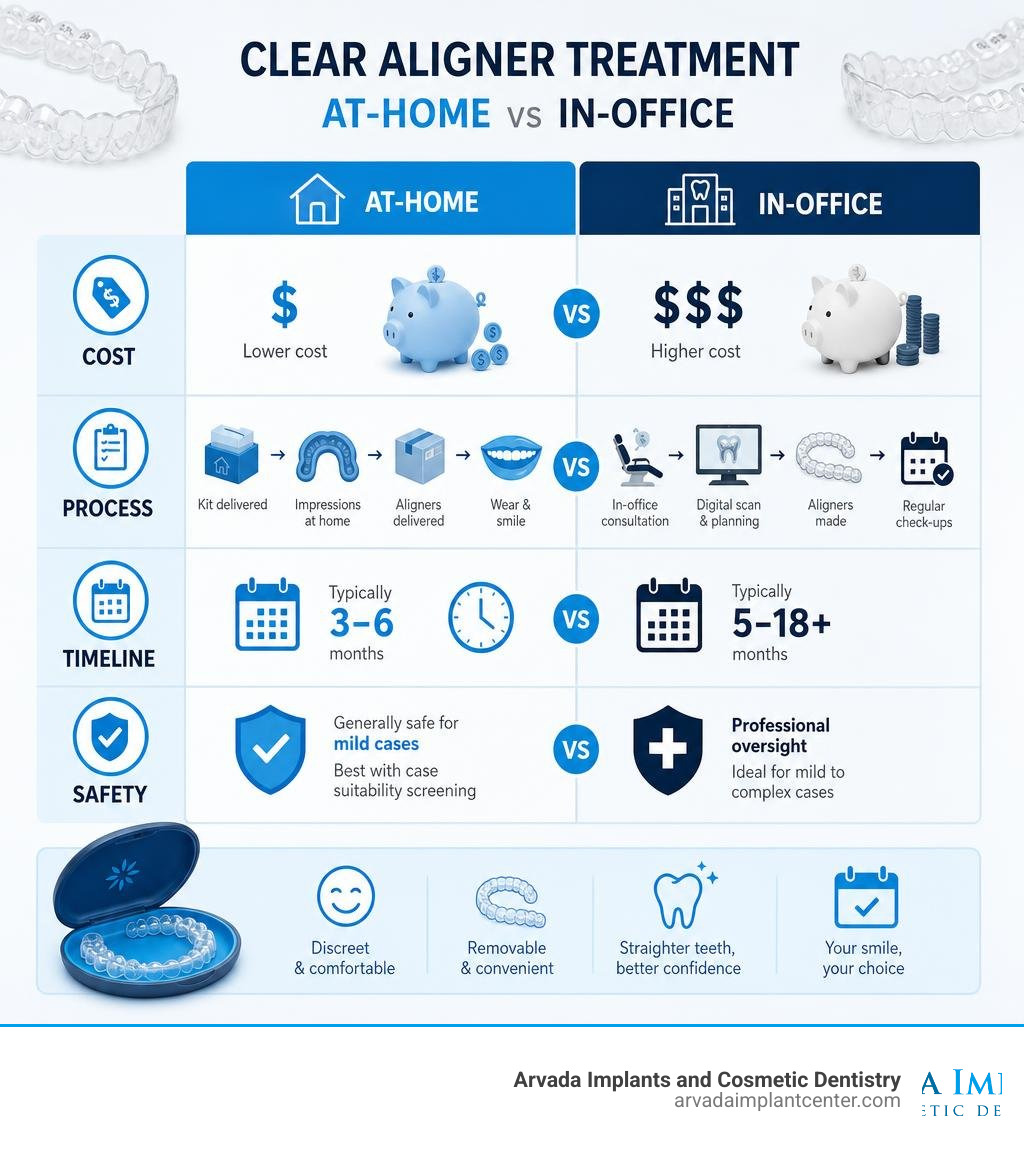
Question Quick Answer What is a clear aligner home kit? A mail-in system where you take impressions at home, send them in, and receive custom aligners delivered to your door Who is it for? Adults and teens with mild to moderate crowding or spacing issues How long does treatment take? Typically 3–6 months for at-home kits; 5–18+ months for in-office treatment How much does it cost? At-home kits: ~$549–$2,500 In-office (e.g., Invisalign): ~$3,000–$7,000 Is it safe? Generally yes for mild cases — but complex bite issues require professional oversight Is it covered by insurance? Often yes — FSA/HSA eligible; average insurance coverage is around $1,772
The appeal is real. You skip the waiting rooms. You pay less. And you straighten your teeth from your couch. But — and this matters — not every smile is a good fit for home treatment. Understanding the difference between at-home kits and professional care could save you from costly mistakes.
I'm Dr. Tariq Sawaqed, cosmetic and implant dentist with over 20 years of experience, and I've guided many patients through clear aligner home options as well as in-office treatments at Arvada Implants and Cosmetic Dentistry. In this guide, I'll walk you through everything you need to make a confident, informed decision.
At their core, clear aligners are thin, medical-grade, BPA-free plastic trays custom-molded to fit snugly over your teeth. Instead of using metal brackets and wires to pull your teeth into alignment, clear aligners use a sequential series of trays to gently push them.
Each tray is engineered to move your teeth a fraction of a millimeter at a time. You wear a set of aligners for roughly one to two weeks, for at least 22 hours a day, before moving on to the next set in the series.

But how do they stack up against traditional metal braces?
Aesthetics: Aligners are nearly invisible. Most people won't even notice you are wearing them, which is why they are often called clear plastic braces.
Convenience: They are fully removable. You take them out to eat, drink anything other than cool water, brush, and floss. No dietary restrictions means you can still enjoy popcorn and apples.
Speed: For non-extraction cases, clear aligner treatment can be up to 67% faster than conventional braces. However, if your case requires tooth extractions to resolve severe crowding, clear aligners actually require a 44% longer treatment time than traditional fixed appliances.
Suitability: An estimated 75% of Americans could benefit from comprehensive orthodontic treatment to correct a misaligned bite. While clear aligners are highly effective for cosmetic adjustments and mild to moderate bite corrections, severe structural or skeletal issues may still require traditional braces.
In-Office vs. Clear Aligner Home Treatments
When considering teeth straightening, you will generally choose between two pathways: professional, in-office care led by a local dentist or orthodontist, or fully remote clear aligner home kits.
To help you visualize the differences, we have broken down the two options below:
Feature In-Office Treatment (e.g., Invisalign, CandidPro) At-Home Aligner Kits (Fully Remote) Primary Supervisor In-person dentist or orthodontist Remote dental technician or remote licensed dentist Initial Assessment 3D digital scan, physical exam, and X-rays DIY putty impression kit or a single scan center visit Treatment Scope Mild to complex bite issues (crossbite, severe crowding) Mild to moderate cosmetic alignment only Use of Attachments Yes (small composite bumps to help grip and rotate teeth) No (trays rely purely on friction and basic pressure) Progress Tracking Regular in-person check-ups or advanced remote tracking Self-reporting via mobile apps or no tracking Average Cost $3,000 - $7,000 (Motto mid-tier: ~$2,999) $549 - $2,500
At Arvada Implants and Cosmetic Dentistry, we provide fully customized, dentist-led clear aligner options designed to protect your long-term oral health. The key difference with in-office care is the hands-on supervision. We take 3D digital scans and detailed X-rays to ensure your jawbone and tooth roots are healthy enough to withstand orthodontic movement before your treatment even begins.
The Process of Straightening Teeth at Home
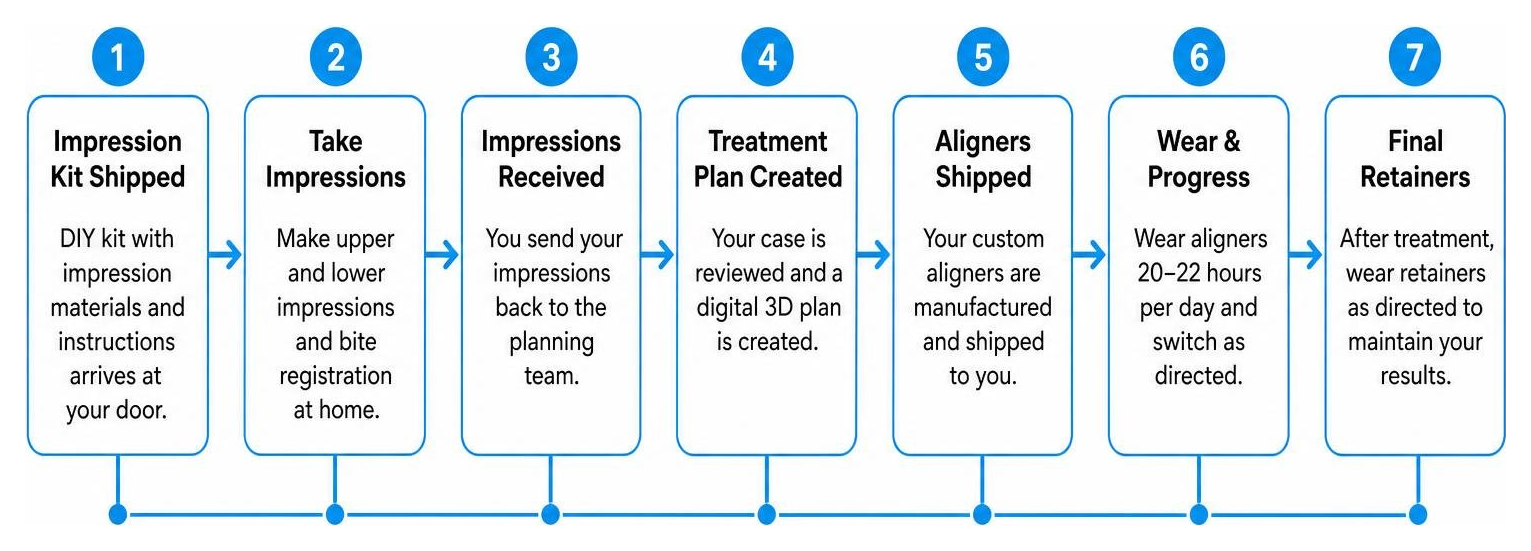
If you choose a fully remote clear aligner home system, the journey is designed to be as self-directed as possible.
Taking Your Clear Aligner Home Impressions
The process begins when you order a DIY impression kit. The company ships a box containing impression trays, packages of putty catalyst and base, and a cheek retractor.
You mix the putty together, place it in the tray, and press it firmly onto your teeth, holding it still for several minutes to create a dental mold. You also perform a bite registration to show how your upper and lower teeth meet.
While this sounds straightforward, it has a high margin of error. If you move your hand, salivate excessively, or fail to push the tray up far enough, the mold will be inaccurate. An imperfect mold leads to poorly fitting aligners, which can stall your progress or cause unwanted tooth movements.
Monitoring Your Clear Aligner Home Progress
Once you mail your impressions back, a remote dental team designs your 3D treatment plan. If you approve it, your custom aligners are fabricated and shipped directly to your doorstep.
To keep your teeth moving safely, you must track your progress. Some modern at-home systems utilize teledentistry apps or platforms like My Virtual Smile to help you submit weekly photos of your teeth. These virtual check-ins allow remote professionals to review your progress and clear you to transition to your next set of trays.
Safety, Efficacy, and Clinical Reality of At-Home Aligners
While the convenience of a clear aligner home routine is highly attractive, it is vital to look at what clinical studies and dental professionals say about remote orthodontic treatment.
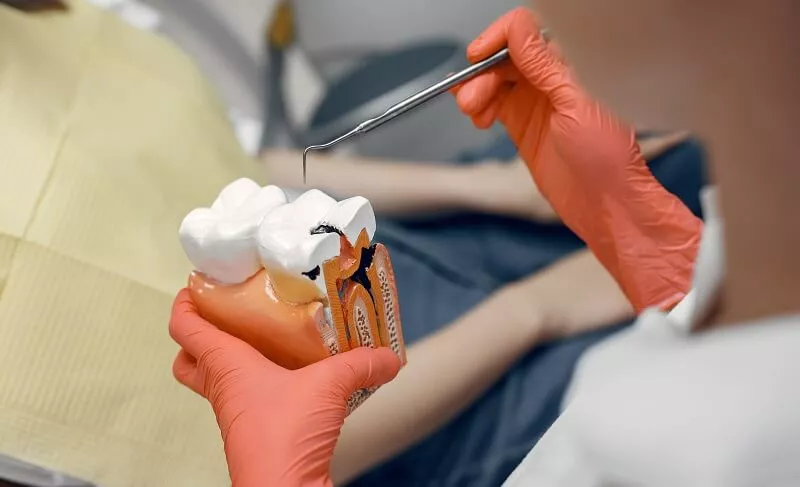
Orthodontic movement is a complex biological process. When an aligner puts pressure on a tooth, it triggers bone remodeling: bone tissue on one side of the tooth breaks down, while new bone builds up on the other side to anchor the tooth in its new position.
Without hands-on supervision, several risks emerge:
The Accuracy Gap: A comprehensive literature review revealed that on average, only 41% of predicted tooth movement is actually achieved with clear aligners. Complex movements like extrusion (pulling a tooth further out of the socket) achieve only about 29.6% accuracy, while rotation corrections hover around 33% accuracy. In-office systems overcome this by placing temporary, tooth-colored composite "attachments" on your teeth to give the aligners leverage. At-home systems cannot use attachments, meaning complex movements are rarely successful.
Apical Root Resorption: Shifting teeth too quickly or under improper force can cause the body to reabsorb the tips of the tooth roots. Research shows that 41.81% of teeth show signs of apical root resorption after clear aligner treatment. While this is usually mild, without diagnostic X-rays before and during treatment, severe resorption can go unnoticed, potentially leading to loose teeth or permanent tooth loss.
Periodontal Health Risks: Moving teeth in the presence of active, untreated gum disease can accelerate bone loss. In-office care requires a clean bill of periodontal health before starting, whereas home kits rely on the patient to self-report that they have visited a dentist recently.
Costs, Insurance, and Aftercare for Clear Aligners
Finances play a massive role in choosing how to straighten your teeth. Fully remote at-home treatments are highly budget-friendly, often ranging from $549 to $2,500. Mid-tier hybrid options (which combine an initial in-person scan with remote monitoring, such as Motto clear aligner systems) cost around $2,999 for mild to moderate cases, with an average treatment plan lasting 5.4 months. In-office systems like Invisalign generally cost between $3,000 and $7,000 depending on complexity.
Fortunately, you do not have to pay for everything out of pocket:
Insurance Coverage: If your dental plan includes orthodontic coverage, it will typically cover clear aligners to the same extent it covers metal braces. In fact, 92% of patients with dental insurance qualify for up to $3,000 in orthodontic coverage, with the average actual insurance payout landing at $1,772 USD.
FSA and HSA: Both at-home kits and dentist-led clear aligner treatments are widely eligible for Flexible Spending Account (FSA) and Health Savings Account (HSA) funds.
Financing: Most providers offer low-interest or interest-free monthly payment plans to make your smile transformation highly affordable.
Aftercare and Maintenance
Your treatment does not end when your last aligner tray comes out. To prevent your teeth from shifting back to their original positions, you must wear custom retainers. Initially, you will wear them full-time, eventually transitioning to nighttime-only wear.
Keeping your teeth and aligners clean is also crucial. Be sure to follow standard home care instructions to protect your enamel. For specific aligner maintenance, you can review our detailed clear aligner home care instructions, which cover how to clean your trays without scratching the medical-grade plastic.
Frequently Asked Questions About Clear Aligners
Who is a good candidate for at-home clear aligners?
At-home clear aligners are best suited for adults and teens with mild to moderate crowding, minor spacing issues, or minor orthodontic relapse (when teeth shift years after wearing braces). They are not designed to treat severe overbites, underbites, crossbites, or skeletal jaw misalignments.
How long does clear aligner treatment typically take?
For mild to moderate cosmetic cases, treatment can achieve visible results in as little as 6 months. Fully remote kits claim timelines of 3 to 9 months depending on whether you choose all-day wear or nighttime-only wear. Complex cases monitored in-office can take anywhere from 12 to 24+ months.
Are at-home teeth straightening kits safe?
They can be safe for very minor cosmetic adjustments, provided you have had a recent dental cleaning and your teeth and gums are completely healthy. However, because they lack in-person clinical exams, physical bite evaluations, and regular X-rays, they carry higher risks of bite misalignment and root damage compared to professional, dentist-led care.
Conclusion
Choosing a clear aligner home kit offers undeniable convenience and cost savings, making a straighter smile more accessible than ever. However, because orthodontic treatment permanently alters your dental anatomy, the safety, predictability, and expert oversight of dentist-led care remain unmatched.
If you live in Arvada, CO, or the surrounding Colorado areas, we invite you to schedule a consultation with us. At Arvada Implants and Cosmetic Dentistry, we provide personalized, affordable treatment plans designed around your unique smile. Whether you are looking for a simple cosmetic touch-up or a comprehensive smile makeover, we are here to guide you every step of the way.
To explore your options and take the first step toward a healthier, more confident smile, visit our Arvada Implants and Cosmetic Dentistry Clear Aligner Services page today!