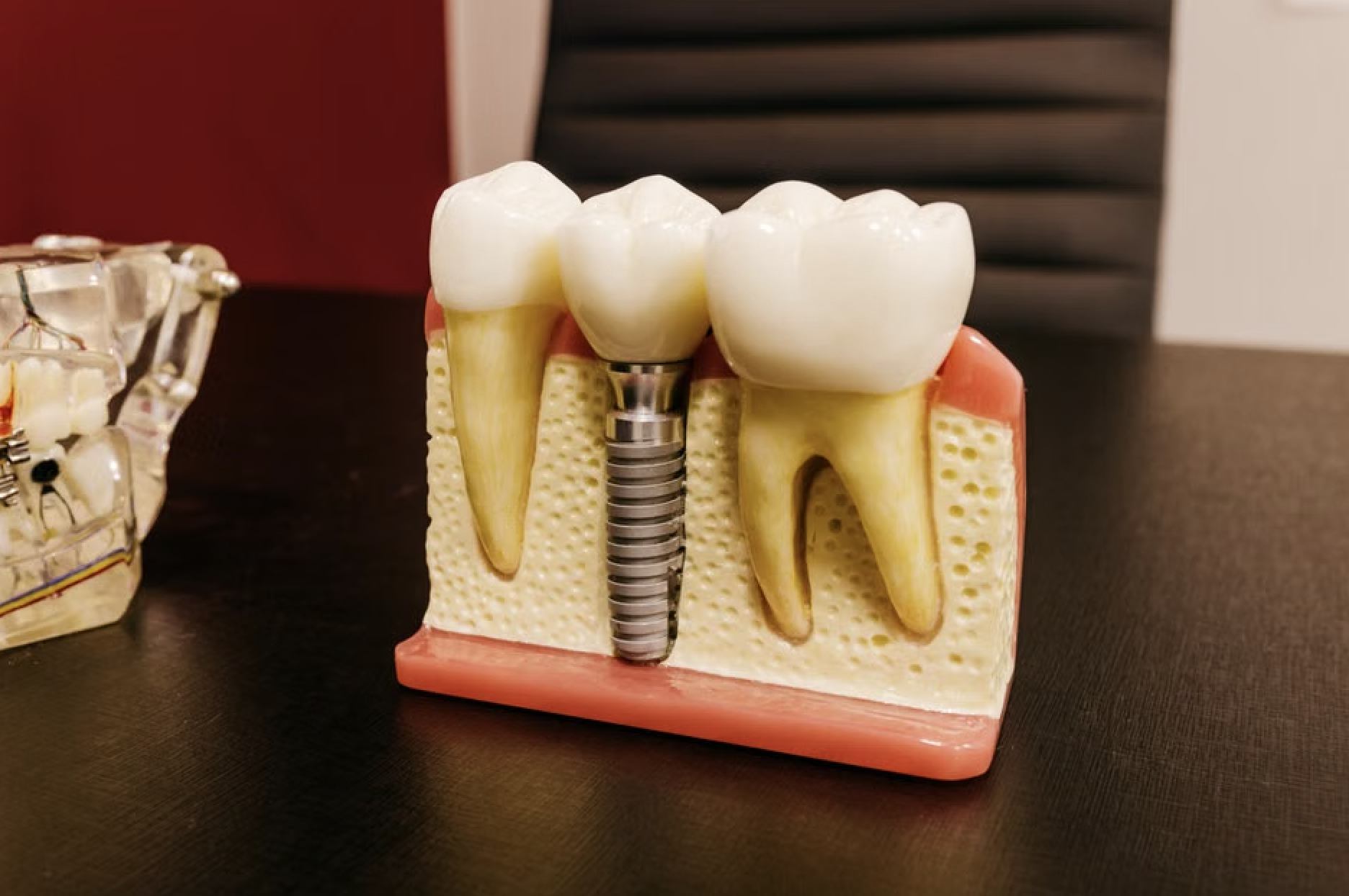
Compare Zirconia Dental Implants Options
Are Zirconia Dental Implants Right for You?
Zirconia dental implants are metal-free ceramic tooth replacements made from zirconium dioxide — a strong, white material that looks and feels like a natural tooth root.
Quick answer: Here's what you need to know at a glance:
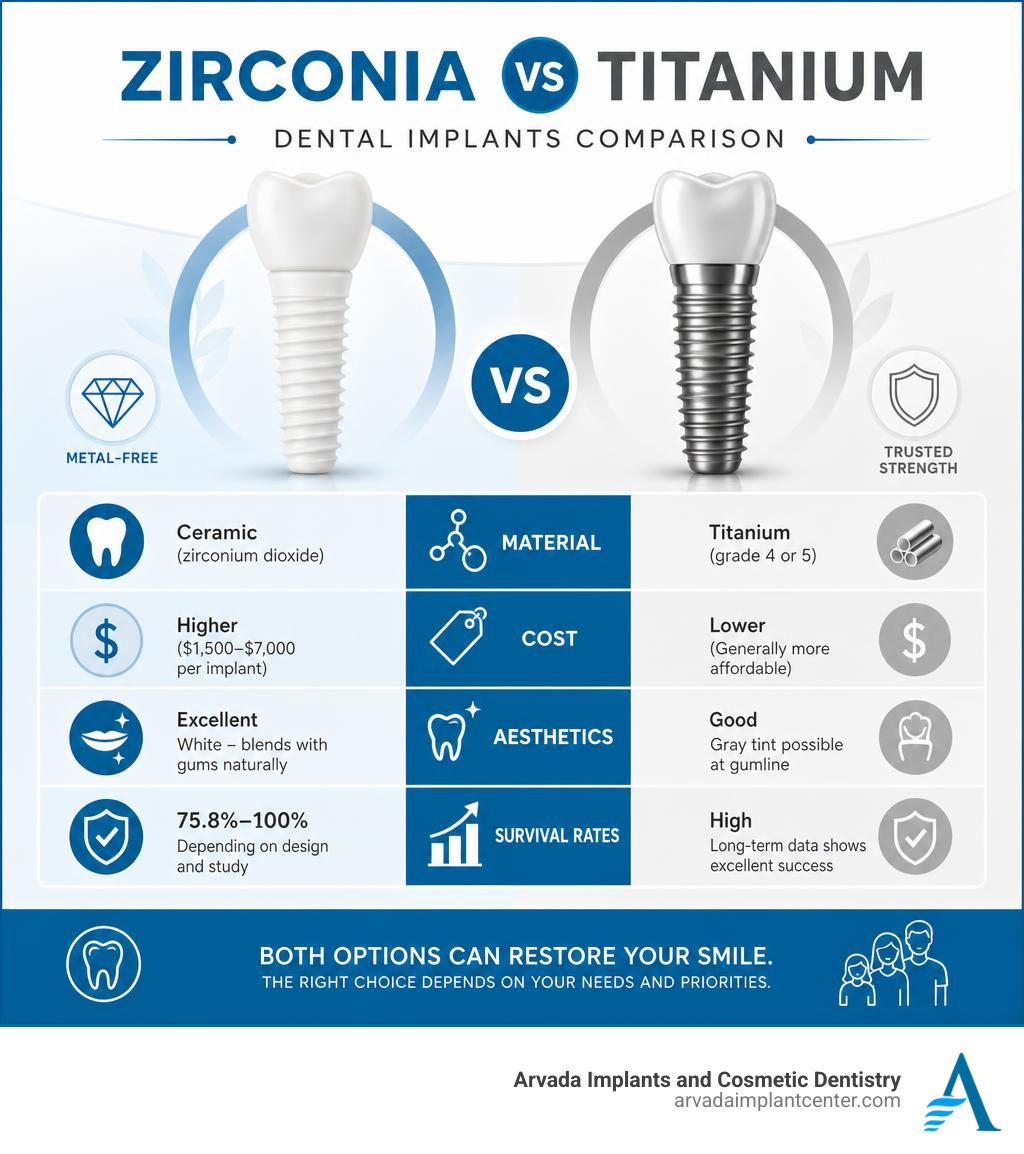
Feature Zirconia Implants Material Ceramic (zirconium dioxide) Color White — blends with gums naturally Metal-free Yes — safe for metal-sensitive patients Typical lifespan 10–15 years with good oral hygiene Cost range $1,500–$7,000 per implant Survival rate 75.8%–100% depending on design and study Best for Aesthetic cases, front teeth, metal allergies
Missing teeth can affect more than just your smile. They can make you feel self-conscious, change the way you eat, and even alter how you speak. For many patients, the search for a replacement that looks and feels natural leads them to explore ceramic options — and zirconia has become one of the most talked-about alternatives to traditional titanium implants.
Zirconia has been used in dentistry since 1986. But it's only in the last decade or so that research and manufacturing improvements have made it a truly competitive option. Today, some studies report survival rates as high as 96–100% over 8–9 years — while other designs have shown lower-than-expected results. The details matter a lot here.
This guide walks you through everything: how zirconia compares to titanium, what the clinical evidence actually says, what it costs, and whether it might be the right fit for your situation.
I'm Dr. Tariq Sawaqed, founder of Arvada Implants and Cosmetic Dentistry, with over 20 years of experience in implant and cosmetic dentistry — including placing and restoring zirconia dental implants for patients seeking natural-looking, metal-free solutions. I'll help you cut through the noise so you can make a confident, informed decision.
What Are Zirconia Dental Implants?
To understand zirconia dental implants, we first need to clear up a very common point of confusion: Is zirconia a metal or a ceramic?
Technically, zirconium is a metal on the periodic table. However, when it is oxidized to create zirconium dioxide ($ZrO_2$), its structure changes completely. It becomes a transition metal oxide, which is classified as a high-performance ceramic.
Think of it like rust. Iron is a magnetic, dark metal; but when it oxidizes, it turns into flaky, reddish-brown iron oxide. In a much more advanced and high-tech way, zirconium dioxide becomes a white, crystalline, non-conductive ceramic. It has no metallic properties, does not conduct electricity, and is entirely free of the gray metallic color associated with titanium.
Because of this unique chemical structure, zirconia offers exceptional biocompatibility. The human body does not recognize it as a foreign metal threat, making it highly tissue-friendly. While titanium has been the "gold standard" of dental implantology for over 45 years, zirconia has carved out a significant place for itself since its introduction to the dental market in 1986. It is highly resistant to corrosion, cracking, and thermal expansion, which is why it is also used in high-stress applications like aerospace engineering and artificial hip joints.
One-Piece vs. Two-Piece Zirconia Dental Implants
When evaluating your options, you will quickly discover that zirconia implants come in two primary designs: one-piece and two-piece systems. Choosing between them is one of the most critical decisions in your treatment planning.
One-Piece Zirconia Implants: In this design, the implant post (the part that goes into the bone) and the abutment (the connector that holds the crown) are manufactured as a single, solid ceramic unit.
The Pros: There is no physical joint or "micro-gap" between the implant and the abutment. This completely eliminates the risk of bacteria gathering in a hidden seam, which is a major win for your gum health.
The Cons: Placement requires extreme precision. Because the abutment sticks up out of the gums immediately after surgery, we cannot "bury" the implant under the gum tissue to protect it during the healing phase. Any accidental biting pressure during the 3-to-6-month healing period can disrupt osseointegration (bone fusing) and cause the implant to fail.
Two-Piece Zirconia Implants: This design mimics traditional titanium implants, where the implant post is placed in the bone, and a separate ceramic abutment is screwed on later.
The Pros: This allows for much greater prosthetic flexibility. We can bury the implant safely beneath your gums to heal undisturbed. It also allows us to angle the final crown more easily if the bone structure isn't perfectly straight.
The Cons: Historically, two-piece ceramic systems were prone to mechanical failures at the screw joint. However, modern engineering has introduced fiberglass-reinforced abutments and advanced ceramic screws that have significantly reduced these risks.
According to the comprehensive Clinical Guideline for Zirconia Dental Implants, one-piece ceramic systems currently have a larger body of long-term clinical evidence supporting their use, while two-piece ceramic systems are rapidly catching up as manufacturing processes improve.
Zirconia vs. Titanium: Comparing the Options
When choosing a material to replace your tooth root, it helps to look at how these two industry heavyweights stack up across several physical and biological categories:
Feature Titanium Implants Zirconia Implants Material Class Metal (Grade 4 or 5 Alloy) Ceramic (Yttria-Stabilized Tetragonal Zirconia) Color Dark Gray Tooth-Colored White / Translucent Flexural Strength ~400 MPa 900–1200 MPa (Y-TZP) / Up to 2000 MPa (ATZ) Corrosion Potential micro-corrosion over decades 100% chemically inert and corrosion-resistant Electrical Conductivity Yes (Can produce minor galvanic currents) No (Electrical insulator) Thermal Conductivity High (Can conduct hot/cold sensations) Low (Reduces temperature sensitivity) Bacterial Affinity Moderate plaque accumulation Very low bacterial adhesion
While zirconia boasts incredible flexural strength (often double or triple that of titanium), it is more rigid. Titanium is slightly ductile, meaning it can bend microscopically under extreme load without shattering. Zirconia, being a ceramic, does not bend. If subjected to forces beyond its limit, it is more prone to microscopic fractures or low-temperature degradation (aging) when exposed to moisture over many years.
Additionally, zirconia does not conduct galvanic currents. If you have other metals in your mouth (like gold crowns or silver amalgam fillings), titanium implants can sometimes create a tiny battery-like effect, conducting a microscopic electrical current through your saliva. Zirconia, as an electrical insulator, completely avoids this phenomenon.
Aesthetic Benefits of Zirconia Dental Implants
The most obvious and celebrated advantage of zirconia is its visual appearance. In the anterior region (your front smile zone), aesthetics are everything.
Traditional titanium implants are dark gray. If you have thick, robust gum tissue, this gray metal is hidden safely out of sight. However, many patients have a "thin gingival phenotype" — meaning their gum tissue is naturally thin and translucent. In these cases, a titanium implant can cast a dark, gray shadow through the gums, making the gumline look bruised or artificial. Furthermore, if you experience even minor gum recession over the years, the metal collar of a titanium implant may become visible as a dark ring at the base of your tooth.
Because zirconia is naturally bright white and semi-translucent, it mimics the light-reflecting properties of a natural tooth dentin. Even if your gums are thin or recede slightly over time, the underlying material remains white, maintaining a seamless, healthy, and highly aesthetic smile. This makes it an exceptional choice for restoring a One Missing Tooth in the front of your mouth.
Osseointegration and Soft Tissue Response
For any implant to succeed, it must bond permanently with your jawbone — a process called osseointegration.
Clinical research shows that modern, surface-roughened zirconia implants achieve bone-implant contact (BIC) rates that are highly comparable to titanium. Once the bone fuses to the micro-rough ceramic surface, the implant becomes incredibly stable.
Where zirconia truly shines, however, is in its relationship with your soft tissues. Gums love zirconia. Because of its ultra-smooth surface at the gumline, it is highly resistant to bacterial plaque. In fact, studies show that bacteria find it much harder to adhere to zirconia than to titanium. This is a massive benefit because plaque accumulation is the primary cause of peri-implantitis — an inflammatory gum disease that can cause bone loss and ultimate implant failure.
A comprehensive Systematic review on survival and success published in Clinical Oral Investigations noted that while titanium remains highly predictable, zirconia consistently demonstrates superior soft tissue aesthetics (measured by the Pink Aesthetic Score) and excellent mucosal healing around the implant collar.
Longevity, Success Rates, and Clinical Outcomes
How long can you expect zirconia dental implants to last?
On average, zirconia implants are designed to last 10 to 15 years, and potentially much longer with meticulous oral hygiene and regular professional cleanings. Because titanium has been used since the 1960s, we have clinical data tracking titanium implants for 30 to 40 years. Zirconia simply hasn't been in widespread clinical use long enough to provide identical multi-decade data, but the mid-term data we do have is highly promising.
However, clinical success is highly dependent on the design of the implant. For example, a study published in Clinical Implant Dentistry and Related Research evaluated custom-made, two-piece zirconia implants and found a 5-year survival rate of 75.8% and a success rate of 71.0%. These numbers were lower than expected, leading researchers to conclude that highly customized, non-standardized designs may carry a higher risk of mechanical failure. Conversely, standard, commercially manufactured zirconia implants from established brands show vastly superior success rates.
Long-Term Survival Rates of Ceramic Implants
When we look at standardized, high-quality ceramic implant systems, the long-term clinical data is incredibly reassuring:
One-Piece Implants (8-Year Outcomes): An 8-year follow-up study on one-piece implants published in Clinical Oral Investigations evaluated 67 one-piece zirconia dental implants. The study revealed a remarkable 100% survival rate and an 89.6% overall success rate after eight years of clinical loading. Interestingly, implants placed immediately after extraction (immediate placement) showed slightly better bone preservation and higher aesthetic scores than those placed after the socket had healed (delayed placement).
Two-Piece Implants (9-Year Outcomes): A 9-year cohort study tracking two-piece zirconia implants in the posterior region of the mouth (where chewing forces are highest) showed a 96.6% survival rate. Remarkably, after the first two years of healing, no new cases of peri-implantitis were recorded throughout the remaining seven years of the study. This confirms that once zirconia successfully integrates, its resistance to plaque helps keep the surrounding bone and gums incredibly stable over the long haul.
Suitability for Patients with Metal Allergies
While true titanium allergies are estimated to affect less than 1% of the population, metal sensitivities and hypersensitivities are becoming a growing concern for many patients.
When a titanium implant is placed, it undergoes microscopic surface corrosion over time, releasing trace metal ions into the surrounding local tissues. For patients with highly sensitive immune systems, chronic fatigue syndromes, or autoimmune conditions, this constant exposure to foreign metal ions can trigger a localized inflammatory response.
Zirconia is completely hypoallergenic. Because it is a ceramic, it does not corrode, degrade, or release metal ions into your bloodstream. For patients who prioritize a holistic lifestyle or those who have confirmed metal sensitivities, zirconia offers complete peace of mind. If you are replacing Multiple Missing Teeth, choosing a metal-free material can significantly reduce the overall systemic "metal load" on your body.
Cost Comparison: Zirconia vs. Titanium
There is no getting around it: zirconia implants are a premium dental solution, and their price reflects that.
Single Titanium Implant Cost: Typically ranges between $975 and $5,000 (including the post, abutment, and crown).
Single Zirconia Implant Cost: Typically ranges between $1,500 and $7,000.
Why is zirconia more expensive? The answer lies in the manufacturing process. Zirconia is incredibly tough, meaning it requires highly specialized, high-temperature sintering and precision CAD/CAM milling to shape. Every single implant must undergo rigorous quality testing — such as a 100% proof test that exceeds maximum human biting forces — to ensure it is free of microscopic structural flaws before it ever reaches a dental office.
Furthermore, restoring zirconia implants requires specialized training and surgical expertise. While we always strive to provide options for patients seeking Cheap Dental Implants Near Me, it is important to view dental implants as a long-term investment in your health, systemic wellness, and confidence.
When it comes to dental insurance, coverage varies. Most insurance plans treat zirconia and titanium similarly — they may cover a portion of the restoration (the crown) but may not cover the full cost of the premium ceramic post. Our team at Arvada Implants and Cosmetic Dentistry will work closely with you to maximize your insurance benefits and find flexible financing options to make your treatment affordable.
Frequently Asked Questions About Zirconia Implants
How long do zirconia implants typically last?
With excellent home care, daily flossing, and regular professional cleanings, zirconia implants typically last 10 to 15 years, and often much longer. Because modern high-performance ceramics are highly resistant to wear, their lifespan is primarily determined by the health of the surrounding bone and gums. Regular checkups as part of Our Services ensure that we catch and address any minor bite adjustments or gum issues before they impact the longevity of your implant.
Are zirconia implants safer than titanium?
Both materials are highly safe and FDA-approved. However, zirconia is chemically inert, non-conductive, and completely hypoallergenic, making it the safer and preferred choice for patients with metal allergies, autoimmune conditions, or severe sensitivities. By utilizing Our Technology, we can carefully evaluate your bone density and systemic health to determine which material is the safest and most compatible option for your unique body.
Can zirconia implants be used for full-mouth restorations?
Absolutely! While zirconia was historically used primarily for single-tooth replacements, modern advancements allow us to use zirconia for full-arch restorations. This includes implant-supported zirconia fixed bridges, which offer incredible strength, stain resistance, and a natural translucency that mimics real teeth. If you are exploring full-mouth options like All On 4, zirconia restorations can provide a stunning, durable, and completely metal-free smile transformation.
Conclusion
At Arvada Implants and Cosmetic Dentistry, we believe that your smile is entirely unique. That is why we don't believe in a one-size-fits-all approach to tooth replacement. Whether you choose traditional titanium or premium, metal-free zirconia dental implants, our goal is to provide affordable, highly personalized treatments designed to restore your confidence and oral health.
By combining advanced dental technology with custom lab creations, we craft beautiful, long-lasting smiles right here in Arvada, CO.
Ready to explore your options and find out if ceramic dental implants are the right choice for your smile? Schedule a consultation for Dental Implants with us today, and let’s take the first step toward rebuilding your smile together!