



Don't Let Your Recovery Go Downhill by Sleeping Flat
Why Elevated Head Sleeping Can Make or Break Your Recovery

Elevated head sleeping is one of the simplest things you can do to heal faster after dental surgery — and one of the most overlooked.
Here's a quick summary of what you need to know:
What it is: Sleeping with your upper body raised at an angle, typically 10–30 degrees above flat
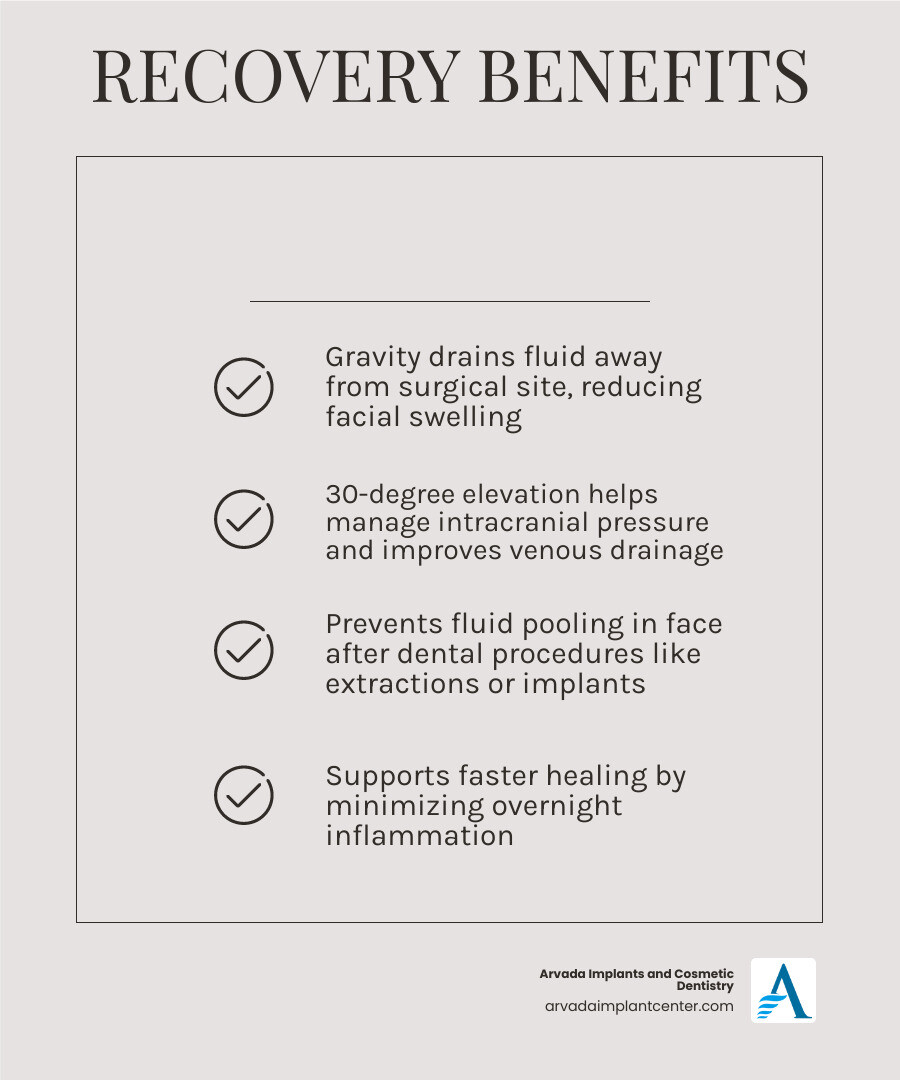
Why it helps recovery: Gravity keeps fluid and swelling away from your surgical site
Best angle: 30 degrees is widely recommended for post-surgery healing and general comfort
How to do it: Use a wedge pillow, stacked firm pillows, bed risers, or an adjustable bed
Who it's for: Anyone recovering from dental, facial, or orthopedic procedures — and people with acid reflux, snoring, or sinus issues
After a tooth extraction or implant procedure, lying flat can work against your body. Fluid pools in your face. Swelling gets worse. Sleep feels restless. A small shift in position — raising your head just a few inches — uses gravity to drain fluid away from the surgical area and reduce inflammation overnight.
It's not complicated. But the difference it makes is real.
I'm Dr. Tariq Sawaqed, a cosmetic and implant dentist with over 20 years of experience helping patients in Colorado recover smoothly after procedures like implants, extractions, and full smile restorations — and elevated head sleeping is one of the first recovery tips I give every patient. In the sections below, I'll walk you through exactly how it works, the best methods to try, and what to watch out for.
The Science and Benefits of Elevated Head Sleeping
When we talk about elevated head sleeping, we aren't just talking about extra comfort; we are talking about "gravity therapy." This approach uses the physical laws of nature to assist your body’s biological healing processes. When you lie flat, your heart and head are on the same plane, which allows blood and interstitial fluids to distribute evenly throughout the body. While this is normal for a healthy person, it can be a nightmare for someone recovering from a dental implant or a complex extraction in Arvada.
By shifting the geometry of your sleep, you change your internal fluid dynamics. Gravity helps pull fluids away from the head and toward the rest of the body, preventing the "puffy face" many patients wake up with. According to Head Elevation During Sleep: Benefits, Techniques, and Considerations, this positioning is vital for managing intracranial pressure and improving venous drainage.
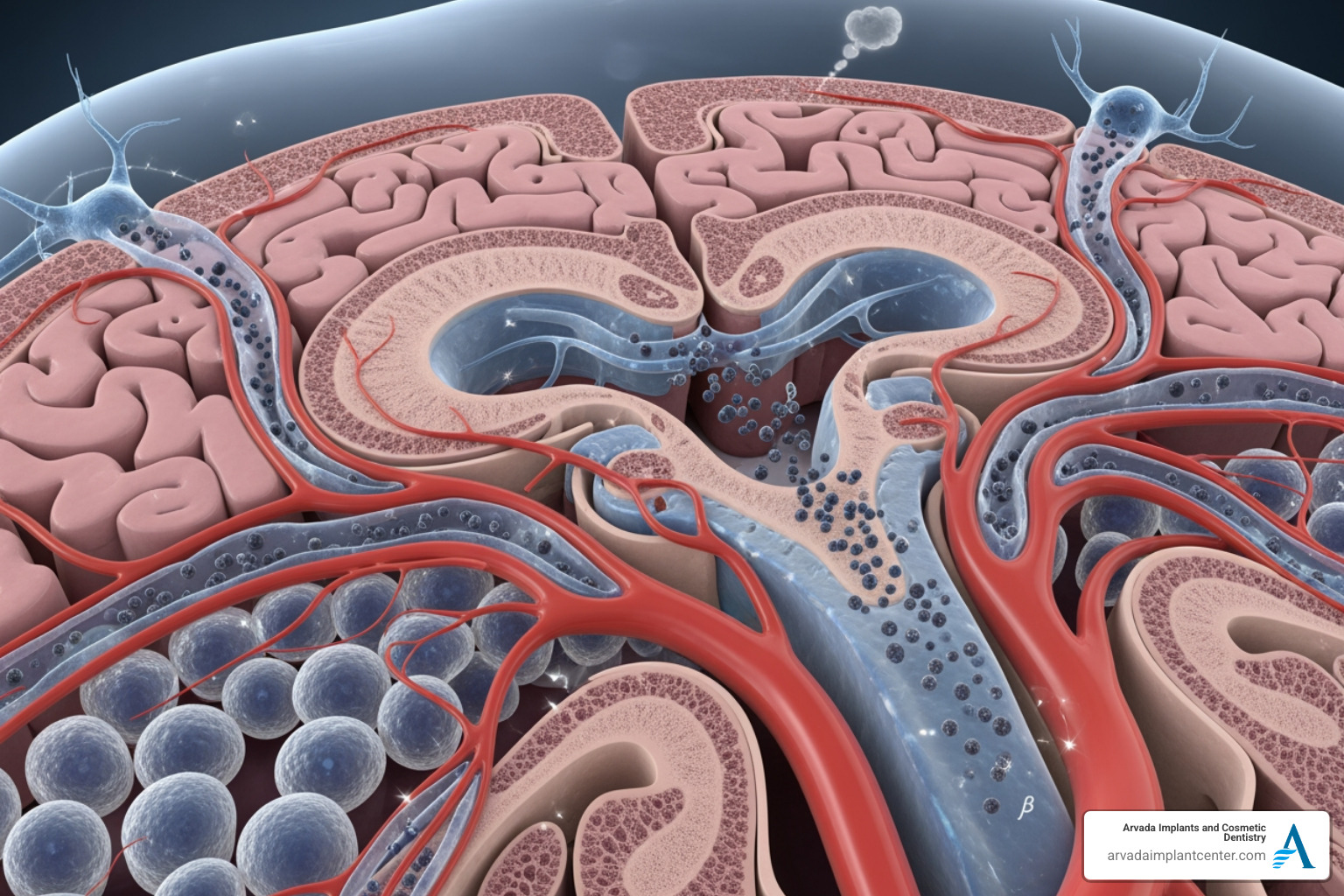
One of the most fascinating aspects of this is the effect on the glymphatic system—the brain's waste-clearance pathway. Research suggests that an inclined position can influence how efficiently your brain clears out metabolic waste. When we minimize the pressure on the venous system in the neck and head, we allow for better drainage of cerebral spinal fluid. For our patients, this means less inflammation, less throbbing pain, and a much faster road to a beautiful, healthy smile.
Managing Respiratory Issues with Elevated Head Sleeping
Beyond surgery recovery, elevated head sleeping is a game-changer for breathing. If you’ve ever been told you snore like a freight train, gravity might be the culprit. When you sleep flat on your back, gravity pulls the soft tissues of your throat and the base of your tongue backward, partially obstructing your airway.
Scientific research, including The influence of head-of-bed elevation in patients with obstructive sleep apnea, has shown that even a modest 7.5-degree incline can reduce the severity of Obstructive Sleep Apnea (OSA) by an average of 31.8%. Imagine getting a 30% improvement in your breathing just by propping up the head of your bed!
Statistically, 67% of participants in clinical studies snored significantly less when sleeping at a 20-degree incline. This position keeps the airway patent (open) and improves oxygen saturation throughout the night. For our patients in Arvada who may already struggle with sleep-disordered breathing, maintaining this elevation during the post-op period ensures they get the high-quality rest their bodies need to knit bone and tissue back together.
Reducing Acid Reflux and GERD Symptoms
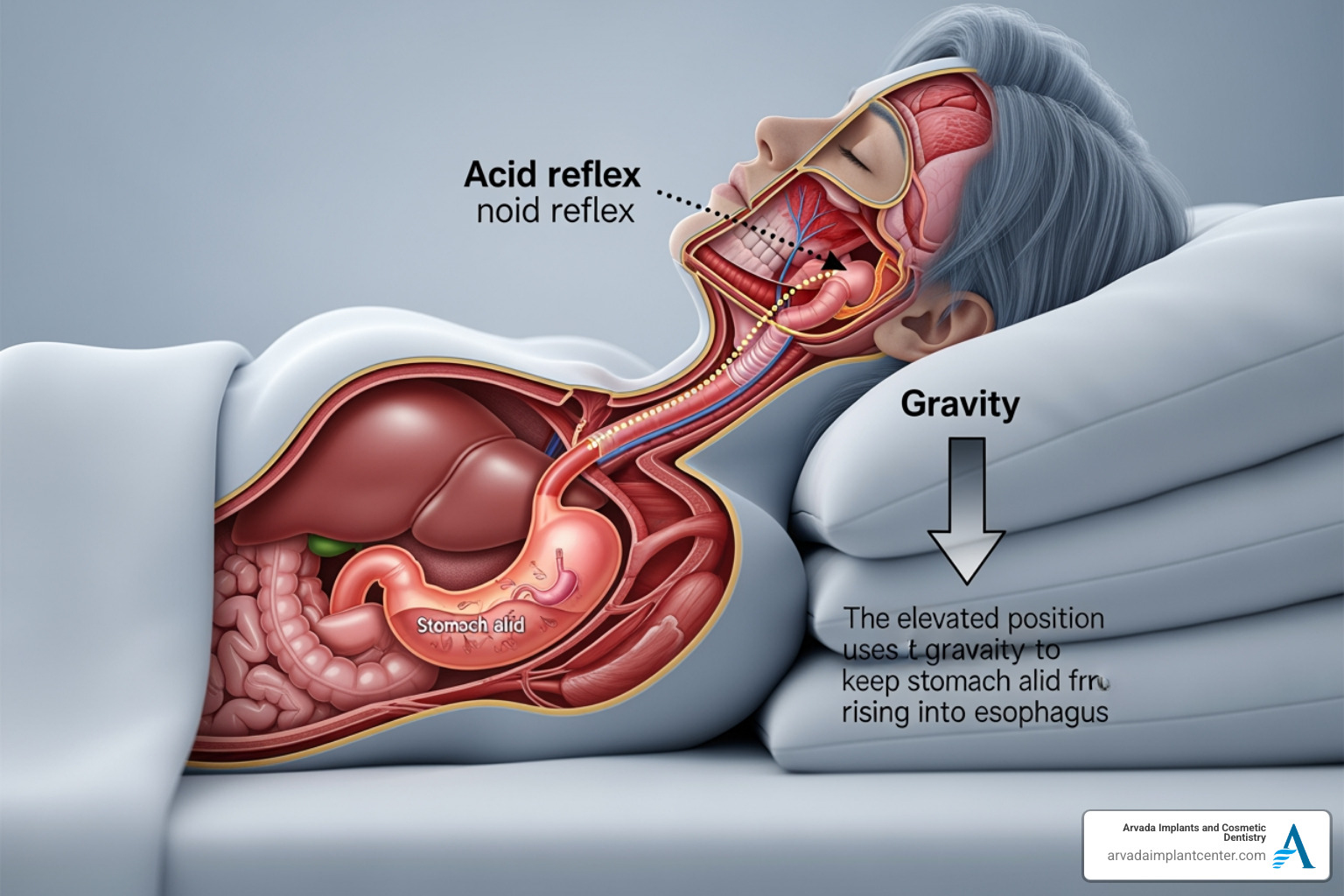
If you’ve ever enjoyed a late dinner in Arvada and then suffered through nighttime heartburn, you know how much "the burn" can ruin a night’s rest. About 79% of people with Gastroesophageal Reflux Disease (GERD) experience symptoms at night when lying flat. This happens because, without the help of gravity, gastric acid can easily escape the stomach and travel up the esophagus.
By maintaining a 30-degree angle, you create a natural gravity barrier. The esophagus remains positioned above the stomach, making it physically difficult for acid to rise. This esophageal protection is a primary reason why medical experts recommend Head Elevation During Sleep: Benefits, Techniques, and Considerations for those with chronic digestive issues.
Practical Methods to Achieve Optimal Elevation
Achieving the right level of elevated head sleeping doesn't necessarily require a major investment, though some methods are certainly more "set and forget" than others. Whether you are recovering from a smile makeover or just looking for better sleep, here is how the common methods stack up:
Method Best For Pros Cons Wedge Pillow Post-op Recovery Affordable, portable, consistent angle Can be difficult for side sleepers Adjustable Bed Long-term Health Precise control, "Zero-G" settings Expensive, heavy Bed Risers Budget DIY Elevates the whole mattress Can make the bed feel unstable Stacked Pillows Emergency/Short-term No cost Pillows shift; can cause neck strain
If you aren't ready to commit to a new bed frame, a high-quality memory foam wedge pillow is usually our top recommendation for patients. It provides a uniform lift from the mid-back up to the head, which is essential. As noted in Gravity as Therapy: The Benefits of Sleeping with Your Head Elevated, you want a continuous straight-plane incline rather than a sharp bend at the neck, which can actually restrict your airway.
Finding the Perfect Incline for Elevated Head Sleeping
So, how high should you go? While "as high as comfortable" is a common phrase, the data points to specific ranges for specific goals:
For Post-Dental Surgery: We recommend a 30-degree incline. This is high enough to significantly reduce facial swelling but low enough to remain comfortable for a full night.
For Snoring and Sleep Apnea: Research suggests 10 to 15 degrees (about 6–8 inches of lift) is effective for many.
For Acid Reflux: A range of 15 to 30 degrees is generally the "sweet spot" for keeping stomach acid where it belongs.
When setting up your recovery nest, ensure the support starts at your mid-back. If you only prop up your head, you’ll end up with a sore neck and potentially restricted breathing. Think of it as creating a gentle ramp for your entire upper torso.
Risks, Side Effects, and Contraindications
While we are big fans of elevated head sleeping, it isn't a "one size fits all" solution. There are a few things to keep in mind to ensure you don't trade one problem for another.
Neck and Back Strain: If you use the "pillow stacking" method, you run a high risk of waking up with a crick in your neck. Always aim for a gradual incline that supports the natural curve of your spine.
Blood Clot Risks: For those at a high risk of deep vein thrombosis (DVT), sleeping in a position that mimics sitting for too long can be a concern. If you have circulatory issues, consult your doctor about whether an incline is safe for you.
Pressure Sores: If you are immobile for long periods in an elevated position, be mindful of increased pressure on your tailbone or hips.
Infant Safety: This is a critical one. The American Academy of Pediatrics and the FDA explicitly warn against inclined sleep for infants. Babies should always sleep on a firm, flat surface to prevent suffocation risks.
According to Benefits of Sleeping With Your Head Elevated: What the Research Recommends, it is always best to check with your healthcare provider if you have pre-existing heart or lung conditions before making a permanent change to your sleep geometry.
Frequently Asked Questions about Elevated Sleeping
Can I elevate my head without an adjustable bed?
Absolutely! While adjustable beds are the "gold standard" for convenience, you can achieve excellent results with a wedge pillow. These are triangular foam inserts that sit on top of your mattress. Alternatively, you can use bed risers (sturdy blocks) placed under the two legs at the head of your bed frame to tilt the entire bed. Just make sure the bed is stable before you hop in!
Is it safe to sleep with your head elevated every night?
For most people, yes. In fact, many people with chronic sinus issues or GERD find that they can never go back to sleeping flat once they experience the benefits of an incline. The key is ensuring your spine remains in a neutral, supported position so you don't develop long-term back or neck pain.
Does head elevation help with post-dental surgery swelling?
Yes, this is the primary reason we recommend it at Arvada Implants and Cosmetic Dentistry. When you are flat, blood flow to the head increases, which can cause the surgical site to throb and swell. By staying elevated, you encourage fluid to drain away from the face, which can significantly speed up your initial healing phase and keep you much more comfortable.
Conclusion
At Arvada Implants and Cosmetic Dentistry, we believe that a successful smile makeover or dental implant procedure doesn't end when you leave our chair. Your recovery at home is just as important as the precision work we do in the office. By practicing elevated head sleeping, you are taking an active role in your own healing, reducing discomfort, and ensuring your body has the best possible environment to recover.
Whether you are coming to see us for a single implant or a full set of dentures, we are here to provide the personalized, affordable care you deserve. If you have questions about your upcoming procedure or need specific advice on your recovery, don't hesitate to reach out to our team in Arvada. For more detailed instructions on caring for yourself after a procedure, please review our Tooth extraction home care instructions.
Sleep well, stay elevated, and we look forward to seeing your new smile soon!