How to Follow Tooth Extraction Aftercare the Right Way
Why Proper Tooth Extraction Aftercare Makes All the Difference
Tooth extraction aftercare starts the moment you leave the dental chair — and what you do in those first hours and days has a big impact on how fast and smoothly you heal.
Here's a quick overview of the key steps:
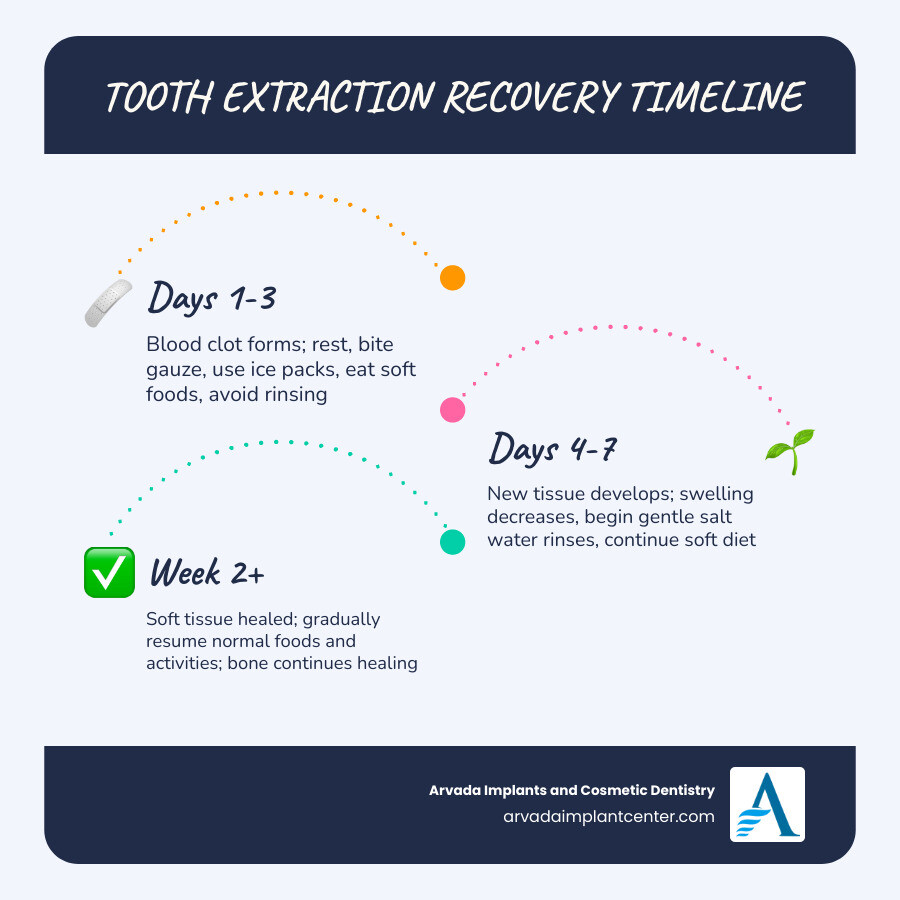
Timeframe What to Do First 24 hours Bite on gauze, rest, keep head elevated, avoid rinsing or spitting Days 2-3 Swelling peaks — use ice packs, eat soft foods, start gentle salt water rinses Days 3-7 New tissue forms, pain eases — continue soft diet, avoid smoking and straws Week 2+ Most soft tissue healed — gradually return to normal foods and activities
The single most important goal in early recovery is protecting the blood clot that forms in the empty socket. That clot is your body's natural bandage. If it gets dislodged, a painful condition called dry socket can occur — exposing the bone underneath and slowing healing significantly.
Most people can return to their normal routine within a week, though full healing of the bone and deeper tissue takes longer.
I'm Dr. Tariq Sawaqed, a cosmetic and implant dentist with over 20 years of experience helping patients in Colorado navigate procedures like tooth extractions — including the tooth extraction aftercare that makes the difference between a smooth recovery and a painful setback. In the sections below, I'll walk you through exactly what to do, what to avoid, and when to call your dentist.
Essential Steps for Tooth Extraction Aftercare
When we perform a tooth extraction at Arvada Implants and Cosmetic Dentistry, our primary goal is to ensure your mouth heals cleanly, quickly, and with as little discomfort as possible. The foundation of this entire recovery process is protecting the surgical site so your body can do what it does best: regenerate tissue.
Immediately after a tooth is removed, your body initiates a natural healing response by forming a blood clot in the empty socket. This blood clot is absolutely vital. It seals the exposed bone and delicate nerve endings within the socket, shielding them from food particles, bacteria, and air. If this clot fails to form properly, or if it is prematurely dislodged, it leads to a highly painful complication known as dry socket (alveolar osteitis).
To protect this socket and support the natural healing process, you must be incredibly gentle with your mouth during the first few days. Forceful movements, suction, and hard textures are the enemies of a stable blood clot. By following a structured timeline and understanding the medical reasons behind each recovery step, you can significantly reduce your risk of complications. For a detailed breakdown of how your body heals day-by-day, you can explore this comprehensive Tooth extraction aftercare: Timeline and guide.
The First 24 Hours of Tooth Extraction Aftercare
The first 24 hours following your extraction represent the most critical window for your recovery. During this period, your primary mission is to encourage stable clot formation and keep swelling to a minimum.
Apply Consistent Gauze Pressure: Before you leave our Arvada office, we will place a clean, damp gauze pad over the extraction site. You must bite down on this gauze with firm, steady pressure for at least 30 to 60 minutes. The physical pressure helps compress the blood vessels and stops active bleeding. If the gauze becomes soaked, gently replace it with a fresh, slightly dampened gauze pad and continue biting down.
Keep Your Head Elevated: When you go home to rest, resist the urge to lie completely flat. Use two or three pillows to keep your head elevated well above your heart. This simple adjustment reduces blood pressure in your head, which directly decreases throbbing pain and limits post-operative swelling.
Prioritize Physical Rest: The first day is not the time to catch up on chores or go to the gym. Avoid any physical exertion, lifting, or bending over. Increased physical activity raises your heart rate and blood pressure, which can easily cause the extraction site to start bleeding again.
Avoid Suction and Spitting: This is a golden rule of tooth extraction aftercare. Do not drink through a straw, do not smoke or vape, and do not spit forcefully. The negative pressure created in your mouth by these actions acts like a vacuum, which can instantly pull the newly formed blood clot right out of its socket. If you have excess saliva or blood in your mouth, gently swallow it or wipe it away with a tissue rather than spitting.
For a handy, downloadable checklist of these immediate steps, please review our official Tooth Extraction Home Care Instructions.
Long-Term Tooth Extraction Aftercare and Diet
Once you have safely navigated the first 24 hours, your focus will shift toward long-term healing and nutritional recovery. Eating a balanced diet is crucial for giving your body the vitamins and proteins it needs to rebuild tissue, but you must choose your foods carefully to avoid traumatizing the healing socket.
During the first 24 to 48 hours, stick strictly to liquids and very soft foods that require absolutely no chewing. Cold or room-temperature options are ideal, as heat can cause blood vessels to dilate and trigger bleeding. Excellent choices include:
Smoothies (remember: no straws! Eat them with a spoon)
Greek yogurt and cottage cheese (great sources of protein)
Applesauce and mashed bananas
Pudding and gelatin
Lukewarm broths
As you transition into days 3 through 7, you can gradually introduce soft, easily mashable foods. Mashed potatoes, scrambled eggs, well-cooked oatmeal, and macaroni and cheese are perfect mid-recovery meals. Always try to chew your food on the opposite side of your mouth from the extraction site to prevent food debris from collecting in the healing socket.
Avoid any sharp, crunchy, or seedy foods (such as chips, popcorn, nuts, or berries with small seeds) for at least a week. These hard fragments can easily wedge themselves into the socket, causing severe irritation or introducing bacteria that lead to infection. For more detailed instructions on dietary progression and long-term wound care, refer to our complete Home Care Instructions.
Timeline for Resuming Normal Activities

Every patient's healing timeline is slightly unique, depending on the complexity of the extraction (such as a simple extraction versus a surgical wisdom tooth removal) and your body's natural recovery speed. However, having a general expectation of the recovery stages can help you plan your week.
Returning to Work: While some people feel ready to return to light duties the next day, a 2022 study suggests that most people cannot go to work as usual for up to 3 days after a tooth extraction due to normal post-operative fatigue, swelling, and pain management. If your job involves heavy physical labor, we highly recommend taking at least 72 hours off to prevent elevated blood pressure from disrupting your healing.
Stitches Dissolving: If we placed sutures at your extraction site, they are typically dissolvable. These stitches generally dissolve and fall out on their own within 7 to 14 days. If they are still present after 10 days and are causing mild irritation, you can gently rub them with a soft toothbrush and toothpaste to help them break down.
Resuming Exercise: You should avoid strenuous workouts, running, or heavy lifting for at least 3 to 5 days. Start back slowly, and if you feel any throbbing in your jaw while exercising, stop immediately and rest.
Healing of the Socket: The soft tissue of your gums will typically heal over the empty socket within a few weeks, making it safe to return to a completely normal diet. However, the bone underneath takes several months to fully remodel and fill in the gap.
For detailed clinical guidance on what to expect during this multi-week healing phase, you can read the post-operative leaflet on the Removal of Teeth, Post-Operative Care Advice.
Managing Pain, Swelling, and Bleeding

Experiencing some degree of pain, swelling, and mild bleeding is a completely normal part of the body's inflammatory response after oral surgery. Knowing how to manage these symptoms effectively at home will keep you comfortable and prevent minor issues from turning into emergencies.
Swelling is your body's way of sending healing cells to the surgical site. It typically begins to develop shortly after surgery, peaks on the second or third day, and then gradually resolves over 7 to 10 days. To manage this natural swelling and keep pain under control, we recommend a strategic combination of cold and warm therapies:
Therapy Type Timing How to Apply Purpose Cold Therapy (Ice) First 24 to 48 hours Apply an ice pack wrapped in a cloth to your cheek for 20 minutes on, then 20 minutes off. Constricts blood vessels, reduces swelling, and numbs acute pain. Warm Therapy (Heat) Starting on Day 3 (after 48 hours) Apply a warm, moist compress to the side of your face for 20 minutes at a time. Increases blood circulation, relaxes stiff jaw muscles, and promotes tissue healing.
For pain relief, over-the-counter anti-inflammatory medications like ibuprofen are highly effective because they target both the pain and the underlying inflammation. In some cases, we may prescribe stronger pain relievers or recommend combining ibuprofen with acetaminophen. Always take your first dose of pain medication before the local anesthetic completely wears off so you can stay ahead of the discomfort, and always take these medications with a small amount of soft food in your stomach to prevent nausea.
Controlling Post-Operative Bleeding
It is very common to experience minor oozing from the extraction site for the first 12 to 24 hours. That a tiny amount of blood mixed with a large volume of saliva can look like a lot of bleeding, so try not to panic if your saliva appears pink or light red.
If active bleeding starts up again, follow these steps to control it:
Clear the Site: Gently wipe away any large, loose blood clots from your mouth with a clean tissue.
Bite on Damp Gauze: Place a fresh, slightly dampened gauze pad directly over the extraction site. Bite down with firm, continuous pressure for 30 to 45 minutes. Do not chew on the gauze or open your mouth to check on it constantly, as this releases the pressure.
The Black Tea Bag Trick: If gauze is not stopping the bleeding, take a standard black tea bag, moisten it slightly with warm water, and bite down on it for 30 minutes. Black tea contains natural compounds called tannic acids, which act as a natural astringent to constrict blood vessels and promote rapid clotting.
Recognizing Signs of Complications
While complications are rare when you follow proper tooth extraction aftercare, they can still happen. It is vital to monitor your healing closely and know the difference between normal recovery symptoms and signs that require professional medical attention.
You should contact our office immediately if you experience any of the following:
Severe, Throbbing Pain: Pain that suddenly worsens on the 3rd to 5th day after surgery, especially if it radiates toward your ear and is not relieved by pain medication (a classic sign of dry socket).
Fever: A persistent body temperature over 101°F (38.3°C), which often indicates an active infection.
Worsening Swelling: Swelling that continues to increase or becomes harder and warmer to the touch after the fourth day.
Persistent Numbness: Lasting numbness or a "tingling" sensation in your lower lip, chin, or tongue that does not wear off within 10 to 12 hours after surgery (which could indicate temporary nerve irritation).
Difficulty Breathing or Swallowing: This is a medical emergency; if you experience severe swelling that impacts your airway, seek immediate emergency care.
If you are unsure whether your symptoms are normal, please visit our dedicated portal For Patients to review our clinical guidelines or contact our team directly.
What to Avoid During Recovery
Knowing what not to do is just as important as knowing what to do. Many common daily habits can inadvertently damage the healing tissues in your mouth, delay your recovery, or introduce harmful bacteria.
To keep your healing on track, make sure to avoid the following during your recovery:
Using Straws: The physical suction required to drink through a straw creates negative pressure in your oral cavity. This suction can easily dislodge the delicate blood clot, leading to dry socket. Avoid straws for at least 7 to 10 days.
Smoking and Vaping: Tobacco smoke contains harmful chemicals that reduce oxygen levels in your bloodstream, directly delaying tissue repair. Furthermore, the physical act of inhaling from a cigarette or vape creates the same dangerous suction as a straw. We strongly advise avoiding smoking or vaping for at least 72 hours—though using this opportunity to quit entirely is even better for your long-term oral health!
Forceful Spitting and Rinsing: Vigorous rinsing or spitting during the first 24 hours can wash the blood clot away. If you must empty your mouth, let the liquid gently drool out over the sink.
Strenuous Exercise: Heavy lifting, running, and intense workouts raise your heart rate and blood pressure, which can trigger painful throbbing and cause the extraction site to start bleeding again. Avoid strenuous activity for at least 3 days.
Alcohol and Carbonated Drinks: Alcohol thin the blood and can interfere with your pain medications, while carbonation can irritate the raw tissues of the socket. Avoid these beverages for the first 3 to 4 days.
For a comprehensive post-operative guide on protecting your mouth during daily activities, you can download the NHS patient resource on Looking after your mouth after a dental extraction.
Frequently Asked Questions about Tooth Extraction
How long does it take for the extraction site to fully heal?
The healing process occurs in distinct stages. During the first 1 to 2 weeks, the soft gum tissue over the socket will close up and heal, meaning you will no longer feel discomfort when eating soft foods. However, the deeper bone tissue underneath takes much longer to fully regenerate. It typically takes 3 to 6 months for the jawbone to completely fill in the empty socket. If you plan to replace the missing tooth with a dental implant, this bone-healing phase is crucial for ensuring a strong, stable foundation.
When can I brush my teeth normally after an extraction?
Maintaining excellent oral hygiene is vital for preventing post-operative infections, but you must be careful. You should continue brushing and flossing your other teeth normally starting the night of your surgery. However, avoid brushing the teeth directly adjacent to the extraction site for the first 24 hours.
Starting on day 2, you can gently brush around the area with a soft-bristled toothbrush. You should also begin rinsing your mouth with warm salt water (1/2 teaspoon of salt in a glass of warm water) 3 to 4 times a day, especially after meals, to gently flush away food debris without disturbing the socket.
What should I do if I suspect I have dry socket?
If you begin experiencing a severe, throbbing pain that starts 3 to 5 days after your extraction and is not relieved by your prescribed pain medication, you may have dry socket. You might also notice a foul taste in your mouth or bad breath.
If you suspect you have dry socket, do not try to treat it at home or stick anything into the socket. Contact us right away. We can easily treat dry socket in our office by gently flushing the area and placing a medicated dressing that provides almost immediate, soothing pain relief.
Conclusion
Recovering from a tooth extraction doesn't have to be a stressful experience. By understanding the science behind tooth extraction aftercare—especially the critical importance of protecting that initial blood clot—you can take active control of your recovery and get back to your normal routine quickly and comfortably.
At Arvada Implants and Cosmetic Dentistry, we are proud to provide our patients in Arvada, Colorado, with highly personalized, affordable, and compassionate dental care. Whether you need a simple tooth extraction, a custom lab-created denture, or a complete smile makeover with state-of-the-art dental implants, our experienced team is here to support you at every stage of your oral health journey.
If you have an upcoming extraction scheduled or are currently recovering and have questions about your healing, please review our step-by-step tooth extraction home care instructions or reach out to our friendly team today to schedule a follow-up visit. We are always here to help you smile with confidence!