Dentures 101: A Comprehensive Look at Your New Smile Options
What Are the Different Types of Dentures?
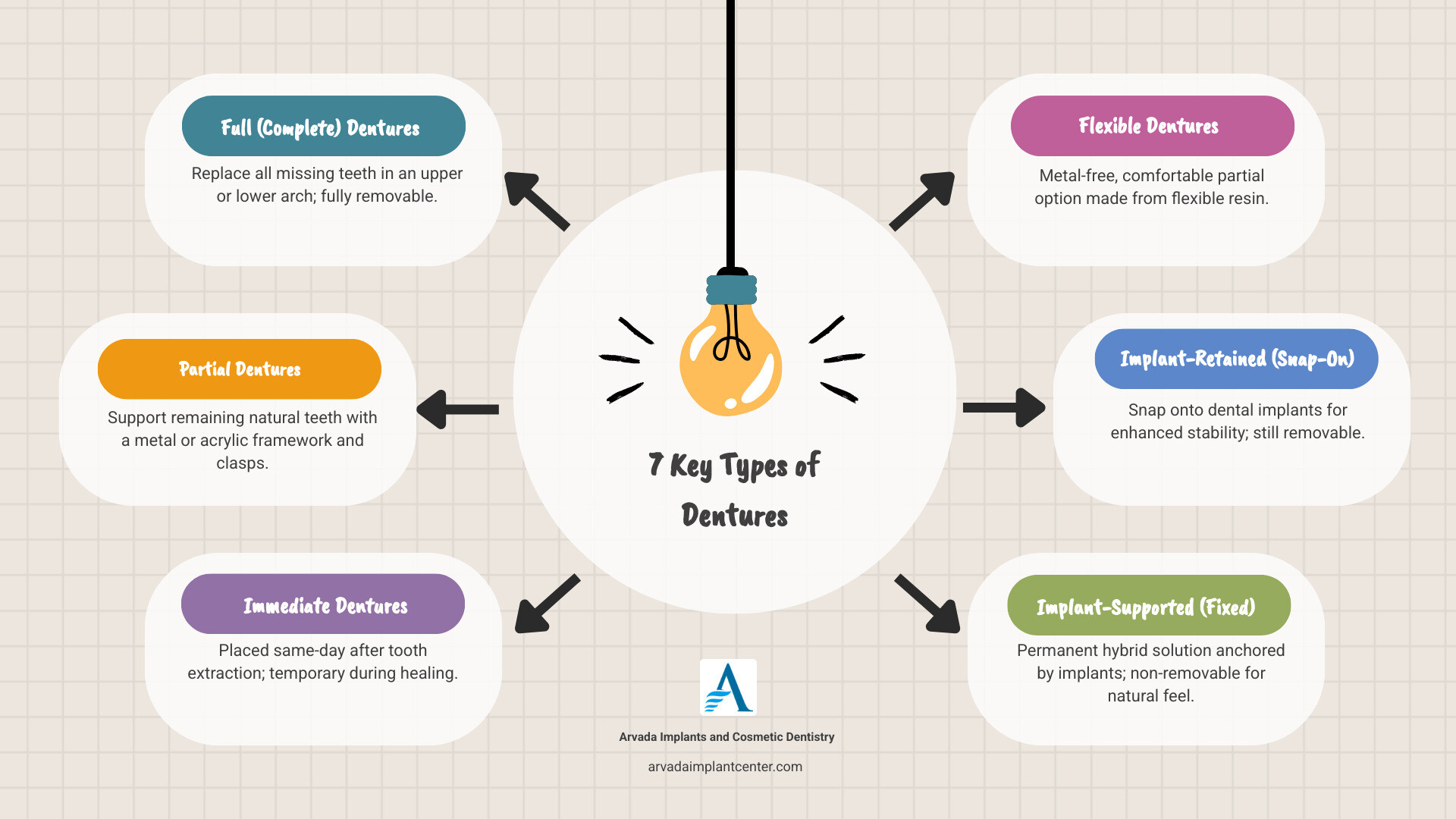
The main types of dentures are:
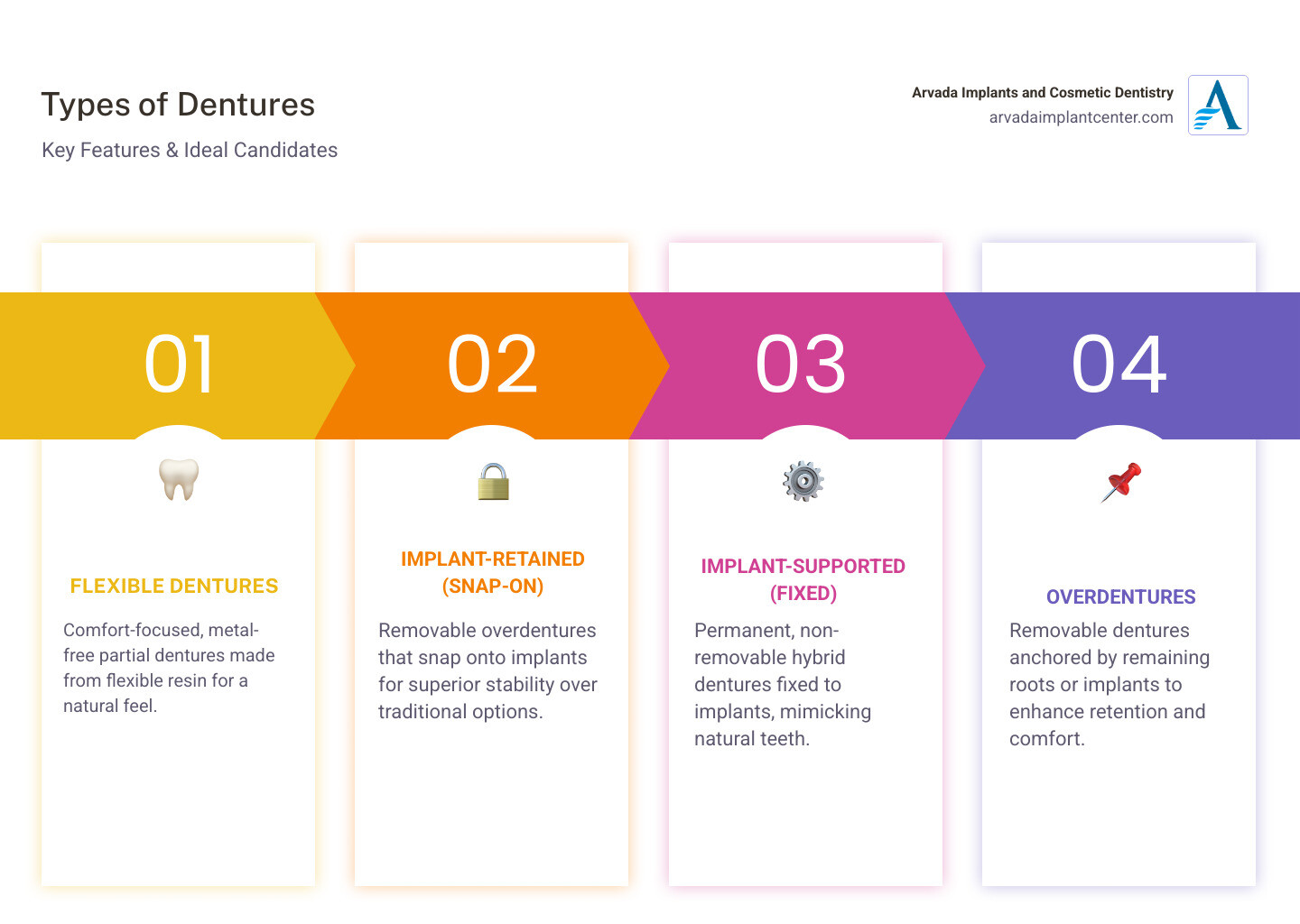
Type Best For Removable? Full (Complete) Dentures All teeth missing in upper or lower arch Yes Partial Dentures Some natural teeth remaining Yes Immediate Dentures Same-day placement after extraction Yes (temporary) Flexible Dentures Comfort-focused, metal-free partial option Yes Implant-Retained (Snap-On) Those wanting more stability than traditional Yes Implant-Supported (Fixed/Hybrid) Those wanting a permanent, non-removable solution No Overdentures Patients with remaining roots or implants as anchors Yes
Losing teeth is more common than most people think — and the options for replacing them have come a long way.
Whether you've lost one tooth or a full arch, modern dentures can restore your ability to eat, speak clearly, and smile without hesitation. They also do something many people overlook: they support your facial structure. Without teeth, the jawbone gradually shrinks — a condition sometimes called facial collapse — causing a sunken appearance over time.
The good news? There's a denture solution for almost every situation and budget.
But with so many options out there, it's easy to feel overwhelmed. Full dentures, partials, snap-ons, implant-supported — the terminology alone can be confusing. This guide breaks it all down in plain language so you can walk into your next dental appointment knowing exactly what questions to ask.
Understanding the Benefits and Candidates for Dentures

When we talk about dentures, many people still picture the "false teeth" of decades ago—perhaps sitting in a glass of water on a nightstand. But today’s prosthetics are a far cry from those bulky, ill-fitting plates. At Arvada Implants and Cosmetic Dentistry, we view dentures as life-changing tools that help you feel like yourself again.
According to the Cleveland Clinic, dentures are removable oral appliances designed to replace missing teeth and the surrounding tissues. But who exactly is a candidate? Generally, anyone missing several teeth or an entire arch is a candidate. However, the type of denture you need depends on your bone health and lifestyle.
The benefits go far beyond just looking good:
Chewing Function: Replacing teeth allows you to return to a varied diet, which is essential for proper nutrition.
Speech Clarity: Teeth play a vital role in articulating sounds. Dentures help eliminate the "lisp" or whistling sounds often caused by gaps.
Facial Support: When teeth are lost, the facial muscles can sag. Dentures provide the internal structure needed to keep your cheeks and lips looking full.
Bone Health & Prevention of Facial Collapse: While traditional dentures sit on the gums, implant-supported versions actually stimulate the jawbone, preventing the "sunken" look that occurs when the bone resorbs (shrinks) over time.
Exploring the Primary Types of Dentures

Choosing the right types of dentures is a personal journey. We offer a variety of Full & Partial Dentures to ensure every patient in Arvada finds a fit that matches their needs and budget.
Traditional Full and Partial Types of Dentures
Traditional dentures are the "standard" option.
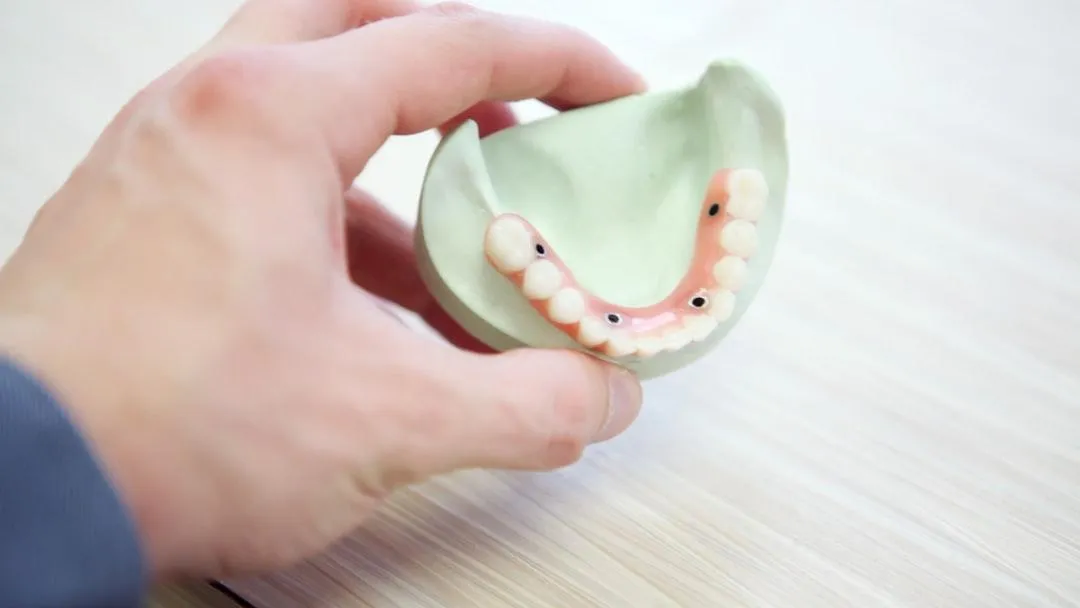
Full (Complete) Dentures: These are used when all teeth in either the upper or lower arch (or both) are missing. They consist of a flesh-colored acrylic resin base that fits over your gums. The upper denture covers the palate (the roof of your mouth), while the lower one is shaped like a horseshoe to leave room for your tongue. They stay in place through natural suction or a bit of denture adhesive.
Partial Dentures: If you still have some healthy natural teeth, a partial is the way to go. These use a metal framework (often cobalt-chrome) or a plastic base that clips onto your remaining teeth with metal clasps or precision attachments. As noted by InformedHealth.org, these are excellent for preventing your natural teeth from shifting into the gaps.
Immediate and Temporary Types of Dentures
No one wants to go weeks without teeth while their mouth heals. That is where immediate dentures come in.
Same-Day Placement: These are made before your teeth are extracted and placed the very same day.
The Healing Period: As your tissues heal and the swelling goes down, your gums and bone will naturally shrink.
Relining: Because of this shrinkage, immediate dentures usually require several adjustments or "relines" to maintain a snug fit. Think of them as a high-quality placeholder while your mouth prepares for its permanent prosthetic. WebMD suggests that it can take 8 to 12 weeks for the gums to heal enough for a final conventional denture.
Removable vs. Fixed: Understanding Implant-Supported Options
One of the most frequent questions we hear is about the difference between Snap-in Dentures vs All-on-4 Implants. This is the "Gold Standard" of modern tooth replacement.
Snap-In (Implant-Retained) Overdentures
These are a hybrid between traditional dentures and implants. We place two to four titanium posts in your jaw. The denture then "snaps" onto these posts.
Pros: Much more stable than suction; you don't have to worry about them falling out while laughing or eating.
Removability: You still take them out at night to clean them.
Fixed (Hybrid) Dentures and All-on-4
If you want something that feels exactly like natural teeth, fixed dentures are the answer. Using All-on-4 technology, a full arch of teeth is permanently screwed into four to six implants.
Permanence: Only a dentist can remove these. You brush them just like natural teeth.
Bone Density: These require sufficient bone density, though techniques like zygomatic implants (using the cheekbone) can help those with severe bone loss.
Feature Removable Dentures Fixed Implant Dentures Stability Moderate (may slip) High (no movement) Bone Preservation Low High Cleaning Take out and soak Brush like real teeth Cost Lower upfront Higher investment
The Denture Process: From Consultation to Fitting
Getting your new smile is a process of precision and artistry. At Arvada Implants and Cosmetic Dentistry, we don't believe in "one size fits all." Here is what you can expect:
Clinical Examination: We start with a thorough exam and 3D imaging to check your bone health and gum tissue.
Impressions & Models: We take detailed impressions of your jaw ridge. These are sent to a custom lab where technicians create stone models of your mouth.
Bite Registration: We use wax blocks to measure how your jaws relate to each other. This ensures your new teeth meet perfectly when you chew.
Wax Try-In: This is the fun part! We create a "draft" of your dentures in wax. You get to see the tooth shape, color, and "gum" detailing. We can make changes here before the final version is cast.
Final Delivery: Once the lab handcrafts your final set, we fit them and make any necessary adjustments.
According to InformedHealth.org, the goal is to ensure the "superstructure" (the teeth) is perfectly matched to your jaw shape for optimal speech and comfort.
Maintenance, Costs, and Life with Your New Smile
Once you have your new smile, you’ll want to keep it in top shape. Following our Denture Home Care Instructions is the best way to ensure your investment lasts.
Daily Maintenance
Cleaning: Use a non-abrasive brush and specific denture paste. Regular toothpaste is too scratchy and can create tiny grooves where bacteria hide.
Soaking: Always soak your dentures overnight in water or a mild solution. If they dry out, they can warp and lose their shape.
Rest: Give your gums at least 8 hours of rest every day to prevent irritation and fungal infections like denture stomatitis.
Understanding the Costs
The cost of dentures varies widely based on the materials used and the complexity of the case.
Traditional Full Dentures: On average, these cost around $1,968, though premium custom versions can range up to $6,500.
Implant-Supported Dentures: These average about $3,976, but the stability and bone health benefits often make them the preferred long-term choice.
Insurance: Most dental insurance plans cover about 50% of denture costs, as they are considered a "major restorative" procedure. We recommend checking with your provider to see your specific out-of-pocket factors.
Adapting to Your New Teeth
There is a learning curve!
The First Few Days: You might notice increased saliva or minor sore spots. This is normal.
Eating: Start with soft foods (think mashed potatoes and yogurt) and chew on both sides of your mouth simultaneously to keep the denture stable.
Speech: Practice reading aloud. If your dentures "click" while you talk, speak more slowly. Your cheek and tongue muscles need time to develop the "muscle memory" to hold the appliance in place.
Frequently Asked Questions
How long do dentures last before needing replacement?
On average, the lifespan of a denture is 7 to 10 years. Over time, the materials wear down, and more importantly, your jawbone changes shape. This can lead to a loose fit. You should have your dentures professionally relined every 1 to 2 years to keep them snug.
Is it safe to sleep with dentures in?
It is generally recommended to remove them for at least 8 hours a day. Sleeping with dentures can lead to gum irritation, accelerated bone loss, and bacterial growth. Your gum tissues need to be bathed in saliva to stay healthy.
When should I call my dentist for denture issues?
You should schedule an appointment if you notice:
Loose Fit: If they slip when you speak or eat.
Mouth Sores: Persistent red or painful spots on your gums.
Cracked Base: Never try to glue a broken denture at home; the chemicals are toxic and can ruin the prosthetic.
Clicking Sounds: This often indicates the fit needs adjustment.
Conclusion
At Arvada Implants and Cosmetic Dentistry, we take pride in providing personalized care and custom lab creations that look and feel natural. Whether you are interested in traditional plates or the life-changing stability of implants, we are here to guide you through every step of the journey in Arvada, CO.
Ready to reclaim your confidence? Learn more about our full and partial denture services and schedule your consultation today!