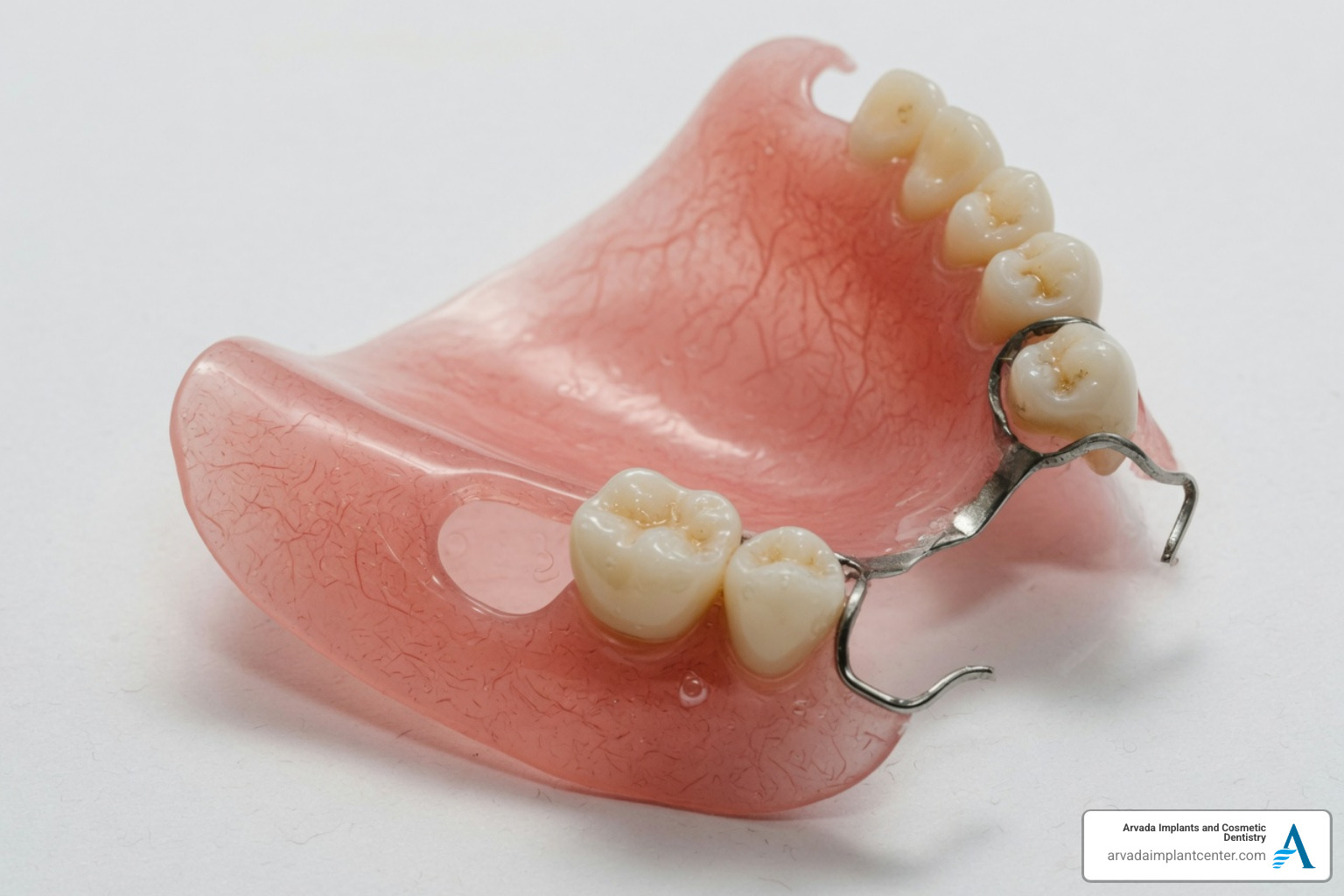
Why flexible partial dentures are the ultimate comfort choice
Missing Teeth? Here's Why Flexible Partial Dentures Are Worth Knowing About
Flexible partial dentures are removable tooth replacements made from soft, bendable thermoplastic materials — no metal wires, no rigid acrylic, and no adhesives required.
Here's a quick snapshot of what you need to know:
What they are: Custom-made partial dentures crafted from flexible nylon-based resins (like Valplast or DuraFlex) that adapt to the shape of your gums
Who they're for: People missing one or a few teeth who want a comfortable, natural-looking, metal-free solution
How long they last: 5–7 years with proper daily care
Cost range: Roughly $400–$3,000+ depending on provider, materials, and number of teeth replaced
Key advantage: Gum-colored clasps that blend in, no metal showing, and a lightweight fit that reduces sore spots
Key limitation: Harder to repair than traditional dentures and can harbor bacteria if not cleaned daily
Living with missing teeth isn't just a cosmetic issue. It affects how you eat, how you speak, and how confident you feel in everyday moments. For many people, the idea of getting dentures brings up real worries — the cost, the time, the discomfort, and the fear that they'll look obviously fake.
That's exactly where flexible partial dentures have changed the conversation.
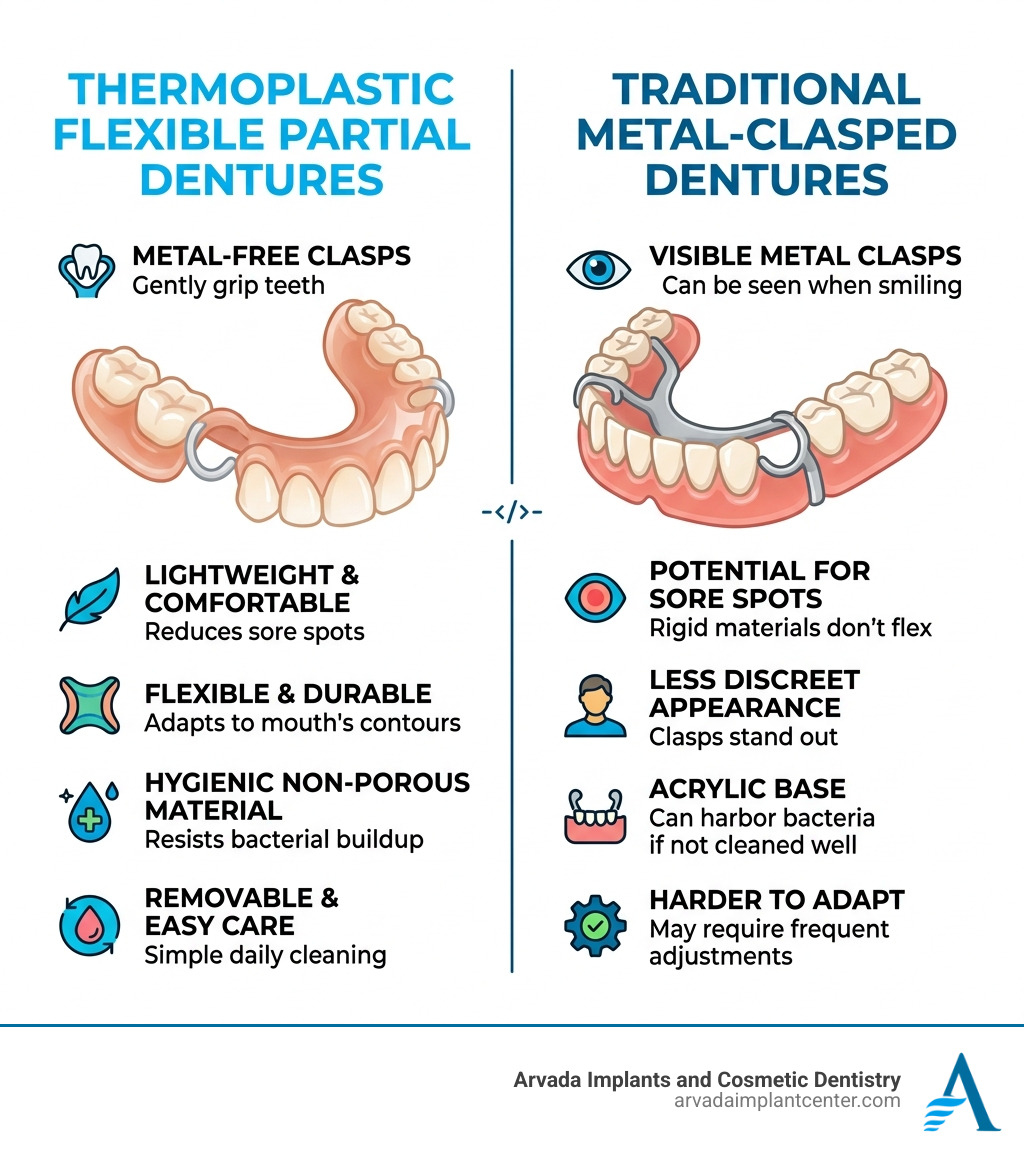
Unlike old-school metal-clasped partials, flexible dentures use soft, gum-colored thermoplastic materials that hug the natural contours of your mouth. Millions of patients have already made the switch — and for good reason. They're lighter, more discreet, and far more comfortable for everyday wear.
This guide walks through the top flexible partial denture options, how they compare, and what to expect if you're considering one.
What Are Flexible Partial Dentures and How Do They Work?
When we talk about flexible partial dentures, we are referring to a modern breakthrough in restorative dentistry. Traditional partials usually rely on a rigid acrylic base reinforced by a metal framework. While functional, these can feel heavy and sometimes "clunky" in the mouth.
Flexible versions work differently. Instead of using metal hooks to latch onto your remaining teeth, these dentures are made from a specialized thermoplastic resin. This material is incredibly strong yet thin enough to be flexible. Because the material is slightly translucent, it allows your natural gum color to show through, making the prosthetic virtually invisible once it’s in place.
At Arvada Implants and Cosmetic Dentistry, we see these as an excellent middle ground for patients who want the aesthetics of a bridge without the invasive preparation of adjacent teeth. They stay in place by gently "wrapping" around the necks of your natural teeth with gum-colored extensions, providing a secure fit without the need for irritating adhesives or unsightly silver wires.
For those interested in how these fit into the broader world of tooth replacement, you can find More info about full and partial dentures on our service pages. According to Flexible Partial Dentures | www.acedentalresource.com, the primary appeal is the lack of metal, which removes the risk of a "metallic" taste or sensitivity to temperature changes often associated with chrome cobalt.
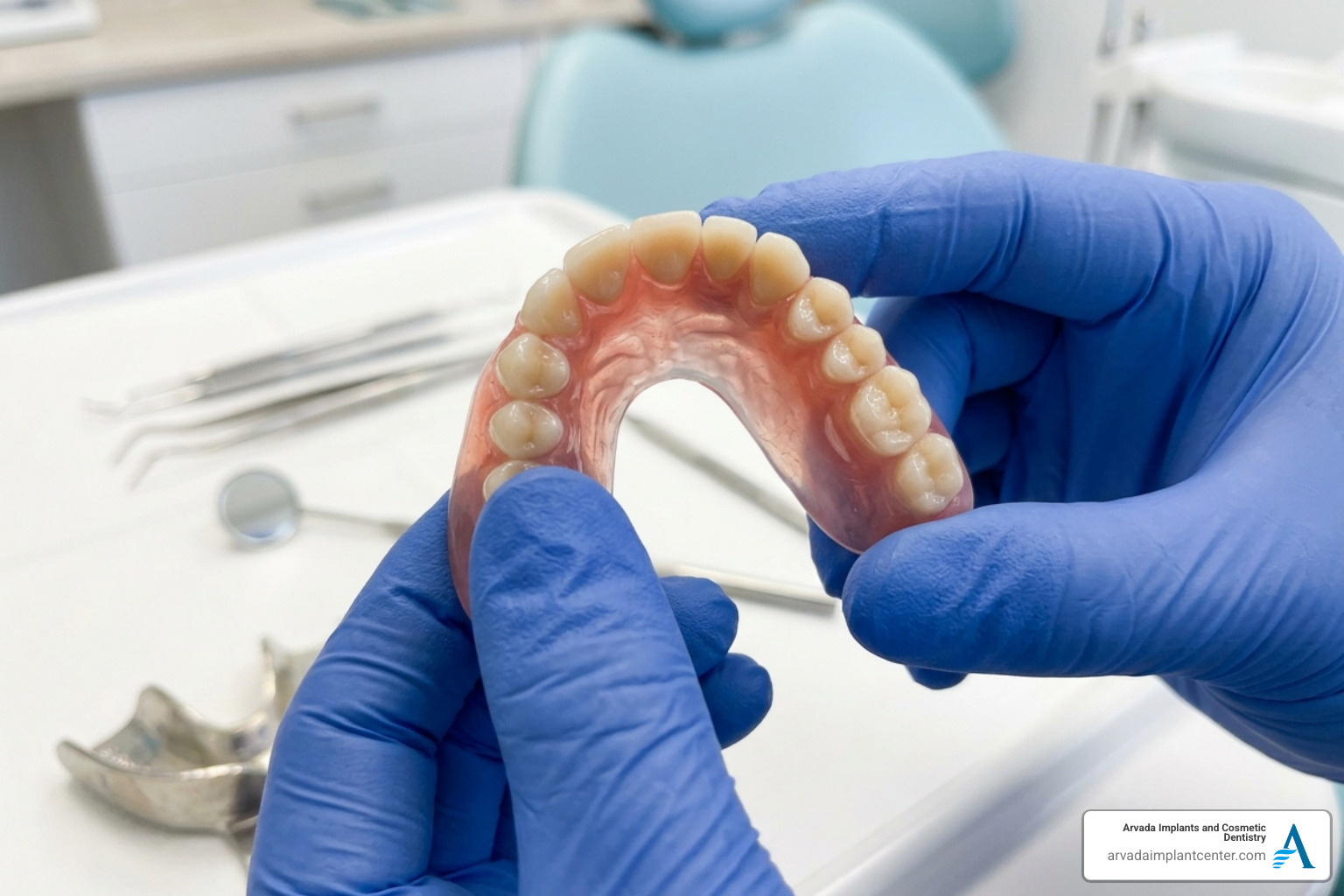
The Science Behind Flexible Partial Dentures Materials
The "magic" of these dentures lies in the biocompatible materials used to create them. In May 2026, the industry has narrowed down the most effective resins to a few key brands:
Valplast: Perhaps the most famous name in the industry. Valplast is a pressure-injected, nylon-based resin. It is exceptionally moisture-resistant, meaning it won't absorb odors or stains as easily as traditional porous acrylic.
TCS (Thermoplastic Comfort Systems): Often praised for being "unbreakable," TCS is a high-performance thermoplastic. It is hypoallergenic and contains no BPA, making it a safe choice for patients with chemical sensitivities.
DuraFlex: This material is known for being slightly easier for dentists to adjust in-office compared to pure nylon. it provides a dense surface that resists the buildup of plaque and bacteria.
These materials are all thermoplastic, meaning they can be heated and molded into precise shapes. This allows us to create a base that is much thinner than a standard denture, which significantly improves comfort and makes it easier for you to speak clearly from day one.
Advantages of Flexible Partial Dentures for Front Teeth
If you are missing teeth in the "smile zone" (your front teeth), aesthetics are likely your top priority. Flexible partial dentures excel here because they eliminate the "metal smile" look.
In traditional partials, metal clasps often have to wrap around the canine or premolar teeth to stay secure. If you have a wide smile, those metal bits are often visible. With a flexible partial, the clasps are made of the same pink material as the base. They blend into the gumline so seamlessly that most people won't even know you're wearing a prosthetic.
Furthermore, because the material is flexible, it can be designed to cover areas of gum recession. If your natural teeth appear "long" due to receding gums, the flexible base can act as a cosmetic gum mask, restoring a youthful appearance to your entire smile. This is why many consider them a top Guide to Flexible Partial Dentures in Denver and the surrounding Arvada areas.
Pros and Cons: Is a Flexible Option Right for You?
Choosing a dental restoration is a big decision. While we love the comfort of flexible options, they aren't a "magic bullet" for everyone. Let’s look at the data:
Feature Flexible Partial Dentures Traditional Acrylic Partials Material Thermoplastic Nylon/Resin Rigid Acrylic & Metal Aesthetics Excellent (No metal) Moderate (Visible clasps) Comfort High (Lightweight/Soft) Moderate (Can cause sore spots) Durability High (Difficult to break) Moderate (Can crack if dropped) Repairability Low (Often requires remake) High (Easy to add teeth/fix) Fit Accuracy 95% on first fit Requires multiple adjustments
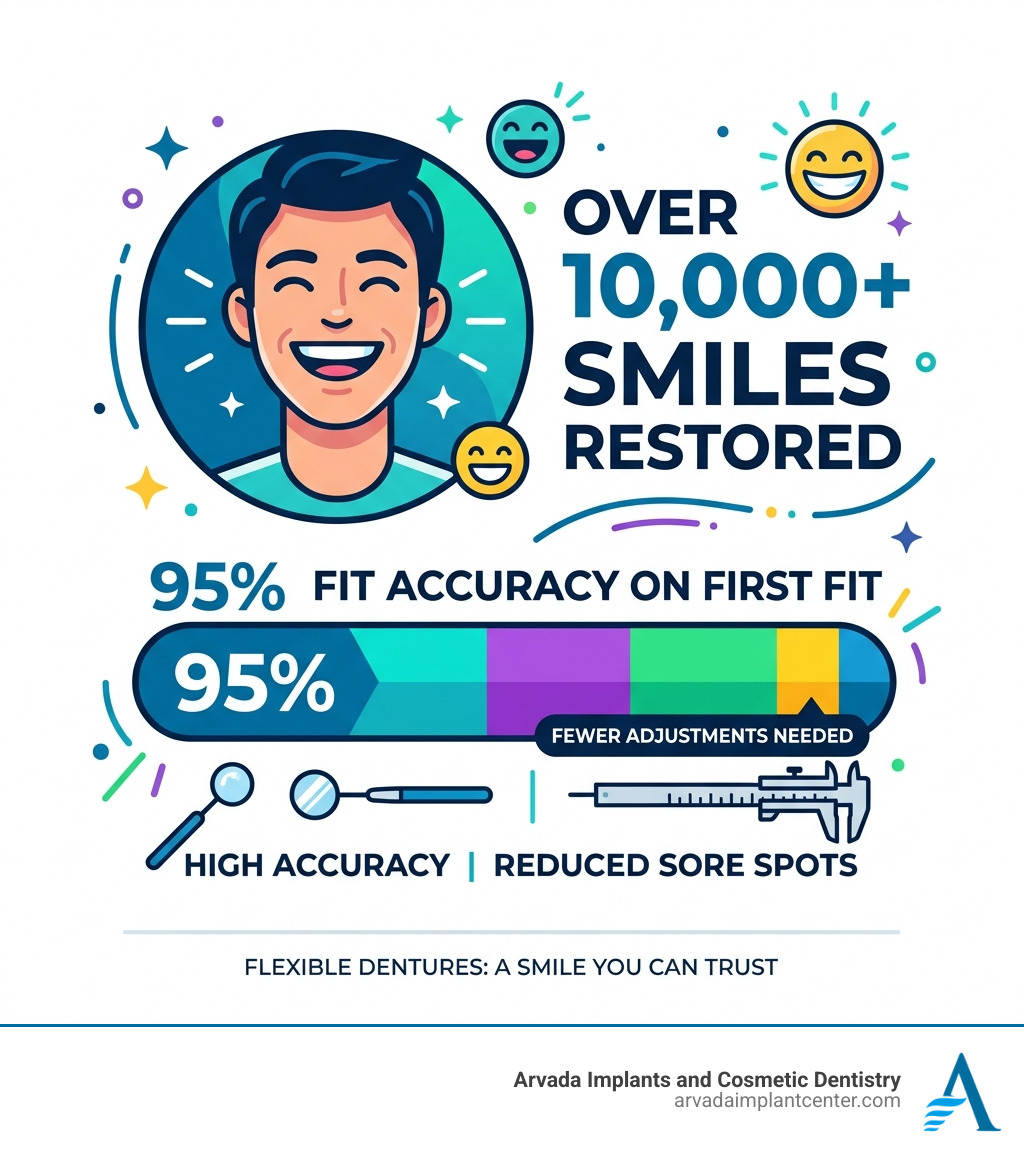
Over 10,000+ smiles have been restored using these modern techniques, and the high accuracy rate means fewer return trips to the office for "sore spot" adjustments. However, it is important to weigh these benefits against your specific oral health needs.
Ideal Candidates for Flexible Partial Dentures
Who benefits most from this technology? We typically recommend flexible partial dentures for:
Patients with Metal Allergies: If you have a sensitivity to nickel or chrome cobalt, a metal-free flexible partial is a lifesaver.
Irregularly Shaped Mouths: If your remaining teeth are tilted or have unusual shapes, a rigid metal denture might be difficult to insert. The "give" in a flexible material allows it to slide into place more easily.
Aesthetic-Conscious Individuals: If you are worried about people seeing your dental work, this is the most discreet removable option available.
First-Time Wearers: Because they are so lightweight, the adjustment period is usually much shorter than with traditional dentures.
If you have missing teeth but also have damaged natural teeth that need repair, you might want to look into More info about crowns and bridges to see if a fixed solution is more appropriate for your situation.
Potential Drawbacks to Consider
We believe in total transparency. There are a few reasons why a flexible partial might not be the best choice:
Bacterial Buildup: The material is slightly more porous than metal. If you don't follow a strict cleaning routine, it can harbor bacteria, leading to gum irritation or "denture breath."
Repair Challenges: Unlike acrylic dentures, you usually cannot "add" a tooth to a flexible partial if you lose another natural tooth later. In most cases, if your mouth changes, you’ll need an entirely new denture.
Staining: While modern resins are stain-resistant, they aren't stain-proof. Frequent consumption of coffee, red wine, or tobacco can dull the finish over time.
Bone Health: Like all removable dentures, these sit on top of the gums. They do not stimulate the jawbone like dental implants do, which means the bone underneath will continue to shrink slowly over time.
The Process and Cost of Getting Your New Smile
Getting fitted for your flexible partial dentures at Arvada Implants and Cosmetic Dentistry is a streamlined, comfortable process. We use the latest technology to ensure that your new teeth look and feel like they belong in your mouth.
The process generally looks like this:
The Consultation: We examine your remaining teeth and gums to ensure they are healthy enough to support a partial.
The Impressions: We take highly accurate impressions of your mouth. In many cases, we use 3D digital scanning to create a "virtual map" of your smile. This eliminates the need for the messy "goop" used in traditional molds.
The Lab Phase: Your impressions are sent to a specialized lab where technicians heat-mold the thermoplastic resin to your exact specifications.
The Fitting: About 2–3 weeks later, you return to our Arvada office. We check the fit, ensure your bite is aligned, and make any minor adjustments needed.
For a full look at our restorative capabilities, check out More info about our services.
Understanding the Cost of Flexible Partial Dentures in 2026
As of May 2026, the cost for a custom flexible partial denture typically ranges from $1,000 to $3,000 per arch when performed in a professional dental setting. While you may see "at-home" kits advertised online for significantly less, these often lack the professional oversight required to ensure your bite is correctly aligned, which can lead to long-term jaw pain (TMJ issues).
Factors that influence the price include:
The number of teeth being replaced.
The specific material used (Valplast vs. DuraFlex).
Any preparatory work needed, such as fillings or deep cleanings on supporting teeth.
While the upfront cost is higher than some traditional acrylic options, the 5–7 year lifespan and the lack of need for expensive adhesives often make it a better long-term value. We also offer various payment plans to make this investment more manageable. If you are looking for a more permanent, albeit higher-investment solution, you can find More info about dental implants on our site.
Maintenance and Care for Long-Lasting Comfort
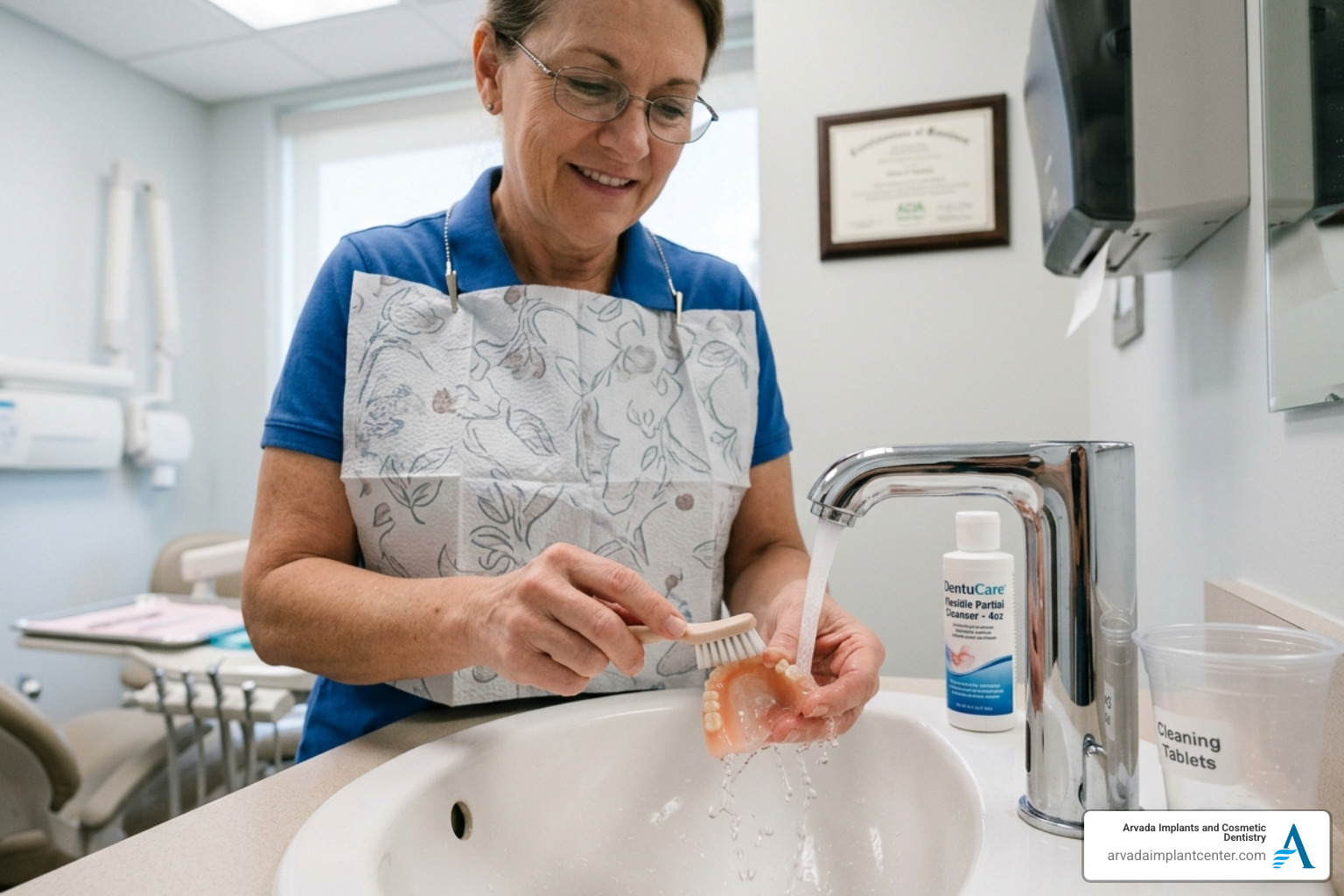
To get the full 7 years out of your flexible partial dentures, you have to treat them right. Because the material is unique, you can't just scrub them with regular toothpaste. Toothpaste is abrasive and will create microscopic scratches on the flexible surface, which then become "hotels" for bacteria and stains.
Our Recommended Daily Routine:
Rinse After Eating: After every meal, take the partial out and rinse it under warm water to remove loose food particles.
Use a Soft Brush: Use a brush specifically designed for dentures. You can use mild soap or a specialized denture paste, but avoid standard whitening toothpastes.
The Overnight Soak: This is critical. Flexible materials need to stay hydrated to maintain their shape. Soak them overnight in a professional-grade cleanser like Val-Clean.
Oral Hygiene: Don't forget your natural teeth! Brush and floss your remaining teeth twice a day to prevent gum disease, which could compromise the teeth that hold your partial in place.
For a detailed printable guide, visit our Denture Home Care Instructions page.
Frequently Asked Questions about Flexible Partials
Can you eat and speak normally with flexible dentures?
Yes! However, there is a "learning curve." For the first week, we recommend eating softer foods and cutting your food into smaller-than-usual pieces. This helps your brain and mouth muscles adjust to the new sensation. For speaking, try reading aloud to yourself at home. You'll find that because the material is so thin, you'll be back to your normal speech patterns much faster than you would with bulky acrylic dentures.
How long do flexible partial dentures typically last?
With proper care, you can expect them to last 5 to 7 years. The material itself is incredibly durable and resistant to breaking if dropped. However, your mouth changes over time. Your bone and gums will naturally shift, and eventually, the denture will no longer fit perfectly. The ADA recommends an evaluation for replacement every 5 years to ensure you aren't putting undue stress on your gums.
Are flexible partials better than dental implants?
"Better" depends on your goals. Flexible partial dentures are a fantastic, non-invasive, and affordable way to restore your smile. However, they are still removable. Dental implants are a permanent solution that actually replaces the tooth root, which prevents bone loss in the jaw. Implants restore about 98% of natural chewing power, whereas partial dentures restore about 20-40%. For a deeper dive into these differences, see our comparison of Snap-in Dentures vs All-on-4 Implants.
Conclusion
At Arvada Implants and Cosmetic Dentistry, we believe that everyone deserves a smile they can be proud of without sacrificing comfort. Flexible partial dentures have revolutionized the way we help our neighbors in Arvada, CO, regain their confidence. By using advanced thermoplastic resins, we can provide a lightweight, metal-free, and virtually invisible solution that fits your lifestyle.
Whether you are looking for a temporary aesthetic fix or a long-term comfortable prosthetic, our team is here to provide personalized, custom lab-created solutions tailored to your unique mouth. Don't let missing teeth hold you back from laughing, eating, and living your life to the fullest.
Ready to see if flexible partials are the right fit for you? Get your custom flexible partial dentures today by scheduling a consultation with our expert team. We look forward to helping you smile again!