Don't Rush the Gush: A Week-by-Week All-On-4 Recovery Timeline
What to Expect: The All-On-4 Recovery Time at a Glance
All-on-4 recovery time is one of the most common questions patients have before committing to full-arch restoration — and the honest answer is that it happens in stages.
Here's a quick breakdown so you know exactly what you're signing up for:
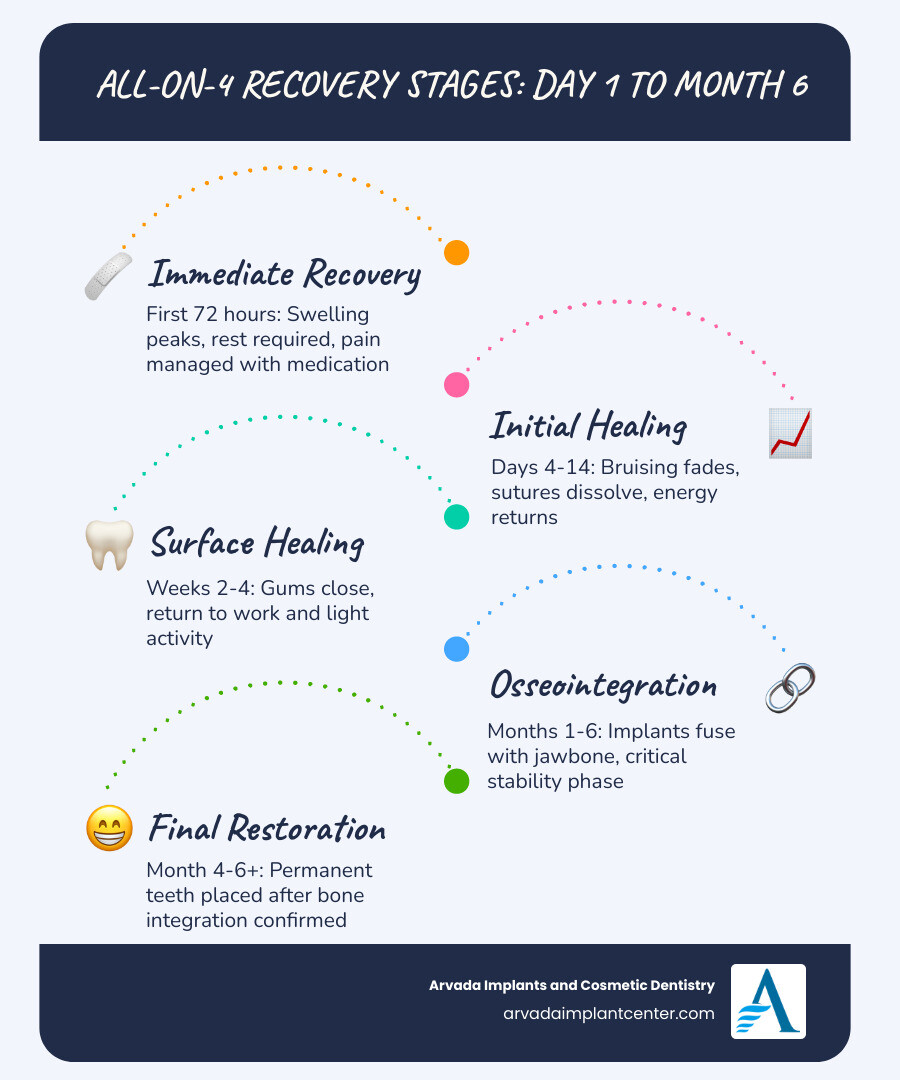
Phase Timeframe What's Happening Immediate recovery First 72 hours Swelling peaks, rest required, pain managed with medication Initial healing Days 4-14 Bruising fades, sutures dissolve, energy returns Surface healing Weeks 2-4 Gums close, most patients return to work and light activity Osseointegration Months 1-6 Implants fuse with jawbone — the most critical phase Final restoration Month 4-6+ Permanent teeth placed once bone integration is confirmed
The short version: Most people feel like themselves again within 1-2 weeks. But full healing — the kind where your jawbone has firmly locked around those titanium implants — takes 3 to 6 months.
That biological process is called osseointegration, and it's the reason the timeline is measured in months, not days.
The good news? You won't be sitting at home with no teeth. Most patients leave surgery the same day with a functional temporary set of teeth already in place. The recovery happens largely in the background while you get on with your life.
That said, what you do in those early days and weeks matters a lot. Rushing the process — eating the wrong foods, skipping rest, or returning to the gym too soon — can put your implants at risk before they've had a chance to stabilize.
This guide walks you through every stage, week by week, so you know exactly what to expect and how to protect your investment in a permanent smile.
Learn more about All-on-4 Dental Implants at Arvada Implants and Cosmetic Dentistry
The Immediate Aftermath: The First 72 Hours
The first three days following your All-on-4 surgery are the most intense, but they are also the most predictable. When you leave our office in Arvada, the sedation will typically take about 4 to 5 hours to wear off completely. During this time, you’ll feel a bit "loopy" and numb, which is why having a pre-arranged ride home is mandatory.

Managing the "Puffy" Phase
Swelling is a natural part of the body's healing response. It typically peaks between 48 and 72 hours post-surgery. You might feel like you’ve stored a week’s worth of snacks in your cheeks, but don't worry—this is normal. To manage this:
Cold Compresses: Apply ice packs to your cheeks in 15-to-20-minute intervals for the first 24 hours.
Head Elevation: Gravity is your best friend here. Sleep with your head elevated on 2 or 3 pillows. This prevents fluid from pooling in your facial tissues and can significantly reduce the "throbbing" sensation.
Rest is Mandatory: We recommend at least 72 hours of complete rest. This isn't the time to catch up on yard work or heavy cleaning. Your body needs to direct all its energy toward the surgical sites.
Pain Management
We will provide you with a specific medication schedule. The key to a smooth all on 4 recovery time is staying ahead of the discomfort. Don't wait for the pain to become "unbearable" before taking your prescribed dose. Most patients find that a combination of prescribed relievers and over-the-counter anti-inflammatories keeps the discomfort well within a manageable range.
Explore Our Full Range of Dental Services
Navigating the All-on-4 Recovery Time: Week-by-Week Milestones
Once you clear the 72-hour hurdle, the recovery moves into a more "behind-the-scenes" phase. You’ll start feeling more like yourself, but the biological work is just beginning.
Week 1: The Turning Point
By day four or five, the swelling should begin to subside. You may notice some bruising—yellow, green, or even blue tinges on the skin near the surgical sites. This is perfectly normal and usually fades within a week. If you had sutures (stitches) placed, they may begin to dissolve or feel slightly "itchy" as the gum tissue tightens.
Week 2-4: Surface Healing
This is often called the "Danger Zone" for overconfidence. By the second week, most patients feel good enough to return to office-based work. Your gums will appear pink and healthy again. However, the implants are currently in a delicate state. While the surface looks healed, the bone hasn't fully fused yet. You must continue to be gentle with your new teeth.
Month 3-6: The Magic of Osseointegration
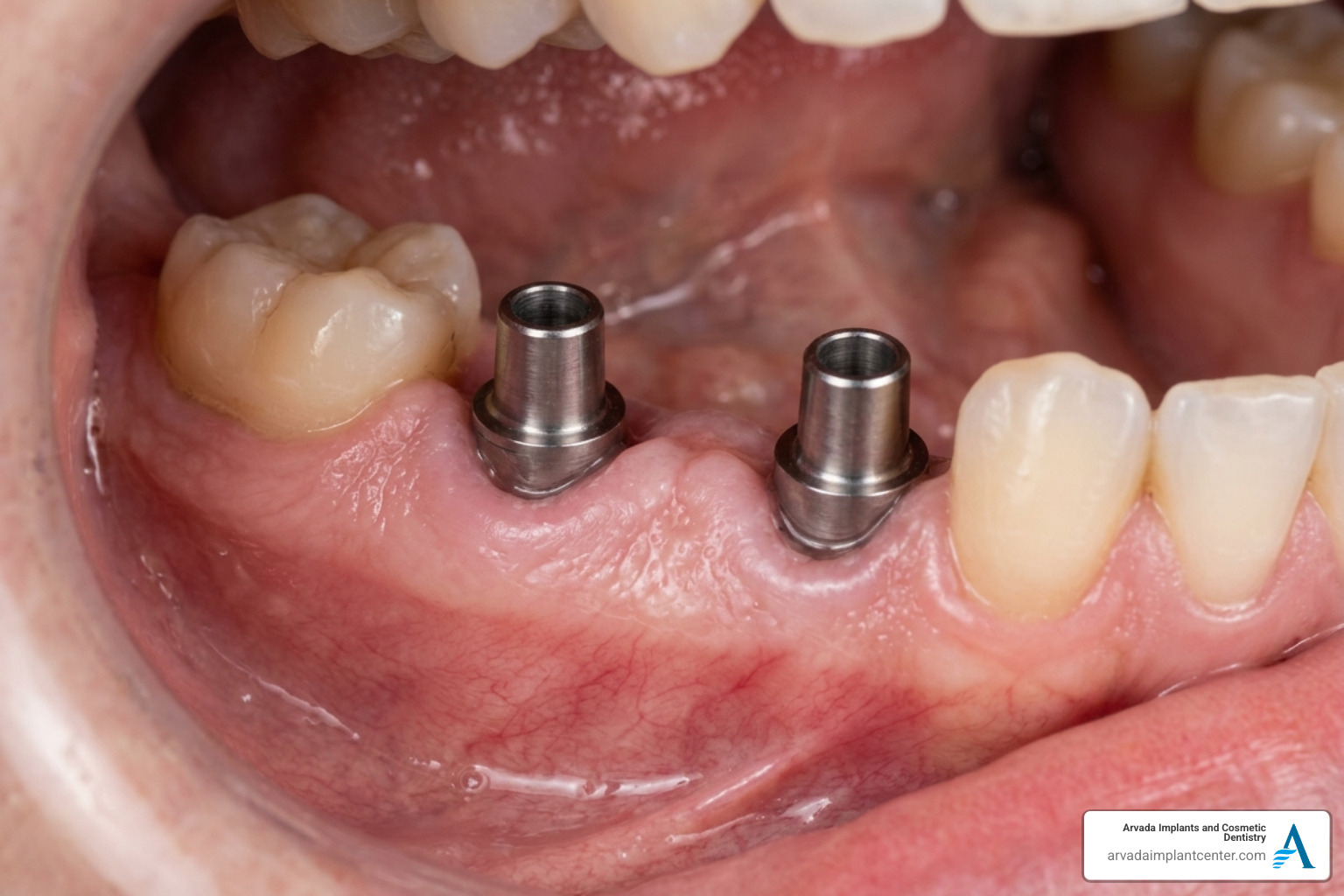
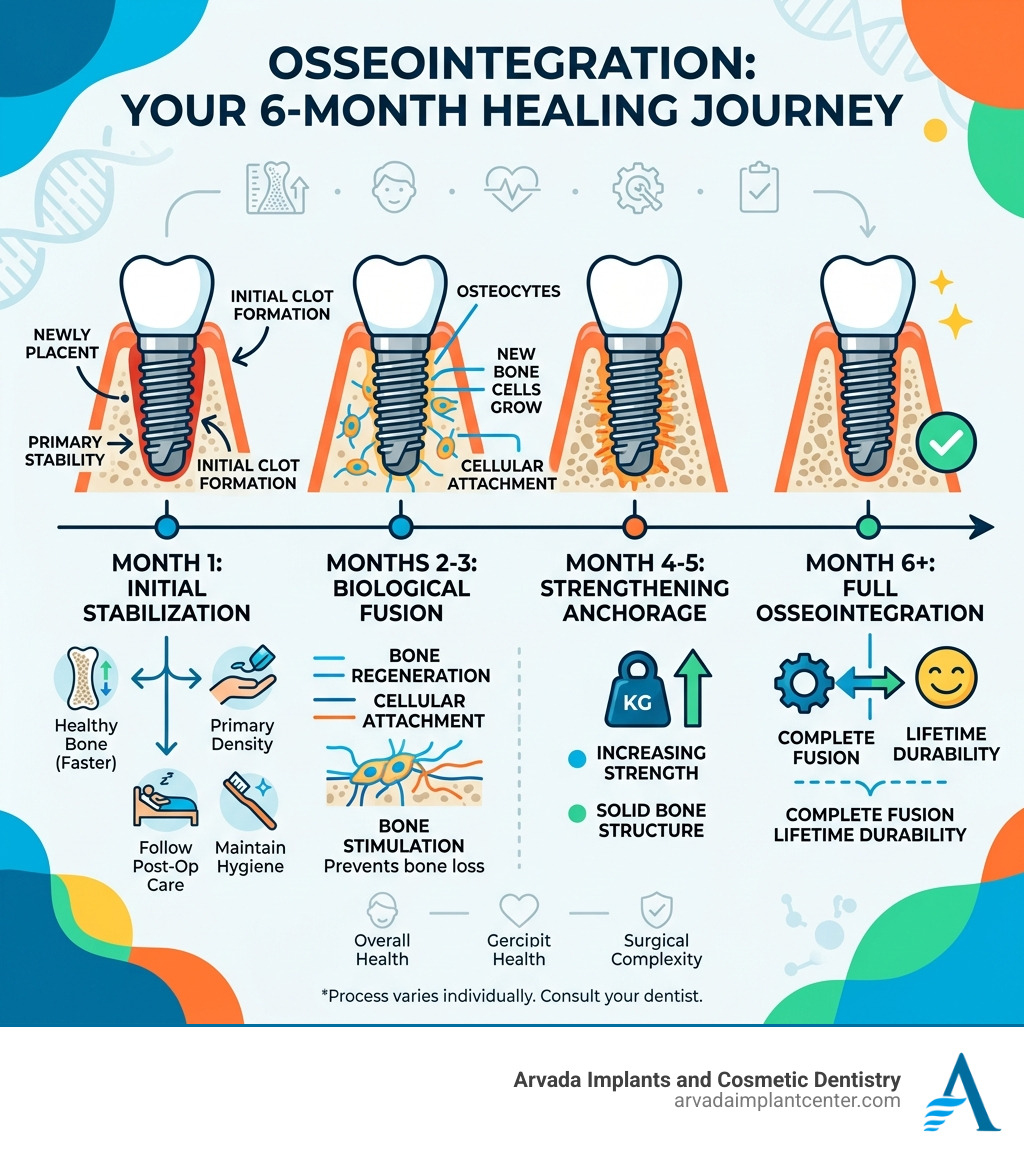
This is the most critical phase of the all on 4 recovery time. Osseointegration is the process where your jawbone literally grows into and fuses with the titanium implant posts. This takes between 3 to 6 months. During this time, the implants are becoming a permanent part of your anatomy. If this process is interrupted by excessive pressure (like chewing a steak too early), the implants could fail.
Read our Dental Implants Overview
Maintaining Oral Hygiene During All-on-4 Recovery Time
Keeping the surgical site clean is non-negotiable for preventing infection. However, you can't just go in with an electric toothbrush on day two.
The First 24 Hours: Avoid rinsing or spitting.
Saltwater Rinses: After the first day, gentle warm saltwater rinses (about 1/2 teaspoon of salt in a cup of water) help keep the area clean and soothe the tissues. Do this after every meal.
Soft-Bristled Brush: Use an ultra-soft manual toothbrush to gently clean the prosthetic and the gum line, avoiding the actual incision sites for the first few days.
No Straws: The suction created by a straw can dislodge blood clots and lead to a painful condition called dry socket. Skip the straws for at least a week.
Antibacterial Mouthwash: We may prescribe a specific alcohol-free antimicrobial rinse to keep bacteria levels low without irritating the healing tissue.
View Detailed Implants Home Care Instructions
Temporary vs. Permanent Teeth in the All-on-4 Recovery Time
One of the best parts of the All-on-4 procedure is that you walk out with a smile. But it’s important to understand that your first set of teeth is a "provisional" or temporary bridge.
The Provisional Bridge: Usually made of a high-quality acrylic, this bridge is designed to be lightweight. It allows your gums to heal and your bone to integrate without being subjected to the full force of a heavy, permanent bridge. It looks great, but it is not as strong as the final version.
The Final Restoration: Once we confirm that osseointegration is complete (usually at the 4-to-6-month mark), we replace the temporary bridge with your permanent one. This final set is often reinforced with titanium or made of high-strength zirconia.
Bite Adjustments: As your gums shrink and heal over the first few months, your "bite" might feel different. We will see you for several follow-up appointments to make minor adjustments to ensure your teeth meet perfectly.
Compare Snap-in Dentures vs All-on-4 Implants
Essential Diet and Lifestyle Adjustments for Healing
What you eat directly impacts how fast you heal. Think of your diet during the all on 4 recovery time as "fuel for bone growth."
Stage Duration Recommended Foods Foods to Avoid Liquid Phase Days 1-2 Protein shakes, smoothies (no straws), lukewarm broth, Greek yogurt Anything hot, spicy, or carbonated Very Soft Phase Days 3-14 Mashed potatoes, scrambled eggs, flaky fish, avocado, hummus Crunchy bread, seeds, rice Soft Solid Phase Weeks 2-12 Pasta, soft-cooked vegetables, tofu, ground meats Steak, apples, nuts, hard candy Normal Diet After Month 4-6 Most foods (once cleared by your dentist) Extremely hard items (ice, pens)
Nutritional Support
Your body needs specific building blocks to create new bone:
Vitamin C: Essential for collagen production and wound healing.
Calcium and Vitamin D: The dynamic duo for bone density.
Protein: Necessary for tissue repair.
Smoking Cessation: The Non-Negotiable
If there is one thing that can ruin your all on 4 recovery time, it’s smoking. Nicotine constricts blood vessels, which starves the surgical site of the oxygen and nutrients it needs to heal. Statistics show that smokers have a significantly higher risk of implant failure. We recommend stopping at least one week before surgery and for the entire duration of the osseointegration phase.
Learn about our Advanced Dental Technology
Factors That Influence Your Individual Healing Journey
No two patients heal at exactly the same rate. Several factors can shift your timeline slightly:
Bone Density: If you had high bone density to begin with, your implants might stabilize faster. If you required bone grafting, your total recovery time might extend by a month or two.
Age: While age isn't a barrier to All-on-4, metabolic rates do slow down as we get older, which can mean a slightly longer osseointegration period.
Overall Health: Conditions like controlled diabetes or autoimmune disorders can influence the body's inflammatory response and healing speed.
Surgical Complexity: A full-mouth restoration (upper and lower arches) is a larger "hit" to the system than a single arch, potentially requiring a few extra days of initial rest.
Patient Compliance: This is the big one. Patients who follow the "no-chewing" rule and maintain perfect hygiene almost always heal faster and with fewer complications.
More on Post-Operative Care and Expectations
Frequently Asked Questions about All-on-4 Recovery
When can I return to work and exercise after surgery?
Most patients return to non-strenuous office work within 2 to 3 days. However, if your job involves heavy lifting or intense physical labor, you should wait at least a full week. As for exercise, keep it to light walking for the first 7 to 10 days. Avoid running, weightlifting, or yoga (where your head is inverted) for at least two weeks, as these can increase blood pressure and cause the surgical sites to throb or bleed.
What are the warning signs that I should contact my dentist?
While minor discomfort and swelling are normal, you should call us immediately if you experience:
A fever over 101°F.
Excessive bleeding that doesn't stop with firm pressure.
A temporary bridge that feels loose or "wobbly."
Persistent, throbbing pain that isn't helped by medication.
Severe nausea or signs of an allergic reaction to medications.
How long does the osseointegration process take?
The biological fusion of titanium to bone typically takes a 3-to-6-month window. During this time, the jawbone is stimulated by the implants, which actually helps prevent the bone loss commonly seen with traditional dentures. This phase is what provides the long-term durability that makes All-on-4 a "lifetime" solution for many.
Conclusion
At Arvada Implants and Cosmetic Dentistry, we believe that a "Smile in a Day" is a life-changing event, but the journey doesn't end when you leave the chair. The all on 4 recovery time is a steady, predictable process that requires a partnership between you and your dental team.
By respecting the timeline, fueling your body with the right nutrients, and giving the osseointegration process the time it needs, you are ensuring the success of your investment. We pride ourselves on providing affordable, personalized treatments with custom lab creations right here in Arvada, ensuring your unique smile looks as natural as it feels.
Ready to start your journey toward a permanent, confident smile? Don't let the recovery time hold you back—most patients find it much more manageable than they ever expected.
Schedule your All-on-4 consultation today at Arvada Implants and Cosmetic Dentistry