The No-Nonsense Guide to At Home Teeth Straighteners
Are At-Home Teeth Straighteners Worth It? Here's What You Need to Know First
At-home teeth straighteners are mail-order clear aligner kits that let you straighten mild to moderate tooth misalignment without visiting an orthodontist's office. Here's a quick overview of how they work and what to expect:
How at-home aligners work - at a glance:
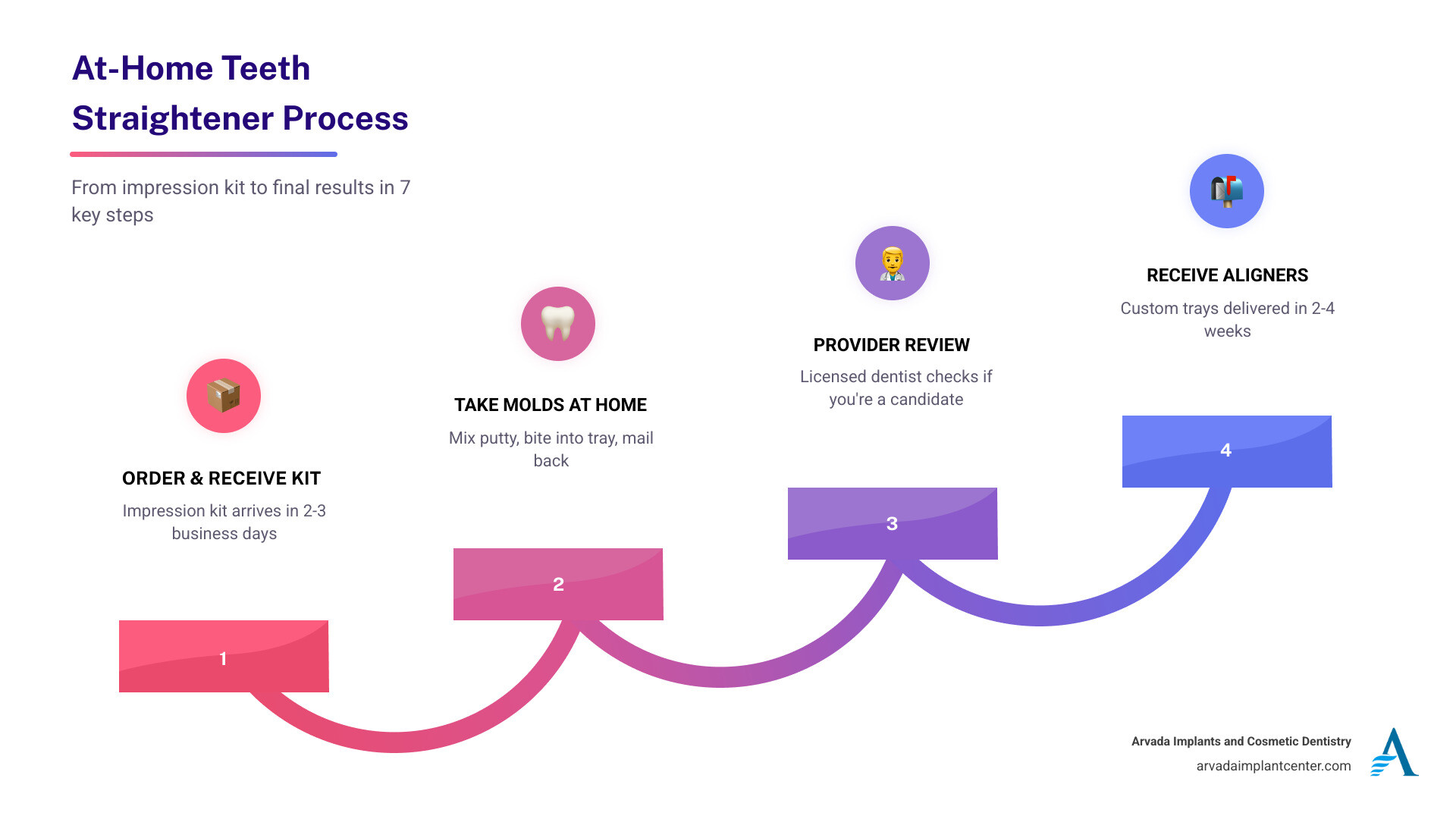
Step What Happens 1. Order impression kit Kit arrives in 2-3 business days 2. Take molds at home Mix putty, bite into tray, mail back 3. Provider reviews case Licensed dentist checks if you're a candidate 4. Receive custom aligners Delivered to your door in 2-4 weeks 5. Wear aligners daily 10-22 hours/day depending on plan 6. Complete treatment Average 2-8 months for mild cases 7. Wear retainers Required after treatment to hold results
Who they're best for: Adults with mild spacing, crowding, or minor relapse after previous orthodontic treatment.
Who should skip them: Anyone with bite issues, gum disease, active decay, missing teeth, or moderate-to-complex misalignment.
The appeal is obvious. At-home aligners can cost as little as $550-$1,000 compared to $5,000 or more for traditional braces. There are no clinic visits, no waiting rooms, and treatment often takes just a few months. For people nervous about dental offices - or watching their budget closely - that sounds like a dream.
But there's a lot the ads don't tell you.
Recent problems in the mail-order aligner industry have shown how risky remote-only treatment can become when support disappears mid-treatment. That does not mean all at-home aligners are bad. It means you need to know what you're getting into before you order.
I'm Dr. Tariq Sawaqed, a cosmetic and implant dentist with over 20 years of clinical experience, and I regularly see patients who come to us after a frustrating experience with at-home teeth straighteners - sometimes needing costly corrective care that could have been avoided with the right information upfront. In this guide, I'll walk you through everything you need to make a smart, safe decision for your smile.
For background on how tooth movement works in orthodontics, see Orthodontics on Wikipedia.
What Are at Home Teeth Straighteners and How Do They Work?
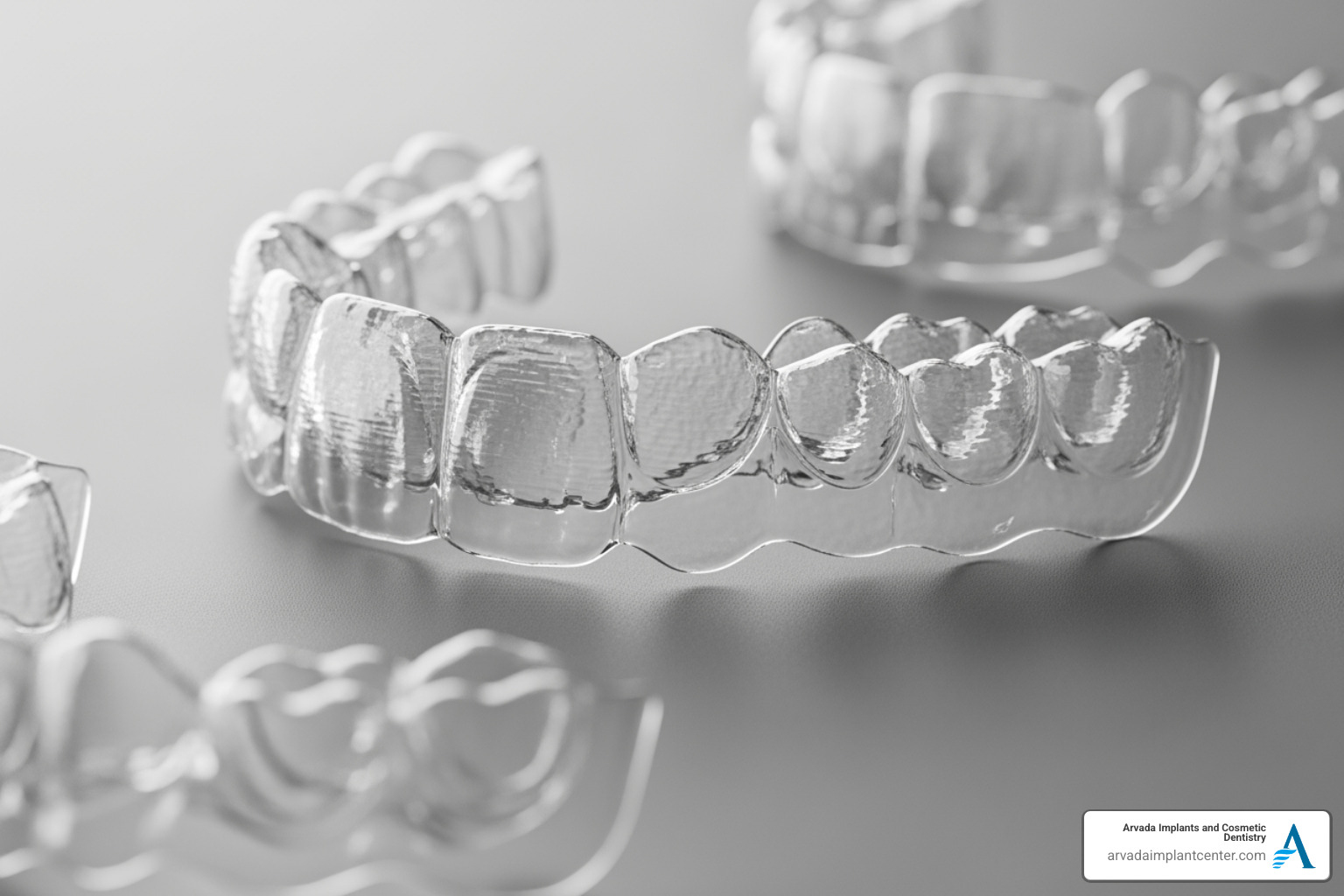
At-home teeth straighteners are clear plastic trays designed to move teeth little by little. They are similar in appearance to in-office clear aligners, but the big difference is how treatment is planned and monitored.
Instead of visiting a dentist or orthodontist for a scan and exam, you usually start with an impression kit or remote scan. The company uses that information to create a digital treatment plan and mails a series of trays to your home.
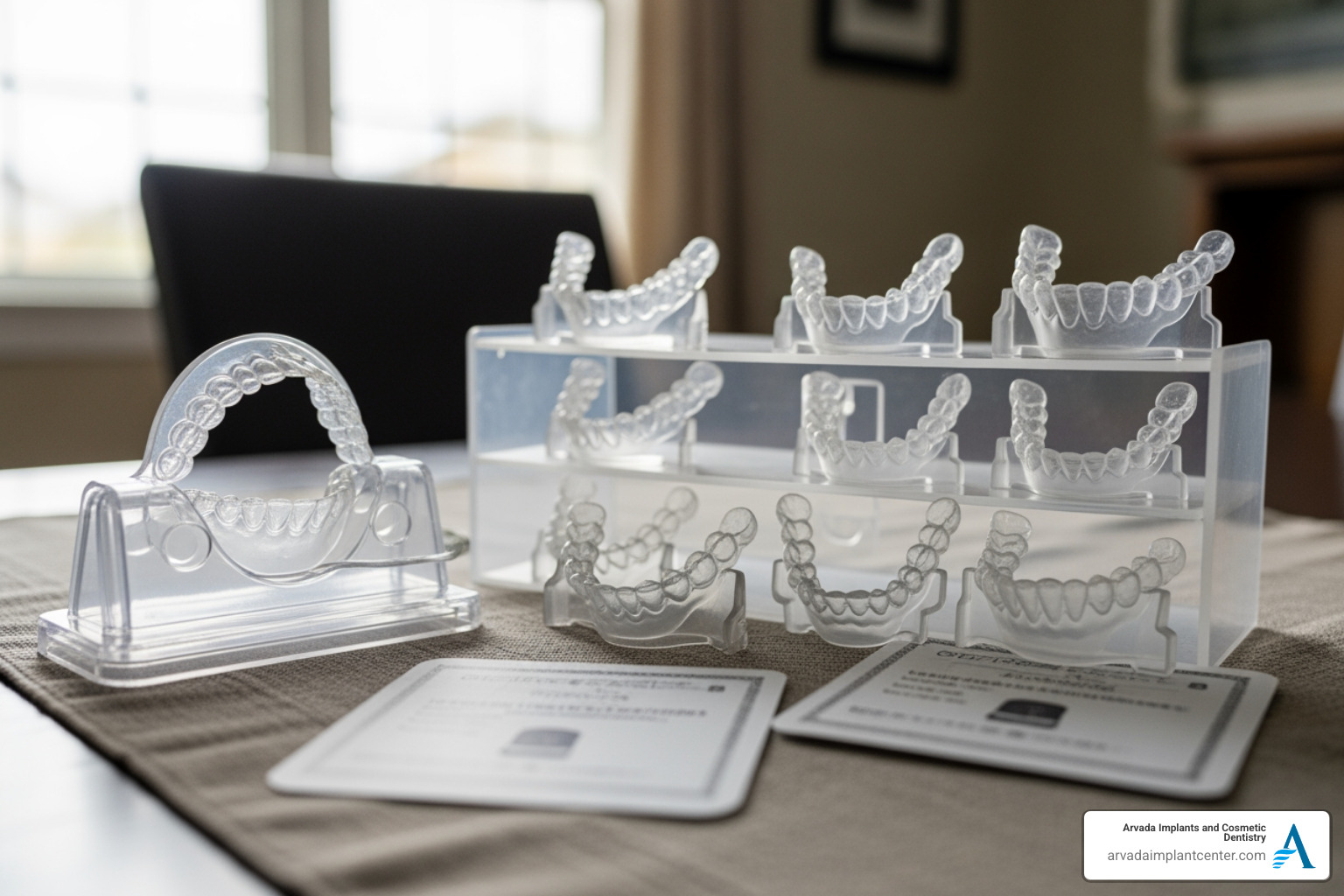
Each tray applies gentle pressure to specific teeth. That pressure encourages movement in very small increments, usually fractions of a millimeter at a time. After you finish one tray, you switch to the next.
How at home teeth straighteners move teeth step by step
The basic mechanics are simple:
Your current tooth position is recorded with impressions or a scan.
Software maps out a sequence of small tooth movements.
A set of trays is made to match each stage.
You wear each set for the recommended number of days.
Teeth gradually shift to fit the next tray.
Most systems require wear for 18 to 22 hours a day. Some nighttime systems advertise 8 to 10 hours nightly, but they usually take longer. If you skip wear time, your teeth may stop tracking with the trays. In plain English: the plastic can only do its job if it is actually on your teeth.
The usual process: impressions, approval, trays, monitoring
Most mail-order systems follow a similar sequence:
Order an impression kit or remote scan
Take putty molds and upload photos
Wait for a provider review and candidacy decision
Approve a digital smile preview
Receive trays by mail
Upload progress photos during treatment
Buy retainers after treatment ends
Timelines vary, but many companies advertise treatment in 2 to 8 months for mild cases. Some promote visible changes within a few weeks or a couple of months. That can happen, but the fine print matters: faster does not always mean better, and short treatment windows usually apply only to minor corrections.
What at-home aligners can usually fix — and what they can’t
At-home aligners may be reasonable for:
Mild spacing
Mild crowding
Small rotations
Minor relapse after braces or aligners
They are not a great fit for many more complicated cases, including:
Significant overbite, underbite, crossbite, or open bite
Severe crowding
Teeth that need attachments for better control
Cases needing elastics
Cases needing enamel reshaping or other in-office adjustments
Situations involving missing teeth, implants, veneers, or major restorative work
That limitation matters. Teeth do not move in isolation. Bite balance, gum health, bone support, and jaw function all affect whether treatment is safe and predictable.
At Home Teeth Straighteners vs Braces vs In-Office Clear Aligners
Here is the practical comparison most people actually want.
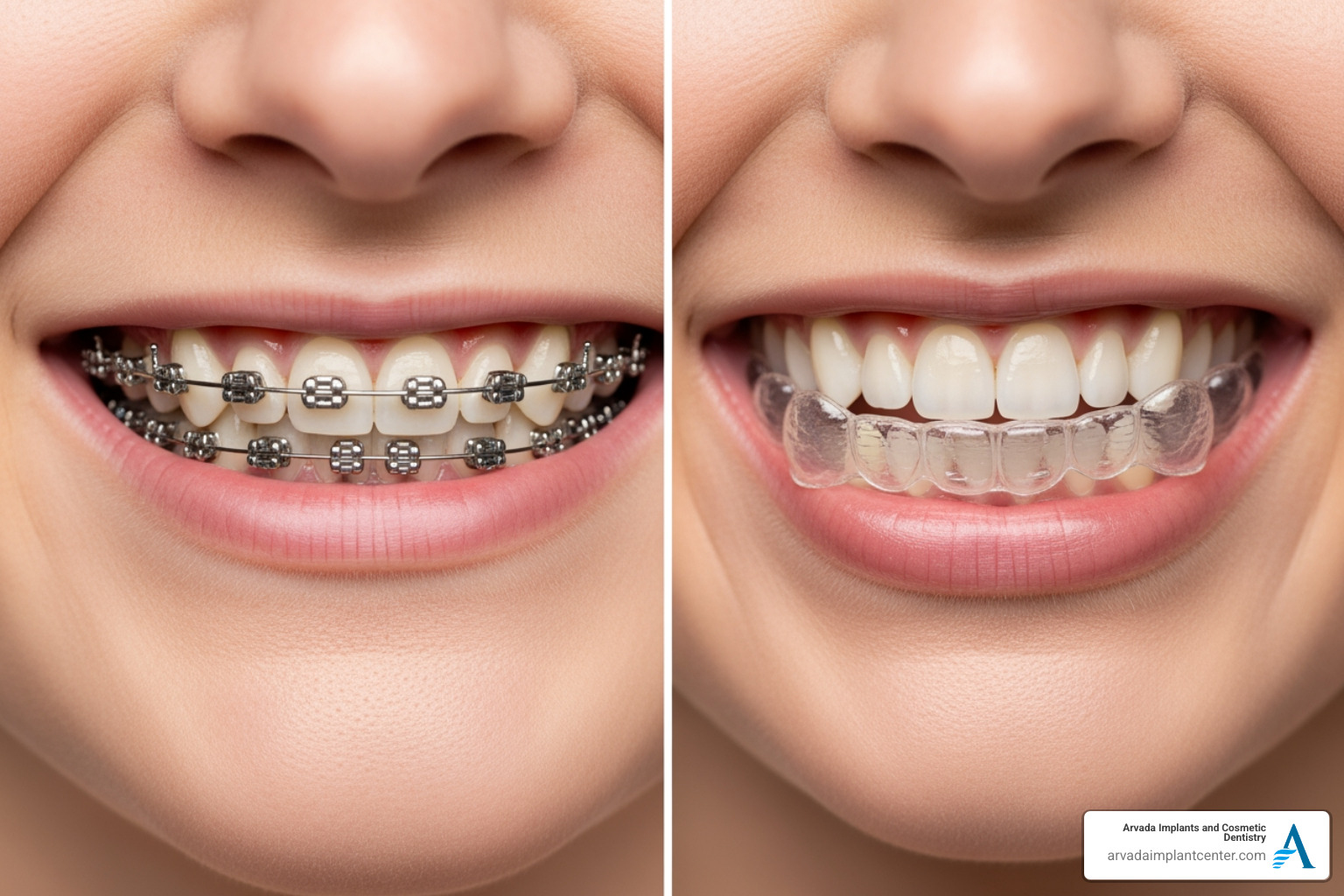
Feature At-Home Aligners Braces In-Office Clear Aligners Typical cost Lower upfront Higher Moderate to higher Supervision Mostly remote In-person In-person with possible remote check-ins Best for Mild cases Mild to complex cases Mild to many moderate and some complex cases Appearance Very discreet Most visible Very discreet Removability Yes No Yes Eating restrictions Remove to eat More restrictions Remove to eat Oral hygiene Easier than braces Harder Easier than braces Attachments/elastics Limited or unavailable Yes Often available Insurance use Varies Often covered Often covered Predictability Lower in tougher cases High with supervision Higher with supervision
Cost, insurance, and financing: the real price difference
The sticker price is why many people look into at-home teeth straighteners. Mail-order treatment may cost a fraction of braces or supervised clear aligners.
But price is not the same as value.
Professional orthodontic coverage through dental insurance may cover up to $3,000 in some cases, with average reported coverage around $1,772 for insured patients. That means the gap between professional care and DIY care may be smaller than it first appears. FSA and HSA funds may also help with supervised treatment.
The hidden cost question is this: what happens if your case does not go as planned?
Possible extra costs include:
New scans or X-rays
Refinement aligners
Emergency dental visits
Gum treatment
Bite correction
Braces or supervised aligners later
Replacement retainers
If you want to explore a supervised option, here is more info about clear aligner treatment.
Convenience and lifestyle: fewer visits, but more responsibility
At-home systems win on convenience. No question.
You avoid office visits. You take impressions at home. You upload photos instead of sitting in a chair. For people with busy schedules, that is appealing.
But convenience shifts responsibility onto you:
You have to take accurate impressions
You must wear trays as directed
You need to notice problems early
You have to keep teeth and trays clean
You must follow through with retainers
Clear aligners in general are more convenient than braces for eating, brushing, flossing, and sports because they are removable. Still, removable also means optional in the moment, and that is where many treatments drift off course. The tray in your napkin at lunch does not move teeth.
Results and predictability: where professional oversight matters most
This is where the biggest difference shows up.
Braces and in-office clear aligners allow more control over tooth movement. Dentists and orthodontists can add attachments, use elastics, reshape enamel when appropriate, take X-rays, and make mid-course corrections if your teeth are not tracking well.
At-home systems are more limited. If your bite starts changing in a way that was not intended, or if one tooth lags behind, the company may not be able to fix it remotely as effectively.
Invisalign and other in-office systems can sometimes deliver results in as little as 6 months for mild to moderate cases, with visible changes in just a few weeks. The advantage is not only speed. It is supervision and adaptability.
Risks, Safety Concerns, and Red Flags Consumers Need to Know
At-home aligners are not automatically unsafe, but they are not risk-free. Teeth are attached to bone and surrounded by gums and ligaments. Moving them is a medical treatment, not just an online purchase.
Common concerns include:
Trays that do not fit well
Gum irritation
Teeth not tracking to the plan
Bite changes
Mobility or soreness beyond the normal adjustment period
Treatment started on teeth with untreated decay or gum disease
More serious outcomes can include worsening bite problems, gum damage, root issues, or expensive corrective care later.
Why lack of in-person exams can create serious problems
The biggest safety concern is not the plastic tray itself. It is missing information before treatment starts.
A proper exam may reveal problems that photos and home impressions do not show well, such as:
Cavities
Bone loss
Gum disease
Recession
Impacted teeth
Existing dental work that changes the plan
Jaw joint issues
Bite interferences
X-rays matter because they show what is happening under the gums. If a patient has periodontal disease or reduced bone support, tooth movement can become much riskier. If there is active decay, aligners can trap bacteria and make the situation worse.
What happened to major mail-order aligner providers - and what it means now
The recent collapse of a major mail-order aligner company changed how many patients view the entire category.
The lesson is bigger than one company. When a remote aligner provider shuts down or cuts support, patients can be left with:
Incomplete treatment
No refinements
Trouble getting records
Limited warranty help
No clear handoff for continuing care
That continuity problem is a real risk in remote-only models. If your treatment needs supervision, you want to know exactly who is responsible and how you can reach them.
How to spot safer providers and avoid the riskiest ones
If you are considering a remote system, look for these safety features:
A licensed dentist or orthodontist reviews your case
A pretreatment dental exam is required or strongly recommended
X-rays are part of the screening when needed
The company clearly states what cases it does not accept
There is a monitoring schedule, not just a one-time approval
You can contact a real clinician if problems arise
Refund and discontinuation terms are clear
Retainers and post-treatment support are explained
Consumer red flags include:
No exam required
No discussion of risks
Guaranteed results for everyone
Very aggressive discount language with little medical detail
No emergency contact process
No clear plan if your bite worsens
Approval after poor-quality impressions or minimal records
Who Is a Good Candidate for At-Home Treatment — and Who Needs an Orthodontist?
This is where honesty beats marketing.
Cases that may be reasonable for remote aligner care
Remote care may be reasonable for adults with:
Slight spacing
Mild crowding
Minor relapse after previous orthodontic treatment
Healthy gums and bone support
No untreated cavities
Strong wear compliance
In other words, if the job is mostly small cosmetic alignment and your mouth is otherwise healthy, remote treatment may be more realistic.
Cases where professional orthodontic care is the safer choice
Professional care is the safer choice for:
Moderate or severe crowding
Crossbite, open bite, underbite, or major overbite
Jaw discrepancies
Missing teeth
Dental implants
Veneers, bridges, or extensive restorative work
Active gum disease
Cavities
Teeth that may need attachments or enamel reduction
Teen cases that need growth assessment
If you are considering broader cosmetic changes, our pages on Cosmetic Dentistry, Veneers, Smile Makeover, and Cosmetic Smile Makeover can help you see how tooth alignment may fit into a bigger treatment plan.
Better affordable alternatives with professional oversight
If budget is your biggest concern, there are still safer middle-ground options:
Limited orthodontic treatment for small movements
In-office clear aligners with fewer visits
Hybrid models with remote check-ins and local supervision
Payment plans
Insurance-supported treatment
Traditional braces when they are actually the better tool
For more details, see more info about clear aligners and learn more about orthodontic treatment options.
How to Choose the Best Path and Protect Your Smile Long Term
The best path is not the cheapest ad in your feed. It is the option that matches your actual dental condition, your budget, and your tolerance for risk.
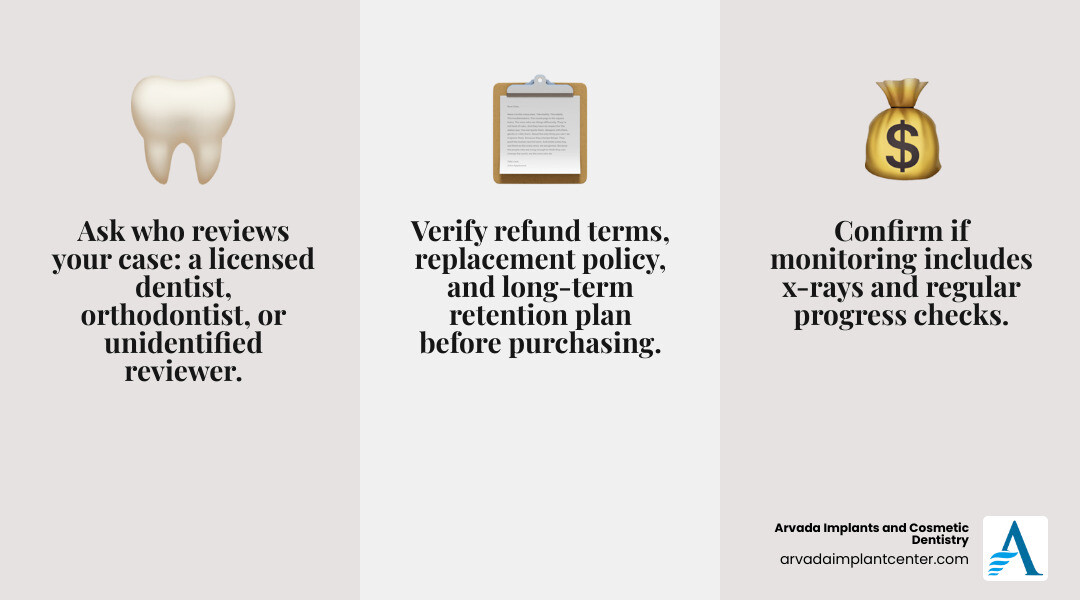
Questions to ask before you buy any at home teeth straighteners
Before ordering, ask:
Who is reviewing my case: a general dentist, an orthodontist, or no one I can actually identify?
Will I need an exam and X-rays first?
What kinds of cases do you reject?
How often is progress monitored?
What if my trays do not fit?
What if my bite gets worse?
Are refinements included?
What is the refund policy?
What retainers will I need afterward?
How do I reach a clinician, not just customer support?
If the answers are vague, that is an answer.
The long-term costs if something goes wrong
When DIY treatment fails, the final bill may be much higher than the original savings.
Potential long-term costs include:
Corrective aligner therapy
Braces after failed remote treatment
New retainers
Restorative dental work if teeth chip or wear unevenly
Periodontal treatment if gums are affected
Lost time and frustration
This is why we encourage people to think beyond the first payment screen. Straightening teeth is not a subscription box. It is a health decision.
Aftercare matters: retainers, cleaning, and home habits
Even if treatment goes perfectly, you are not done when the last tray comes off.
Teeth naturally want to shift back. Retainers are essential. Many retainers are meant to be worn nightly long term, and some need regular replacement.
Basic aftercare includes:
Wear retainers exactly as directed
Clean trays and retainers with lukewarm water
Use a gentle, non-abrasive cleaner
Avoid hot water, which can warp plastic
Brush and floss before putting trays back in
Remove aligners for meals and drinks other than water
For practical tips, visit our Clear Aligner Home Care Instructions.
Just remember: retainers maintain results; they are not the same as active orthodontic treatment.
Frequently Asked Questions About At Home Teeth Straighteners
Are at home teeth straighteners safe?
They can be safe in carefully selected mild cases, especially when a patient has healthy gums, no untreated dental disease, and real clinical oversight. They are less safe when treatment starts without an exam, without X-rays when indicated, or when the case is more complex than the provider admits.
How long do at home teeth straighteners take to work?
Many companies advertise 2 to 8 months, depending on the complexity of the case and how faithfully the trays are worn. Some mild cases move quickly. Others need refinements and take longer. If aligners are worn inconsistently, treatment can stall.
Can at-home aligners replace braces for everyone?
No. They may help in mild cases, but they do not replace braces or supervised in-office aligners for everyone. Complex bite corrections, large rotations, jaw issues, and cases involving dental disease or restorative work usually need professional care.
Conclusion: The Smartest Way to Straighten Teeth Without Regret
At-home teeth straighteners can be tempting because they look simple, affordable, and convenient. Sometimes they are a reasonable option for small cosmetic movements in healthy adult mouths. But they are not magic, and they are definitely not one-size-fits-all.
Our advice is simple: do not choose your orthodontic treatment the way you choose phone accessories.
If you want straighter teeth without unnecessary risk, start with a professional evaluation and make sure the plan matches your real needs, not just a marketing promise. At Arvada Implants and Cosmetic Dentistry, we believe in affordable, personalized care that protects your long-term oral health as much as your appearance.
If you are exploring your options, here is more info about clear aligner treatment.