Don't Let Your Teeth Take a Walk: How to Fix Loose Dentures
Loose Dentures Are More Common Than You Think — Here's How to Fix Them
Fix loose dentures with one of these proven approaches, depending on how severe the problem is:
Denture adhesive — a quick, temporary fix using zinc-free cream or powder
DIY silicone reline kit — molds to your gum shape for a better short-term fit
Professional soft reline — your dentist adds cushioning material to the denture base
Professional hard reline — a more durable reshaping of the denture's inner surface
Dental implants or implant-supported dentures — the only permanent solution that also stops bone loss
If your dentures slip when you laugh, click when you talk, or feel loose during meals — you're not alone. This is one of the most common problems for people who wear traditional removable dentures.
The uncomfortable truth? Loose dentures aren't just annoying. They can cause mouth sores, make eating difficult, and chip away at your confidence in social situations.
The good news is that there are real solutions — from simple at-home fixes to permanent implant-supported options. And the earlier you address the problem, the easier (and less costly) it is to solve.
This guide walks you through everything: why dentures loosen, what you can do right now, and when it's time to talk to a dentist about something more lasting.
Why Dentures Lose Their Grip Over Time
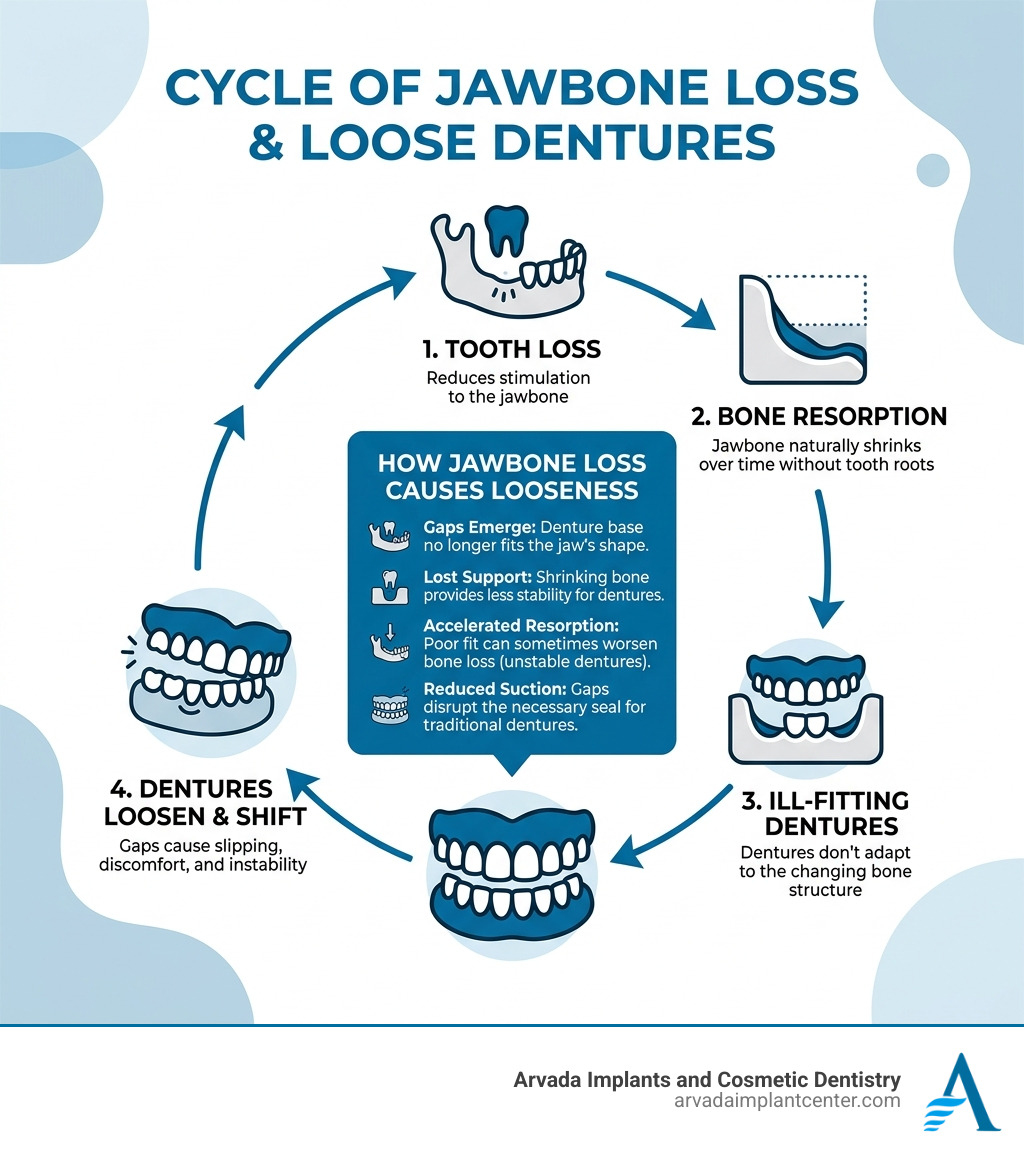
It’s a common misconception that dentures loosen because the acrylic material somehow stretches or warps. In reality, the dentures stay the same size, but your mouth changes. As we move through May 2026, we are seeing more patients than ever looking for ways to Fix loose dentures because they weren't informed about the biological changes that happen after tooth loss.
Bone Resorption: The Primary Culprit
The most significant reason dentures lose their fit is a process called bone resorption. Your jawbone needs the constant stimulation of tooth roots to maintain its density. When your natural teeth are gone, the bone effectively decides it is no longer needed and begins to shrink or "reabsorb" into the body.
This shrinkage changes the shape of your gum ridges. Since traditional dentures rely on a tight seal against those ridges, any change in the "foundation" causes the denture to wobble. This process is most aggressive during the first 18 months after tooth extraction, where gums can shrink drastically, making even a brand-new set of dentures feel like they belong to someone else.
The Impact of Weight Loss
Believe it or not, your dentures are as sensitive to weight fluctuations as your favorite pair of jeans. A weight loss of just 5 to 10 pounds can significantly affect how your dentures sit. In the dental world, we often say that losing 10 pounds is equivalent to going down 2 to 3 pant sizes in terms of denture retention. If you've been working hard on your fitness in 2026, your health might be improving, but your denture fit might be suffering.
Wear and Tear
Dentures are durable, but they aren't invincible. Over a period of 5 to 10 years, the artificial teeth and the acrylic base naturally wear down from the friction of chewing and daily cleaning. This wear can alter your "bite" (occlusion), leading to instability.
Identifying the Signs
How do you know it's time to act? Look out for these red flags:
Clicking Sounds: If your dentures click when you talk or eat, the suction is gone.
Speech Difficulties: Struggling with "s," "sh," "f," or "v" sounds often indicates a loose upper plate.
Mouth Sores: "Hot spots" or sores on the gums are caused by the denture rubbing against the tissue.
Food Traps: If you find more seeds or crumbs getting under your plate than usual, the seal is broken.
For more detailed diagnostic signs, you can read about How to identify ill-fitting dentures.
Professional and At-Home Ways to Fix Loose Dentures
When you realize your "teeth" are taking a walk, you have several paths to stability. Some are "band-aids" to get you through the week, while others are clinical procedures designed to last years.
Feature Soft Reline Hard Reline Material Pliable, rubber-like silicone Firm, medical-grade acrylic Ideal For Sensitive gums or chronic sores Long-term stability and durability Duration Lasts several weeks to months Lasts approximately 2 years Procedure Often done chairside in one visit May require lab processing
Beyond relining, we often recommend looking at your daily habits. Proper maintenance is the first line of defense against premature looseness. You can find our specific Denture Home Care Instructions to ensure you aren't accidentally warping your prosthetics during cleaning.
Immediate At-Home Steps to Fix Loose Dentures
If you have a big event tonight and your dentures are acting up, you need an immediate fix. While these aren't permanent, they can restore your confidence for a few hours or days.
1. Denture Adhesives (Creams and Powders) Adhesives work by creating a thin film between the denture and the gums, increasing surface tension.
Creams: Provide a strong hold but can be messy. Look for zinc-free options to avoid health issues associated with excessive zinc intake.
Powders: Often preferred by those with less severe looseness, as they are easier to clean and feel less "goopy."
2. Temporary Silicone Reline Kits Available at most pharmacies, these kits allow you to add a thin layer of silicone to the inside of your denture. This mimics a professional soft reline. It’s like adding a padded insole to a shoe that’s slightly too big. However, be careful—overusing these can sometimes cause more bone loss if the bite isn't perfectly aligned.
3. Tightening Partial Clasps If you wear a partial denture, the metal clasps can sometimes lose their tension. While we always prefer to do this for you, a very gentle adjustment can sometimes provide a temporary fix.
Professional Relining to Fix Loose Dentures
When at-home fixes aren't enough, it’s time for a professional reline. This is the most common clinical way to Fix loose dentures without replacing them entirely.
Soft Reline: We use a liquid polymer to create a cushioned layer inside the denture. This is perfect for patients whose gums are too tender for the hard acrylic or for those who have experienced significant bone loss.
Hard Reline: This is a more permanent fix. We remove a layer of the old acrylic and replace it with new, hard acrylic that perfectly matches the current contours of your mouth. This should generally be done every two years.
Rebasing: If the denture teeth are still in good shape but the pink acrylic base is cracked or extremely ill-fitting, we can replace the entire base while keeping the original teeth.
For those in Arvada looking for these services, our team at Arvada Implants and Cosmetic Dentistry specializes in Full & Partial Dentures and can determine which reline is right for you.
Permanent Solutions with Dental Implants
While relines are effective, they don't solve the underlying problem: bone loss. As long as you are missing tooth roots, your jaw will continue to shrink, and your dentures will eventually become loose again. This is where dental implants change the game.
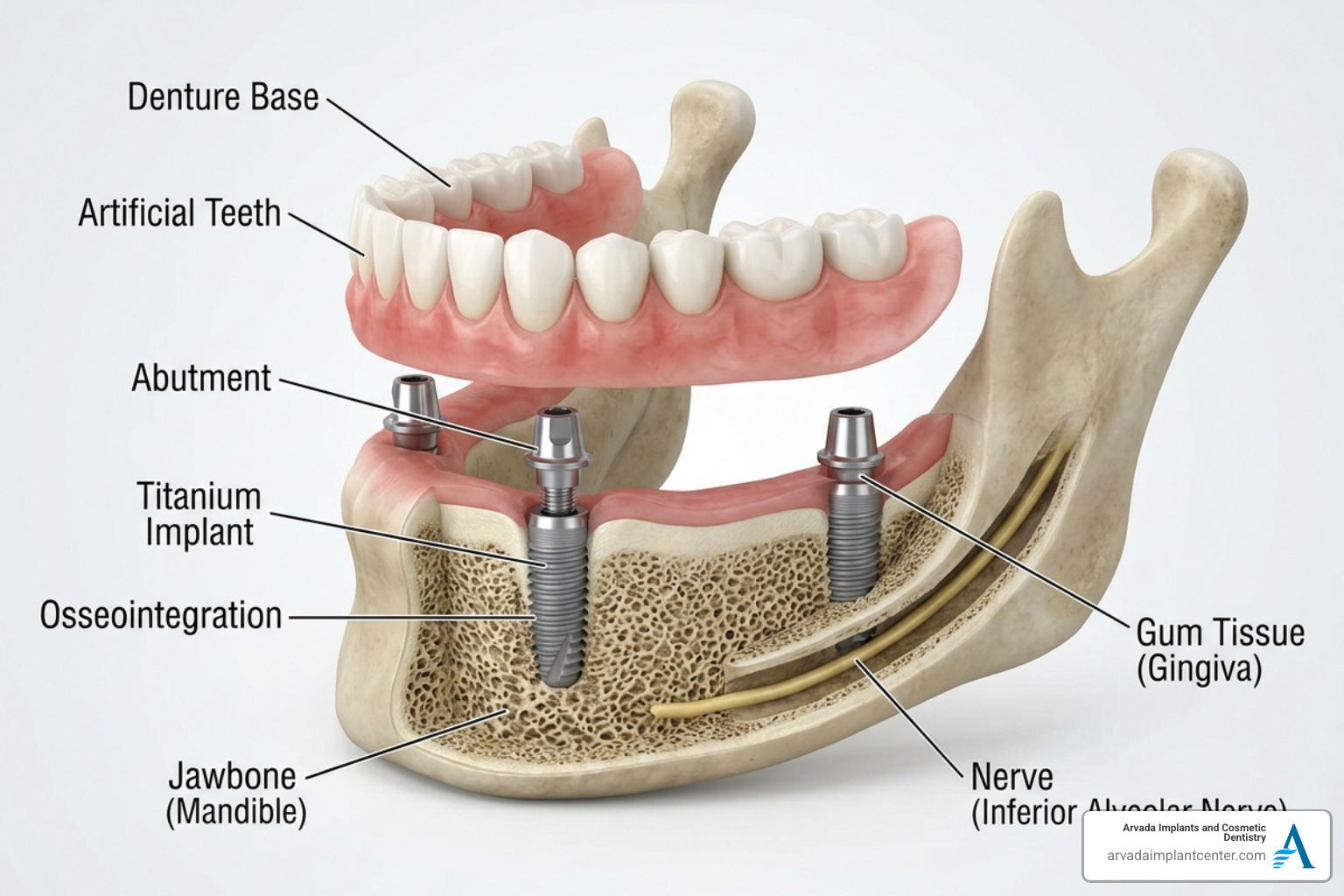
Dental implants are small titanium posts that act as artificial tooth roots. Through a process called osseointegration, these posts actually fuse with your jawbone. This provides two massive benefits:
It stops bone resorption by stimulating the jaw.
It provides a rock-solid anchor for your dentures.
All-on-4 Implants
This is often considered the "gold standard" for a full-mouth makeover. We place four (sometimes more) implants in the jaw and attach a full arch of permanent teeth. These don't come out at night, they don't slip, and they restore up to 90% of your natural bite force. You can eat steak, apples, and corn on the cob again without a second thought.
Snap-in Dentures (Implant-Supported Overdentures)
If you want the stability of implants but prefer the ability to remove your dentures for cleaning, snap-in dentures are a fantastic middle ground. Usually, 2 to 5 implants are placed, and the denture "snaps" onto them using a ball-and-socket or bar-retained system. This eliminates the need for messy adhesives and prevents the "clicking" sound entirely.
To see which of these modern marvels fits your lifestyle, check out our comparison of Snap-in Dentures vs All-on-4 Implants or learn more about the Dental Implants / All-on-4 process.
Maintenance Tips to Prevent Future Looseness
Preventing your dentures from becoming loose is much easier than fixing them once they’ve started to slip. In 2026, the standards for oral hygiene have evolved, but the basics remain the foundation of a lasting smile.
1. Clean Twice Daily Use a soft-bristle brush and a non-abrasive denture cleaner. Standard toothpaste is actually too abrasive for denture acrylic and can create microscopic scratches where bacteria—and plaque—can hide. Plaque buildup doesn't just smell; it can actually change the fit of the denture over time.
2. Give Your Gums a Rest Never wear your dentures 24/7. Your gum tissues and jawbone need time to recover from the pressure of the appliance. Removing them for at least 8 hours (usually while you sleep) helps prevent accelerated bone resorption.
3. Nightly Soaking When your dentures aren't in your mouth, they must be in water or a soaking solution. If they dry out, the acrylic can warp, and even a tiny change in shape will lead to a loose fit. Pro tip: Never use boiling or hot water, as it can permanently ruin the shape of the resin.
4. Regular Dental Checkups Even if you have no natural teeth, you still need to see us every six months. We check for oral cancer, evaluate the health of your gums, and monitor the "bite" of your dentures. Catching a slight looseness early allows for a simple adjustment rather than a full replacement.
For additional advice on maintaining a snug fit, you can explore How to stop dentures from being loose.
Frequently Asked Questions about Denture Fit
How often should I have my dentures relined?
Typically, a professional hard reline is recommended every two years. However, if you've recently had teeth extracted, you may need a soft reline within the first few months as your gums heal and shrink. Traditional dentures themselves usually need to be replaced entirely every 5 to 10 years.
Can weight loss really make my dentures loose in 2026?
Yes! As mentioned earlier, even a 5-10 pound change can alter the fat pads in your mouth and the contours of your jawline. If you are on a weight loss journey, keep a close eye on your denture fit—it’s often one of the first places you’ll notice the change.
Are there health risks to wearing loose dentures?
Absolutely. Beyond the obvious discomfort, loose dentures can cause chronic inflammation. This inflammation has been linked to an increased risk of oral infections and, in extreme cases of long-term neglect, a higher risk of oral cancer. Furthermore, if you can't chew properly, your nutrition will suffer, which impacts your overall health.
Conclusion
At Arvada Implants and Cosmetic Dentistry, we believe that no one should have to live with the embarrassment or discomfort of slipping teeth. Whether you need a simple professional reline to Fix loose dentures or you’re ready to explore the life-changing stability of dental implants, we are here to help.
Our Arvada-based team provides affordable, personalized treatments using custom lab creations to ensure your smile is as unique as you are. Don't let your teeth take a walk—take control of your oral health today.
Ready for a smile that stays put? Schedule your consultation for Full & Partial Dentures with us today and rediscover the joy of eating, speaking, and smiling with total confidence.