Hypodontia 101: Identifying Frequently Absent Teeth
You Might Be Missing a Tooth and Not Even Know It
The most common missing teeth in adults are not always the ones you'd expect. Here's a quick answer if you're looking for the short version:
Most Frequently Missing Teeth (Excluding Wisdom Teeth)
Rank Tooth Location 1 Second premolar Lower jaw (mandible) 2 Lateral incisor Upper jaw (maxilla) 3 Second premolar Upper jaw (maxilla) 4 Central incisor Lower jaw (mandible)
These teeth fail to develop at all — not because of decay or injury, but because they simply never formed. This condition is called hypodontia, and it affects between 2% and 8% of the general population when wisdom teeth are excluded from the count.
That number jumps significantly when you look at broader estimates. As many as 20% of adults are missing at least one tooth due to congenital absence — meaning roughly 1 in 5 people were born without a full set of permanent teeth.
If you've noticed a gap in your smile, a retained baby tooth that never fell out, or a space your dentist flagged on an X-ray, you're far from alone.
I'm Dr. Tariq Sawaqed, a cosmetic and implant dentist with over 20 years of experience helping patients in Colorado restore their smiles — including many who came to me after discovering they had most common missing teeth conditions that had gone undiagnosed for years. Understanding why certain teeth go missing, and what your options are, is the first step toward a confident, functional smile.
Understanding the Most Common Missing Teeth
When we talk about the most common missing teeth, we are usually referring to tooth agenesis—a fancy clinical term for teeth that simply never grew. In the dental world, we categorize this primarily as hypodontia, which is the developmental absence of one to six teeth (excluding wisdom teeth).
While it might seem like a rare quirk, hypodontia is actually one of the most frequent developmental anomalies in human dentition. It isn't just about having a gap; it’s about how your mouth functions as a complete system. Most people are surprised to learn that their "missing" tooth isn't hiding in the gums—it just doesn't exist.
According to a scientific research on congenitally missing teeth, the prevalence of this condition varies depending on whether you are looking at the general population or patients already seeking orthodontic care. In the general population, the rate is about 4%, but it climbs to 5.5% in orthodontic groups.
Why the Mandibular Second Premolar is the Most Common Missing Tooth
If you are missing a tooth, there is a very high statistical probability it is your mandibular second premolar (the tooth just in front of your back molars on the bottom).
But why this specific tooth? The development of our teeth follows a strict timeline that begins before we are even born. The dental lamina—the band of tissue that serves as the "blueprint" for our teeth—must stay active for years to produce permanent teeth. Because the second premolars are among the last "standard" teeth to develop (often not beginning their calcification until a child is several years old), they are more susceptible to environmental or genetic "glitches" that stop development in its tracks.
When this tooth is missing, the primary (baby) molar often stays in place much longer than it should. We see many adults in our Arvada office who are still rocking a baby tooth in their 30s or 40s because there was never a permanent premolar to push it out. If you find yourself in this situation, you can learn more about multiple missing teeth and how we manage these gaps.
Prevalence of the Most Common Missing Teeth in Adults
While the lower second premolar takes the top spot, the maxillary lateral incisor (the tooth next to your two front teeth) is a very close second. In fact, in some ethnic groups and specific geographic studies, the lateral incisor is actually the most frequently absent.
According to Tooth Loss Facts from the CDC, tooth retention has improved significantly since the 1970s, yet congenital issues remain steady. Interestingly, research shows a 3:2 female-to-male predilection, meaning women are slightly more likely to experience hypodontia than men.
Tooth Type Prevalence Rank Common Issues Lower 2nd Premolar #1 Retained baby teeth, tipping of adjacent teeth Upper Lateral Incisor #2 Aesthetic concerns, "peg" shaped companion teeth Upper 2nd Premolar #3 Minor spacing issues, chewing efficiency Lower Central Incisor #4 Crowding or wide gaps in the lower front
Causes of Congenitally Missing Teeth: Genetics and Environment
Why does this happen? It isn't because you didn't drink enough milk as a child! The roots of hypodontia are buried deep in your DNA and early developmental environment.
The Genetic Blueprint
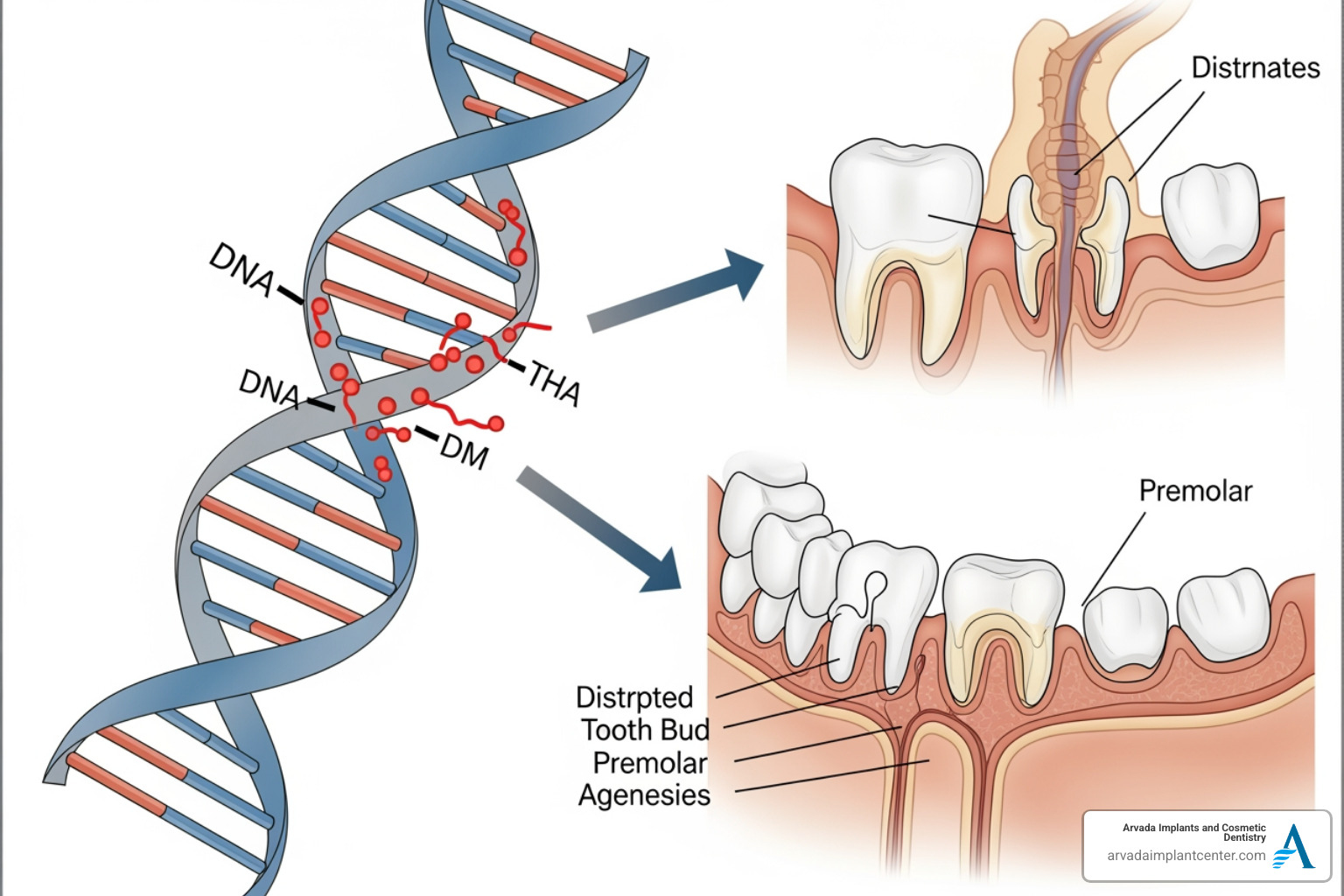
Most cases of the most common missing teeth are hereditary. If a parent is missing their lateral incisors, there is a significant chance their children will be, too. Scientists have identified specific genes—namely MSX1, PAX9, and AXIN2—that act as "master switches" for tooth development. When these genes have a mutation, the signal to grow a tooth bud simply never gets sent.
In some cases, missing teeth are a sign of a broader syndrome. For example, ectodermal dysplasia can affect the development of hair, nails, sweat glands, and teeth. Similarly, children with Down syndrome or a cleft lip and palate have a much higher incidence of tooth agenesis.
Environmental Factors
While genetics do the heavy lifting, the environment plays a role. Factors that can disrupt the dental lamina during early childhood include:
Maternal Health: Certain infections during pregnancy, like rubella.
Low Birth Weight: Statistics suggest a correlation between very low birth weight and missing teeth.
Radiation Exposure: Early childhood medical treatments involving radiation to the jaw area can stunt or stop tooth bud development.
The Impact of Missing Teeth on Oral Health and Development
You might think, "It’s just one tooth, what’s the big deal?" Unfortunately, your mouth is like a finely tuned machine; when one part is missing, the rest of the parts have to overcompensate.
Bone Resorption and Shifting
The most invisible—and perhaps most dangerous—impact is bone resorption. Your jawbone needs the stimulation of a tooth root to stay healthy and dense. Without that root, the bone begins to dissolve. In fact, you can lose up to 25% of the bone width in that area within the first year of a tooth being absent!
Furthermore, teeth like to have neighbors. When there is a gap, the surrounding teeth will naturally "tip" or "drift" into the open space. This can lead to:
Malocclusion: Specifically Angle’s Class II, where the upper and lower teeth don't line up correctly.
Super Eruption: This is when the tooth above or below the gap starts to grow longer because there is no opposing tooth to stop it.
Aesthetic Changes: Missing lateral incisors can cause the "sunken" look often associated with premature aging.
If you are only dealing with a single gap, we have specialized solutions for one missing tooth that can prevent these "cascading" health issues. We often utilize crowns and bridges to restore function and stop teeth from shifting.
Diagnosis and Treatment Options for Hypodontia
The key to managing the most common missing teeth is early detection. Because permanent teeth typically emerge between ages 6 and 14, we can usually spot a problem well before it becomes a crisis.
The Magic Age: Nine
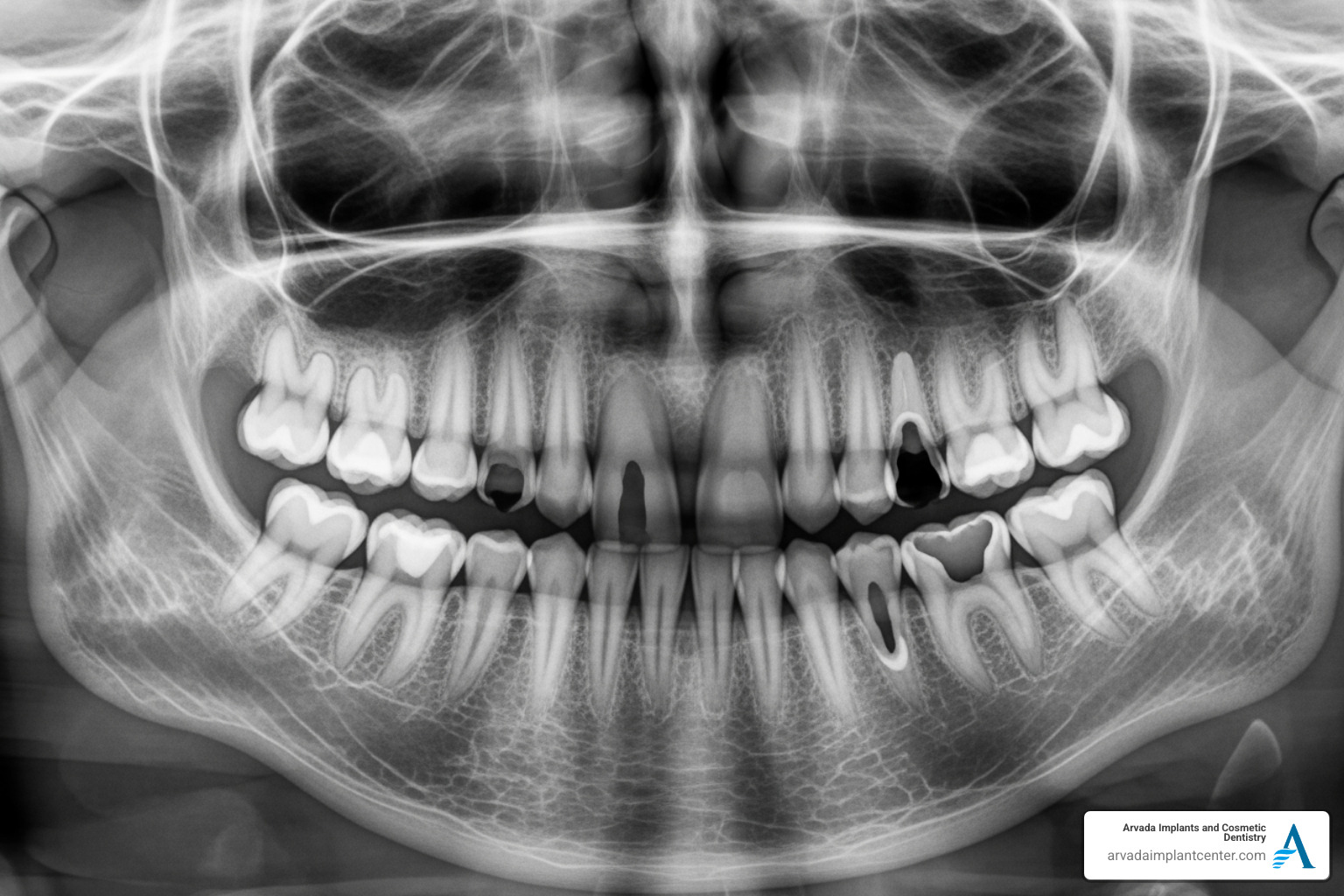
We recommend a comprehensive screening, including a panoramic X-ray, by age nine. Why nine? By this age, the buds for the premolars should be clearly visible on an X-ray. If they aren't there by age nine, they aren't coming. Early diagnosis allows us to plan for space management—either keeping the baby tooth as long as possible or using braces to close the gap.
Modern Solutions in Arvada
At Arvada Implants and Cosmetic Dentistry, we don't believe in a one-size-fits-all approach. Your treatment depends on your age, the location of the missing tooth, and your long-term goals.
Dental Implants: These are the "gold standard." A titanium post acts as a new root, stimulating the bone and supporting a custom-made crown. They look, feel, and function like natural teeth. Check out our guide to dental implants for more details.
Bridges: If the teeth next to the gap need work anyway, a bridge can "bridge" the gap by anchoring to the neighboring teeth.
Orthodontic Space Closure: Sometimes, we can use braces to simply move your other teeth into the gap, eliminating the need for an implant.
Dentures: For those missing many teeth, full and partial dentures offer an affordable way to restore your smile.
All-on-4: If you are missing most or all of your teeth in an arch, the All-on-4 system can provide a full set of permanent, non-removable teeth on just four implants.
Frequently Asked Questions about the Most Common Missing Teeth
What is the difference between hypodontia and oligodontia?
It all comes down to the math! Hypodontia is the term used when you are missing between one and five permanent teeth. If you are missing six or more teeth (excluding wisdom teeth), it is called oligodontia. In very rare cases, a person might be missing all their teeth, which is known as anodontia.
Are missing teeth hereditary?
Yes, absolutely. Tooth agenesis is highly hereditary. If you or your spouse are missing teeth, we highly recommend bringing your children in for an early evaluation. Knowing the family history helps us predict which teeth might be absent and allows us to start "space maintenance" early, often saving you thousands in complex orthodontic work later.
At what age should I check for missing permanent teeth?
While you'll notice front teeth missing early on, the most common missing teeth (the premolars) are further back. A standard dental checkup at age 6 or 7 is great, but a definitive X-ray should be done by age 9 to confirm that all permanent "adult" buds are present and accounted for.
Conclusion
Discovering that you or your child has one of the most common missing teeth can feel overwhelming, but in modern dentistry, it is a very solvable problem. Whether you've lived with a gap for years or just discovered a missing tooth bud in your child’s X-ray, the team at Arvada Implants and Cosmetic Dentistry is here to help.
We specialize in affordable, personalized treatments right here in Arvada. From custom lab-created crowns that match your unique smile to life-changing full-mouth restorations, our goal is to give you a smile you’re proud to show off.
Don't let a missing tooth dictate your confidence or your health. Schedule a consultation for dental implants with us today, and let’s complete your smile together.