In Depth Guide to Tooth Replacement Options
Common Permanent and Removable Tooth Replacement Options
When you are looking into tooth replacement, it is helpful to categorize your choices into two main groups: fixed (permanent) and removable. Fixed options are bonded or screwed into place and stay in your mouth 24/7, while removable options can be taken out for cleaning or while you sleep.
At Arvada Implants and Cosmetic Dentistry, we believe the best choice depends on your budget, the health of your remaining teeth, and your lifestyle goals. According to Harvard Health, the two primary modern pathways involve either a bridge or an implant.
Fixed Bridges and Partial Dentures
A fixed bridge is a traditional solution for One Missing Tooth or a few teeth in a row. It works by using the healthy teeth on either side of the gap—known as abutment teeth—as anchors. These anchors support a "pontic," which is a custom-made artificial tooth that fills the space. While bridges feel very natural, they do require us to remove some enamel from your healthy anchor teeth to fit the crowns.
For Multiple Missing Teeth that are spread throughout the arch, a removable partial denture might be recommended. These consist of replacement teeth attached to a gum-colored base, often held in place by metal or plastic clasps that "clip" onto your natural teeth.
If you are missing an entire arch of teeth, you may consider Full & Partial Dentures. There are many Types of Dentures available today, including "immediate" dentures that can be worn the same day your teeth are extracted so you never have to go a day without a smile.
The Gold Standard: Dental Implants
While bridges and dentures have their place, Dental Implants are widely considered the gold standard for tooth replacement. Unlike other methods, an implant replaces the root of the tooth, not just the crown.
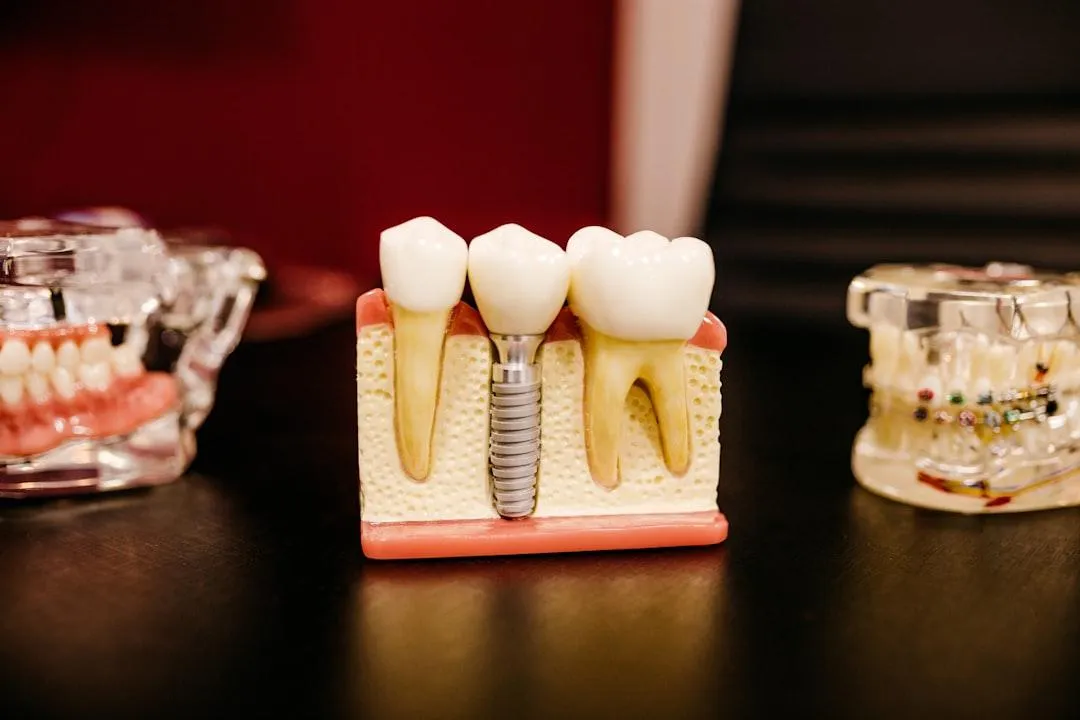
A dental implant is a small titanium post that is surgically placed into the jawbone. Because titanium is biocompatible, your bone actually grows around it, locking it into place. This provides a rock-solid foundation for a crown, bridge, or even a full set of teeth. As noted by the Canadian Dental Association, implants are an excellent long-term investment because they don't rely on neighboring teeth for support and can last a lifetime with proper care.
The Dental Implant Process and Long-Term Benefits
The real "magic" of dental implants lies in a biological process called osseointegration. This is where your living bone tissue fuses with the titanium surface of the implant. This doesn't just hold the tooth in place; it actually tricks your body into thinking the natural tooth root is still there.
Surgical and Restorative Timeline for Tooth Replacement
Getting a dental implant is a journey, not a single appointment. While the timeline varies based on your health, here is the standard process we follow:
Consultation & 3D Imaging: We use advanced CT scans to evaluate your bone density and map out the exact placement of the implant.
Implant Placement: In a minor surgical procedure (often under IV sedation for your comfort), the titanium post is placed into the jaw.
Healing Phase (Osseointegration): This is the most critical step. Over 3 to 9 months, the bone fuses with the implant. You may wear a temporary "flipper" tooth during this time.
Abutment Attachment: Once healed, a small connector piece called an abutment is placed on top of the implant.
Final Restoration: We attach your custom-made crown, bridge, or denture.
According to the Mayo Clinic, this staged approach ensures the highest success rate. While it takes longer than getting a bridge, the purpose and benefits include superior stability and the prevention of facial sagging.
Supplemental Procedures for Implant Eligibility
Not everyone is ready for an implant on day one. If you have been missing teeth for a long time, your jawbone may have thinned out. In these cases, we perform bone grafting or a sinus lift to build up the foundation.
Think of it like building a house: you can't put a heavy structure on a weak foundation. Preparing for Dental Implants might add a few months to your timeline, but it ensures your tooth replacement stays secure for decades.
Advanced Full-Arch Tooth Replacement with All-on-4
If you are missing all of your teeth or struggling with failing "terminal" teeth, you don't necessarily need an individual implant for every single tooth. All-on-4 Dental Implants allow us to replace an entire upper or lower arch of teeth using just four strategically placed implants.
This technique is a game-changer because it often allows for "Same-Day Teeth." We can often place the implants and attach a temporary fixed bridge in a single visit, so you walk out with a functional smile. The American Academy of Periodontology highlights that this approach is often possible even for patients with some bone loss, as the implants are tilted to maximize contact with existing bone.
Comparing Overdentures and Fixed Full-Arch Solutions
When replacing a full arch, you generally choose between Snap-in Dentures vs All-on-4 Implants.
Snap-in Dentures (Overdentures): These are removable but "snap" onto 2–4 implants for stability. They are more affordable but still have a plastic plate that covers the roof of your mouth.
All-on-4 (Fixed): These are bolted down and only removed by a dentist. They use a "horseshoe" design that leaves the roof of your mouth open, allowing you to taste your food better and speak more naturally. They restore up to 90% of your natural bite force!
Costs, Insurance, and Finding Quality Care
Let's talk about the elephant in the room: the cost of tooth replacement. Prices vary wildly based on the materials used (titanium vs. zirconia), the need for extractions or grafting, and the expertise of the doctor.
Navigating Insurance and Medicare for Tooth Replacement
In May 2026, most standard dental insurance plans still treat implants as "cosmetic" or "major" procedures, often covering only 50% of the cost up to an annual limit (usually $1,000–$2,000). Traditional Medicare typically does not cover tooth replacement unless it's related to a medical emergency. However, some Medicare Advantage plans have added dental allowances, though they often have caps around $1,300 per year.
We always recommend checking our Patient Resources and Information to help you navigate these benefits.
Financing and Payment Plans
Because quality tooth replacement is an investment in your health, we offer several ways to make it affordable.
CareCredit: This is a third-party credit card specifically for healthcare that often offers 0% interest for 12–24 months.
In-House Plans: We provide personalized payment schedules to fit your monthly budget.
Long-Term Value: While a partial denture is cheaper today ($800), it may need to be replaced every 5 years. A dental implant ($3,500) can last 25+ years, making it the more cost-effective choice over time.
Check out our guide on Financing Your Dental Care for more details.
Maintenance and Health Considerations for Longevity
Once your new teeth are in place, they need love! While implants cannot get cavities, the gums around them can still get infected (a condition called peri-implantitis).
Daily Care Routine:
Implants: Brush and floss just like natural teeth. Use an interdental brush or a water flosser to get underneath bridges.
Dentures: Must be removed nightly and soaked in a cleaning solution. Never use regular toothpaste on dentures as it is too abrasive.
Health Factors: Smoking is the #1 cause of implant failure because it restricts blood flow to the bone. Uncontrolled diabetes can also slow the healing process.
Professional Temporary Tooth Replacement Solutions
Nobody wants to walk around with a gap while waiting for an implant to heal. We provide several transitional options:
Flipper Tooth: A lightweight, temporary partial denture.
Immediate Partial: Worn right after an extraction.
Maryland Bridge: A resin-bonded bridge that doesn't require grinding down adjacent teeth—perfect for front teeth.
Frequently Asked Questions about Tooth Replacement
How long does the entire tooth replacement process take?
For a bridge or denture, it usually takes 2–4 weeks. For a dental implant, the total time is typically 4–9 months. This allows for the necessary osseointegration. However, with 2026 "All-on-X" technology, many patients can get "teeth in a day" where a temporary bridge is attached immediately after surgery.
What are the risks of leaving a missing tooth gap untreated?
If you don't replace a tooth, your other teeth will begin to "tip" or shift into the empty space. This can lead to "super-eruption," where the tooth above the gap starts to grow downward because there is nothing to bite against. Most importantly, you will lose jawbone density every year the tooth is missing.
Are dental implants better than traditional dentures?
In terms of function and health, yes. Implants prevent bone loss and provide a bite force nearly equal to natural teeth. Dentures, while affordable, only provide about 20–30% bite force and can slip or click while talking. However, dentures are a great non-surgical option for those who may not be candidates for surgery.
Conclusion
Choosing the right tooth replacement is a personal journey. Whether you opt for the permanence of Dental Implants, the speed of a bridge, or the affordability of a denture, the most important step is simply taking action.
At Arvada Implants and Cosmetic Dentistry, we specialize in creating custom, affordable smiles that feel as good as they look. Don't let a missing tooth hold you back from enjoying your favorite Colorado steak or smiling for family photos.
Ready to reclaim your smile? Schedule a consultation for dental implants with our team in Arvada today!