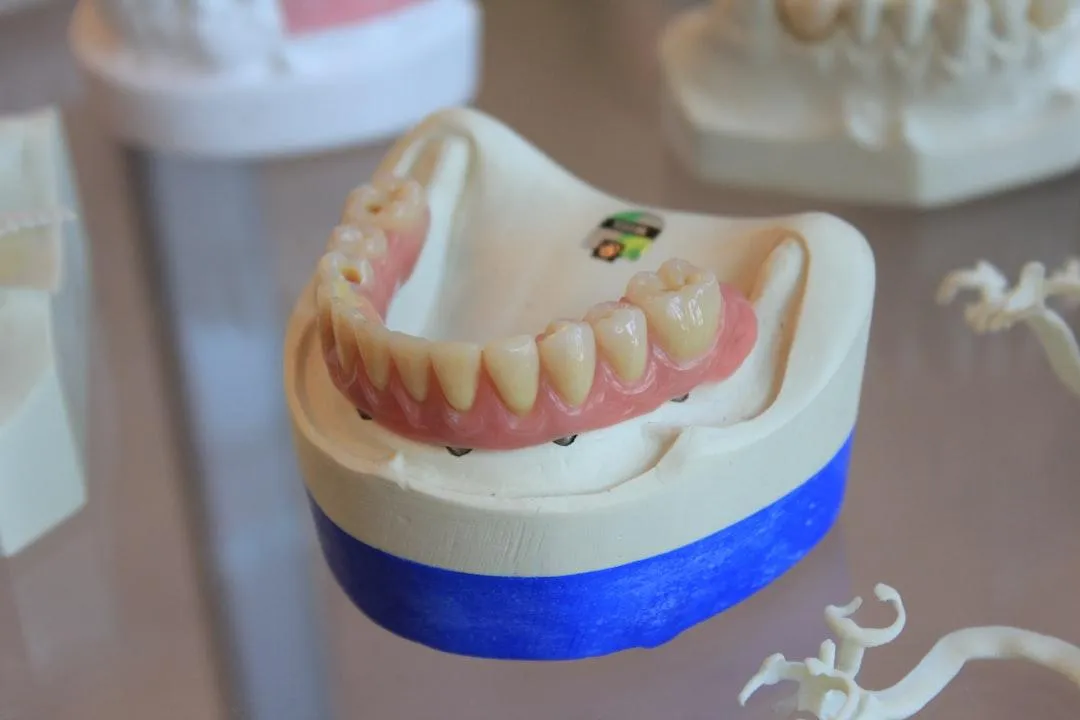
Don't Leave Your Smile Hanging with Partial Tooth Replacement
Missing Teeth Are More Common Than You Think — Here's What to Do About It
Partial dentures are removable appliances that replace one or more missing teeth while your remaining natural teeth stay in place. They sit on a gum-colored base and use clasps or attachments to anchor securely to your existing teeth.
Quick answer: What are partial dentures?
What they are: Removable tooth replacements for people who still have some natural teeth
How they work: Artificial teeth are attached to a pink or gum-colored base that fits over your gums; clasps grip your remaining teeth for stability
Who they're for: Adults missing one or more teeth who have enough healthy teeth remaining to support the appliance
Types available: Acrylic, cast metal, and flexible (nylon resin)
How long they last: 5 to 10 years with proper care
Cost range: Roughly $300 to $1,800+ depending on type and complexity
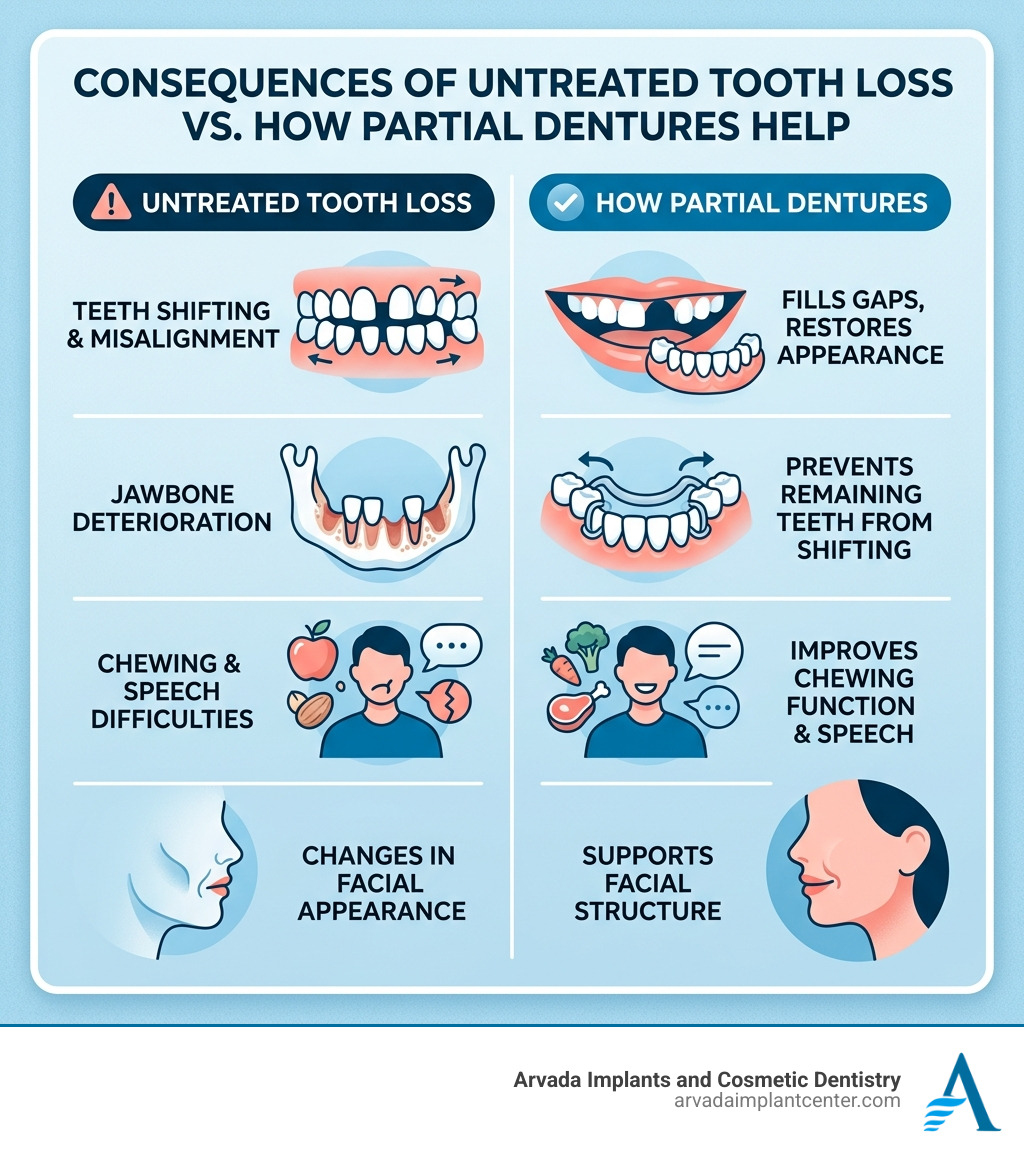
You are not alone if you are dealing with missing teeth. An estimated 120 million adults in the United States are missing at least one tooth. That is a staggering number — and the consequences go well beyond how your smile looks.
Gaps in your teeth can make it harder to chew and speak clearly. Over time, neighboring teeth can drift out of position. Bone loss in the jaw can follow. Even your facial shape can change.
The good news? Partial dentures offer a proven, affordable way to fill those gaps, restore function, and protect the teeth you still have.
Understanding Partial Dentures and How They Work
When we talk about tooth replacement, many people immediately picture "grandma’s teeth" soaking in a glass on the nightstand. While those are full dentures, partial dentures are a much more targeted solution. Unlike full dentures, which replace an entire arch of teeth (either the top or the bottom), partials are designed to fill in the specific gaps left by a few missing teeth.
They are removable appliances, meaning you can take them out for cleaning and while you sleep. They work by using your remaining natural teeth as anchors. This design helps maintain the alignment of your natural teeth, preventing them from shifting into the empty spaces. If you want to dive deeper into the differences, you can find more info about full and partial dentures on our services page.
Essentially, a partial denture acts as a bridge for your smile, but one you can remove. It consists of prosthetic teeth attached to a base that mimics the look of your natural gums. For a technical breakdown of how these are engineered, check out this Everything You Need to Know About Partial Dentures guide.
Components of Partial Dentures
To understand how these devices stay in your mouth without falling out during a dinner party, we have to look at their anatomy.
Prosthetic Teeth: These are the "stars of the show," usually made from acrylic or porcelain, shaped and colored to match your surrounding teeth.
The Base: This is the pink or gum-colored portion made of acrylic resin or flexible thermoplastic. It sits comfortably on your gum tissue.
The Framework: Most traditional partials have a rigid internal structure (often metal) that provides strength.
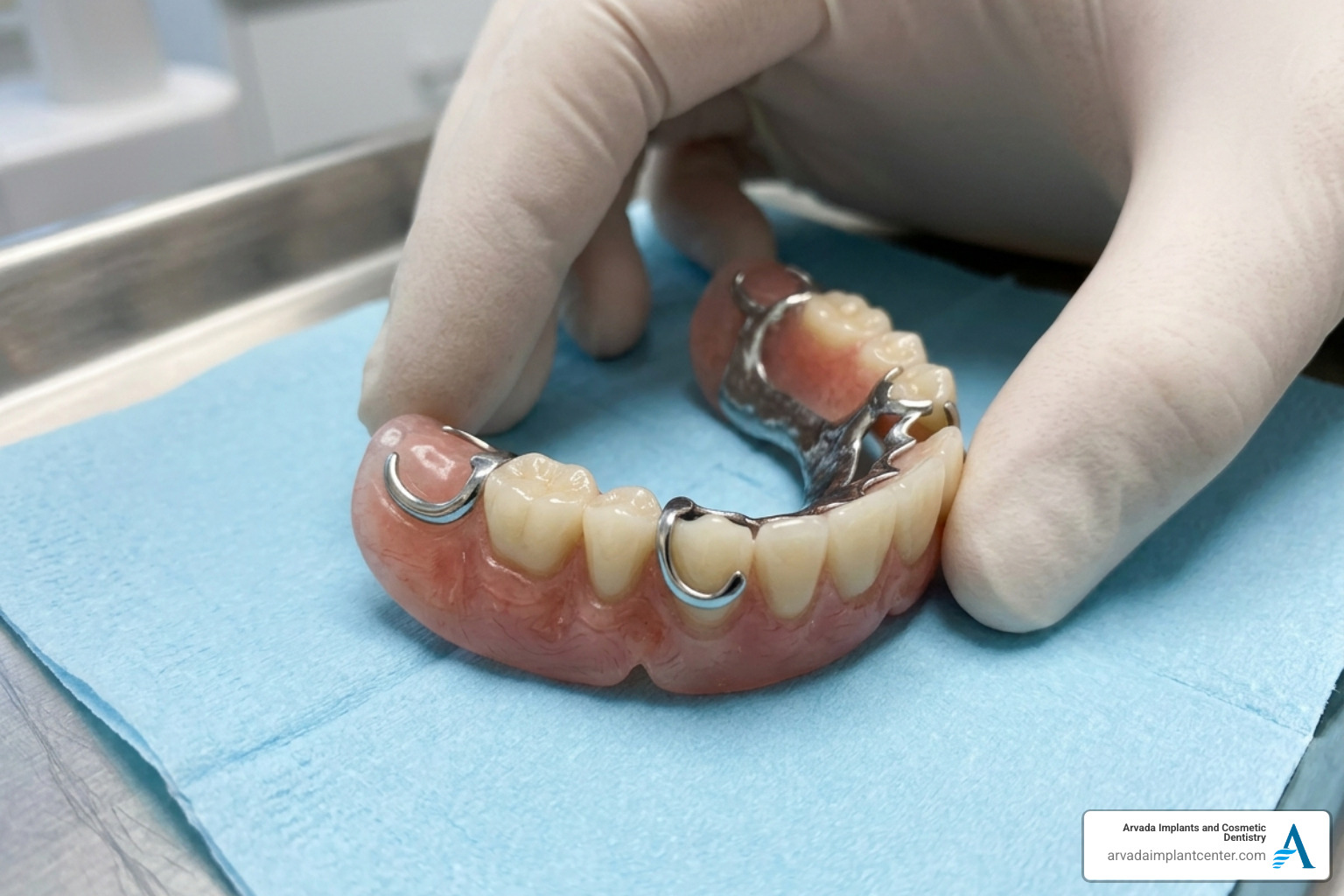
Clasps or Attachments: This is the "hook" system. Metal clasps are the most common, wrapping around your natural teeth to keep the denture stable. For those who want a more "stealthy" look, precision attachments can be used. These are hidden connectors that snap into place, though they often require crowns on your natural teeth to function.
Choosing the Right Material for Your Smile
Not all partial dentures are created equal. In May 2026, we have more material options than ever before, allowing us to prioritize what matters most to you: durability, comfort, or cost.
Feature Acrylic (Flipper) Cast Metal Flexible (Nylon) Durability Low (often temporary) Very High High Weight Lightweight but bulky Heavier but thin Very Lightweight Aesthetics Visible clasps Visible metal clasps Blends naturally Comfort Moderate High (custom fit) Excellent Best For Quick fixes/Budget Long-term strength Comfort & Beauty
For a comprehensive look at how these materials affect your oral health, you can refer to this Partial Dentures Guide.
Acrylic and Cast Metal Frameworks
Acrylic Partials (Flippers): These are often the most affordable and can sometimes be made very quickly. However, they tend to be a bit bulkier and are often used as a temporary solution while a patient waits for a permanent bridge or implant.
Cast Metal Partials: These are the "gold standard" for durability. Usually made from a chrome-cobalt alloy or titanium, the metal framework is incredibly strong and allows the denture to be made much thinner than acrylic. This means it takes up less "real estate" in your mouth, making it easier to speak and eat.
A quick note on titanium: While rare, a study showed that about 0.6% of people can have an inflammatory reaction to titanium. If you have known metal sensitivities, we always discuss this during your consultation. For those looking for a non-removable, titanium-based solution that feels like natural teeth, you might explore more info about dental implants.
The Rise of Flexible Partial Dentures
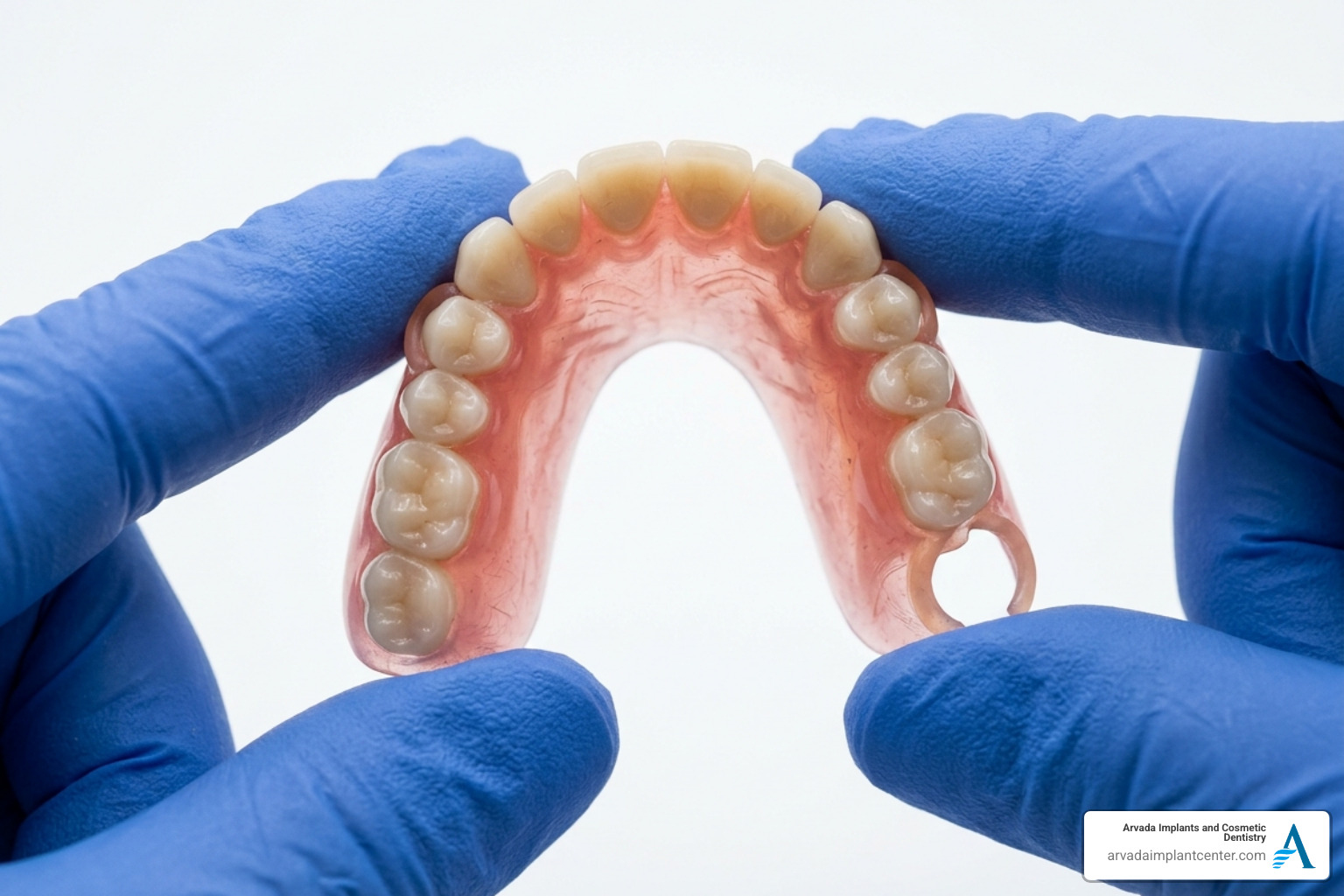
If the idea of metal "hooks" in your mouth doesn't appeal to you, flexible partials are a fantastic modern alternative. Made from a biocompatible nylon resin (a high-tech thermoplastic), these dentures are literally bendable.
The biggest perk? The clasps are made of the same translucent, gum-colored material as the base. This means they blend into your natural gum line, making them virtually invisible to anyone you’re talking to. They are also non-allergenic, making them the perfect choice for patients with acrylic or metal allergies.
The Benefits and Candidacy Requirements
Why bother with partial dentures if you’re only missing a couple of back teeth? It’s a common question. The truth is, your mouth is a finely tuned machine. When one part is missing, the rest of the machine has to work harder.
The benefits include:
Chewing Efficiency: You can return to eating the foods you love.
Speech Clarity: Missing teeth often cause "whistling" or slurred speech; partials provide the structure needed for proper tongue placement.
Preventing Tooth Drift: Teeth like to have neighbors. Without them, they begin to tilt and shift, which can ruin your bite and lead to jaw pain (TMJ).
Facial Support: Teeth support your lips and cheeks. Without that support, your face can take on a "collapsed" or aged appearance.
According to the ADA MouthHealthy information, maintaining these spaces is vital for long-term oral health.
Who is a Good Candidate?
To be a candidate for partial dentures, you must have at least some healthy natural teeth remaining in the arch. These teeth act as the "pillars" that hold the prosthetic in place.
However, if you have active gum disease or your remaining teeth are decayed, those issues need to be addressed first. If you’ve recently had an extraction, your gums typically need about 6 months to fully heal and stabilize before a permanent partial is fitted. If you are missing all your teeth or your remaining teeth are not strong enough, we might suggest looking into more info about All-on-4 options, which provide a full set of teeth supported by implants.
The Process, Cost, and Maintenance of Your New Smile
At Arvada Implants and Cosmetic Dentistry, we don't believe in "one-size-fits-all" smiles. Our process is highly personalized.
The Consultation: We evaluate your oral health and discuss your goals.
Digital Scanning & 3D Imaging: Gone are the days of the "goop" in your mouth. We use advanced digital scans to capture every nook and cranny of your jaw.
Custom Lab Creations: Your partial is handcrafted in a lab to ensure the shade and shape match your natural teeth perfectly.
Wax Try-ins: For more complex cases, we do a "test drive" with a wax model to make sure the bite and look are spot on before the final version is made.
To see the full range of what we offer, visit Our Services page.
Investment and Insurance Coverage
The cost of partial dentures varies based on the materials used and how many teeth are being replaced. Generally, you can expect a range between $300 and $1,800.
Insurance: Most dental insurance plans cover partials as a "restorative" service, often paying for 50% or more of the cost.
Medicaid: In Colorado, programs like Health First Colorado may offer dental benefits for adults, which can include dentures.
Financing: We understand that dental work is an investment. We offer payment plans through various lending partners to make sure your dream smile fits your monthly budget.
Daily Care and Longevity
Well-maintained partial dentures can last anywhere from 5 to 10 years. However, a surprising statistic shows that about 39% of removable partials are no longer in use after 5 years. This is usually due to poor fit or a lack of proper maintenance.
To keep yours in the 61% that succeed, follow these steps:
Clean Daily: Use a soft-bristled brush specifically designed for dentures.
Avoid Toothpaste: Standard toothpaste is too abrasive and can create microscopic scratches where bacteria hide. Use a non-abrasive cleanser or mild dish soap.
Handle with Care: Always clean them over a sink full of water or a folded towel. If you drop them on a hard floor, they will break.
Overnight Soaking: Never let your partials dry out, as they can warp. Soak them in water or a dedicated solution overnight.
For a detailed checklist, read our Denture Home Care Instructions.
Frequently Asked Questions about Partials
Can I eat and speak normally with partials?
Yes, but there is a learning curve! For the first week, stick to soft foods and cut them into small pieces. Try to chew on both sides of your mouth at the same time to keep the pressure even. For speech, practice reading aloud. If you find yourself "clicking" or whistling, don't worry—your tongue is just learning to navigate the new hardware.
Should I sleep with my partial dentures in?
We generally recommend taking them out at night. Your gum tissues need a break from the pressure of the appliance to stay healthy. Removing them also prevents the buildup of bacteria and plaque that can lead to "denture stomatitis" (a yeast infection in the mouth). Plus, it’s the best time to let them soak!
How do partials compare to dental implants?
Partials are a fantastic, cost-effective, non-surgical option. However, they don't stimulate the jawbone like implants do. If you're looking for something that stays in your mouth 24/7 and functions exactly like a natural tooth, you might want to compare Snap-in Dentures vs All-on-4 Implants.
Conclusion
Leaving a gap in your smile is about more than just aesthetics—it’s about your long-term health and confidence. Whether you choose a durable cast metal framework or a beautiful, invisible flexible partial, the team at Arvada Implants and Cosmetic Dentistry is here to help. We pride ourselves on providing affordable, personalized treatments right here in Arvada.
Don't let missing teeth hold you back from enjoying your favorite Colorado foods or smiling for family photos. Schedule your consultation for full and partial dentures today and let's get your smile back on track!