
Best Recovery Foods to Help You Bounce Back Fast
What Are the Best Recovery Foods to Eat After Exercise?
The best recovery foods work on three levels at once: they repair muscle, refill energy stores, and rehydrate your body. Here is a quick-reference list to answer that question fast:
Top 12 Best Recovery Foods:
Eggs - complete protein with high leucine content for muscle repair
Greek yogurt - fast protein plus carbs and electrolytes
Chocolate milk - proven better than sports drinks for post-exercise recovery markers
Tart cherry juice - reduces strength loss and soreness after intense exercise
Salmon - rich in omega-3s that lower inflammation
Bananas - fast carbohydrates plus potassium to replace lost electrolytes
Oatmeal - slow-release carbs with plant protein and anti-inflammatory compounds
Cottage cheese - casein protein that supports overnight muscle repair
Blueberries - antioxidants that reduce exercise-induced oxidative stress
Sweet potatoes - complex carbs packed with vitamins for tissue repair
Chia seeds - omega-3 fats, protein, and magnesium in one small serving
Tuna or mackerel - affordable, high-protein, anti-inflammatory omega-3 source
Quick answer: Eat 20–40g of protein plus roughly half a gram of carbohydrates per pound of body weight within two hours of finishing your workout. Pair that with fluids to replace every pound of sweat lost.
Whether you just finished a long run, a strength session, or you are healing after a dental procedure, what you eat right after matters enormously. Skipping recovery nutrition can slow tissue repair, increase soreness, and even raise your risk of injury from unrepaired microtears in muscle or soft tissue.
I'm Dr. Tariq Sawaqed, a cosmetic and implant dentist with over 20 years of clinical experience helping patients heal and recover after oral surgery procedures — and understanding the best recovery foods has been a key part of supporting that healing process for my patients at Arvada Implants and Cosmetic Dentistry. In the sections below, I'll break down exactly what to eat, when to eat it, and how to tailor your recovery nutrition to your specific situation.
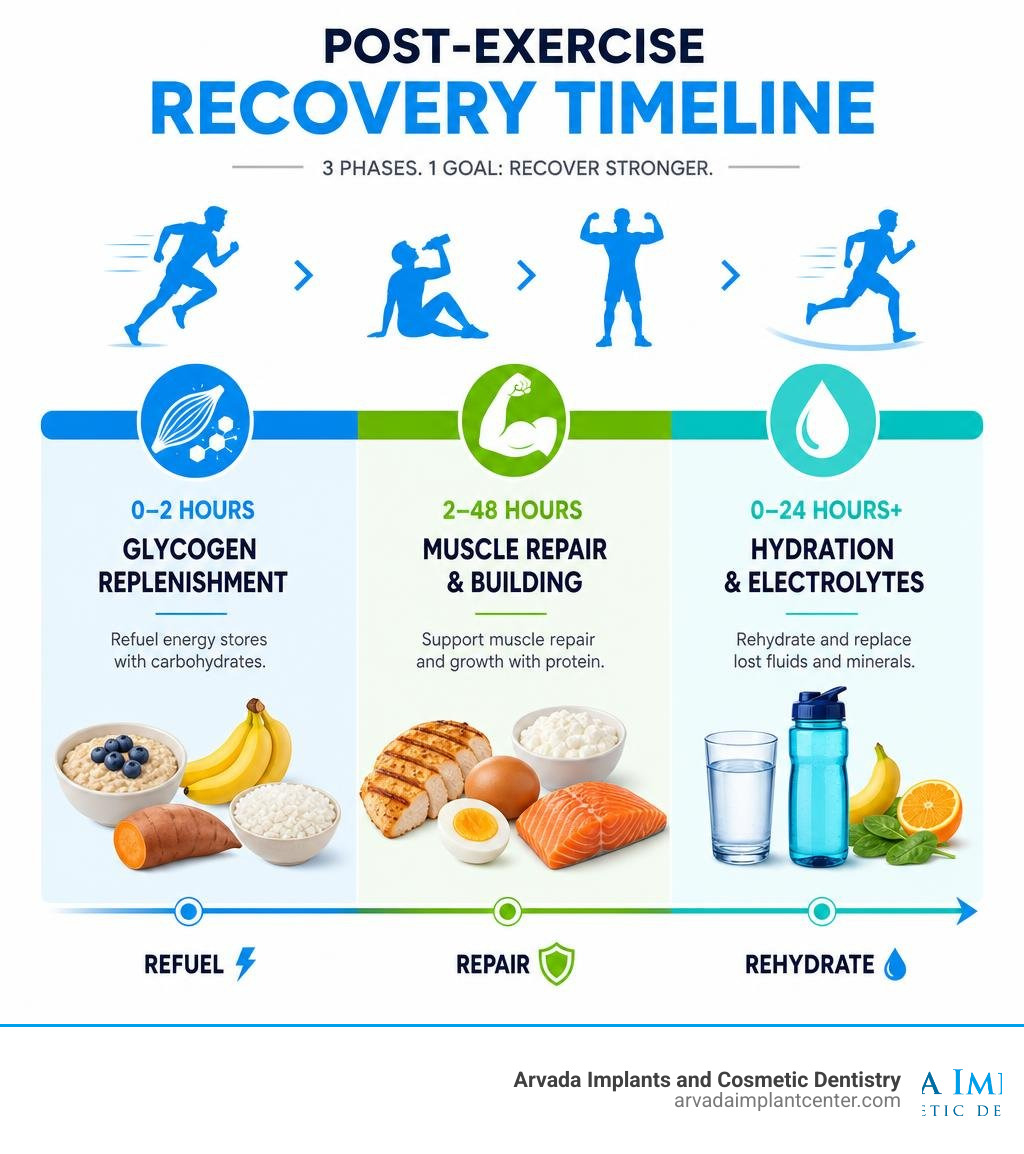
Why the Best Recovery Foods Matter for Muscle Repair
When you push your limits during a hard workout, your body undergoes significant physiological stress. Understanding these processes is the key to choosing the right fuel.
First, intense exercise creates microscopic tears in your muscle fibers. This micro-damage is entirely normal and is actually the stimulus for muscle growth and strengthening. However, without the proper building blocks, these microtears cannot heal efficiently, leading to prolonged delayed onset muscle soreness (DOMS) and a higher risk of overuse injuries.
Second, your body relies on glycogen—a form of stored glucose kept in your liver and skeletal muscles—as its primary fuel source during high-intensity training. Once those glycogen stores are depleted, your muscles feel heavy, and your overall energy levels tank. If you fail to replenish these carbs, your body may start breaking down muscle tissue to use for energy.
Finally, exercise triggers an acute inflammatory response. While some inflammation is necessary to signal the body's repair systems, excessive or chronic inflammation slows down your recovery timeline.
This is where the concept of the "anabolic window" comes into play. For years, fitness culture insisted you had to chug a protein shake within 30 minutes of your workout, or your hard work would go to waste. Modern science paints a more flexible picture. While your muscle cells are highly sensitive to insulin and nutrient absorption immediately after exercise, this primed state actually lasts for about two hours.
To dive deeper into the clinical science behind these cellular mechanisms, you can read the latest Scientific research on post-exercise recovery nutrition, which highlights how combining specific nutrients speeds up tissue regeneration.
Top Macronutrients and Micronutrients for Athletic Recovery
Optimal recovery requires a coordinated approach that balances macronutrients (proteins, carbohydrates, and fats) with micronutrients (vitamins and minerals) that act as cellular catalysts.

Protein: The primary role of post-workout protein is to supply amino acids, the literal building blocks of tissue. To maximize muscle protein synthesis, we recommend practicing "protein pacing"—consuming 20 to 40 grams of high-quality protein every 3 to 4 hours rather than dumping your entire daily requirement into a single meal.
Carbohydrates: Carbs are your recovery spark. When you consume carbohydrates post-workout, your body releases insulin. Insulin acts like a key, unlocking your muscle cells so they can absorb glucose to restore glycogen, while simultaneously shuttling amino acids into those cells for repair.
Healthy Fats: While fats slow down digestion slightly, they are crucial for long-term recovery. In particular, omega-3 fatty acids help manage the inflammatory response, reduce joint stiffness, and support overall cellular health.
Micronutrients: Vitamins C and A, zinc, and copper are essential for collagen synthesis, which repairs the connective tissues, tendons, and joints that support your muscles.
Protein and Carbs: The Best Recovery Foods for Muscle Growth
To build muscle and recover quickly, you need to combine protein and carbohydrates. A general rule of thumb is to aim for a 3:1 or 4:1 carbohydrate-to-protein ratio, especially after intense endurance workouts.
Two of the most effective proteins for this job are whey and casein, both derived from dairy:
Whey Protein: Highly regarded for its rapid absorption rate and high concentration of leucine—an essential amino acid that acts as the primary chemical "switch" to turn on muscle protein synthesis. Just one large whole egg contains about 500 mg of leucine, while a scoop of whey can deliver up to 3,000 mg.
Casein Protein: Unlike whey, casein digests very slowly, providing a steady release of amino acids over several hours. A 2020 research review suggests that consuming a presleep casein snack of at least 40 grams can help control the body's inflammatory response and significantly speed up overnight muscle recovery.
For a comprehensive breakdown of how these proteins interact with carbohydrates to optimize your fitness goals, check out this Expert guide on muscle recovery foods.
Anti-Inflammatory and Antioxidant-Rich Options
If you want to minimize DOMS and get back to training sooner, your diet should feature foods rich in natural anti-inflammatory compounds and antioxidants:
Tart Cherry Juice: This deep red juice is packed with anthocyanins. A study published in the Journal of the International Society of Sports Nutrition found that tart cherry juice significantly reduced strength loss and muscle soreness after intense exercise.
Turmeric and Curcumin: Curcumin, the active compound in turmeric, is a potent natural anti-inflammatory. To maximize its benefits, always pair turmeric with a pinch of black pepper; black pepper contains piperine, which increases curcumin absorption by up to 2,000 percent!
Blueberries: Rich in quercetin and other antioxidants, blueberries neutralize the free radicals produced during strenuous exercise, reducing oxidative stress in your muscle tissue.
Pineapple and Kiwi: Pineapple contains bromelain, and kiwi contains actinidin. Both of these enzymes aid in protein digestion and help break down inflammatory compounds in the body.
Hydration and Electrolytes: Replenishing Lost Fluids
You cannot talk about the best recovery foods without focusing on hydration. Dehydration can impair your athletic performance in less than an hour, increase muscle cramping, and delay the transport of nutrients to your healing muscles.
When you sweat, you lose both water and critical electrolytes, primarily sodium, potassium, and magnesium.
Sodium helps your body retain the fluids you drink.
Potassium prevents muscle cramping and works with sodium to maintain fluid balance.
Magnesium supports muscle relaxation and energy production.
To stay on top of your hydration, monitor your urine color; a pale, straw-like yellow indicates adequate hydration, while a dark color means you need to drink up. Additionally, weigh yourself before and after strenuous workouts. For each pound of lost water weight, you should consume 20 to 24 ounces of liquid.
While plain water is great, certain recovery drinks are highly efficient at restoring fluid and mineral balance:
Recovery Drink Hydration Efficiency Key Electrolytes Provided Best Used For Chocolate Milk Excellent Sodium, Potassium, Calcium Dual carbohydrate/protein recovery & rehydration Coconut Water Very High Potassium, Magnesium Light to moderate workouts, natural hydration Sports Drinks High Sodium, Potassium Prolonged endurance events (60+ minutes) Water Moderate Trace Minerals Short, low-intensity workouts
Tailoring Your Recovery Diet to Specific Needs
There is no one-size-fits-all approach to recovery nutrition. Your ideal plate depends on your sport, training intensity, and body weight.
For example, athletes under 175 pounds typically need about 3 servings of protein and 2 to 6 servings of carbohydrates after a strenuous workout. Meanwhile, athletes over 175 pounds may require up to 5 protein servings and 3 to 8 servings of carbohydrates to fully restore their glycogen and repair damaged tissue.

Furthermore, emerging fields like personalized nutrition—including genetic and metabolic profiling—allow elite athletes to tailor their diet down to their specific inflammatory responses and nutrient absorption rates. However, for most of us, building a balanced "performance plate" consisting of 1/4 clean protein, 1/4 whole-food carbohydrates, and 1/2 colorful, antioxidant-rich plants is the perfect starting point.
The Best Recovery Foods for Runners and Endurance Athletes
Endurance athletes, such as long-distance runners, deplete their glycogen stores to a much greater extent than strength athletes. Therefore, their recovery priority must be rapid glycogen replenishment.
Shortly after a long run, runners should consume fast-digesting carbohydrates (like white rice, bananas, or potatoes) paired with a high-quality protein to stimulate insulin release and accelerate recovery. If you skip this window, you may experience severe mid-cycle fatigue or hit a training plateau.
For practical meal ideas and advice specifically designed for endurance training, read through these Runner recovery nutrition tips.
Soft Foods for Recovery After Oral Surgery
Recovery nutrition isn't just for the gym. If you have recently undergone oral surgery, such as a tooth extraction, a sinus lift, or dental implant placement, your body is in an intense state of tissue repair.
Just like an injured muscle, your surgical sites require extra fuel—specifically protein, zinc, and vitamin C—to rebuild tissue and prevent infection. However, because you must protect the surgical site and avoid putting pressure on healing gums, you must stick to a soft food diet.
Excellent soft, nutrient-dense recovery foods include:
Scrambled Eggs: Soft, easy to chew, and packed with high-quality protein and leucine.
Cottage Cheese: Rich in slow-digesting casein protein and calcium to support bone healing around implants.
Smoothies: A perfect vehicle for blending Greek yogurt, protein powder, spinach, and antioxidant-rich berries (just remember: never use a straw after oral surgery, as the suction can dislodge healing blood clots!).
To ensure a safe, comfortable, and rapid healing process, be sure to strictly follow our Tooth extraction aftercare guidelines and read our comprehensive Dental implants home care instructions to protect your new smile.
Frequently Asked Questions about Recovery Nutrition
How long does the post-workout anabolic window actually last?
While older fitness myths claimed you had to consume nutrients within 30 minutes, current research shows that the optimal post-workout window lasts closer to two hours. Your muscles remain highly receptive to protein synthesis and glycogen replenishment during this time. However, the most important factor for long-term recovery and muscle growth is your consistent daily intake of protein and carbohydrates distributed evenly throughout the day.
Are whole foods better than supplements for muscle recovery?
In almost all cases, whole foods are superior to isolated supplements. While whey protein powder is incredibly convenient, whole foods like eggs, salmon, and dairy contain complex matrices of vitamins, healthy fats, and bioactive compounds that work synergistically to support healing. For example, studies show that eating whole eggs promotes significantly more muscle protein synthesis than consuming an equivalent amount of protein from egg whites alone. Use supplements to fill in the gaps, but build your foundation on real food.
What should I eat immediately after dental implant surgery?
Immediately after dental implant surgery, stick to cool liquids and very soft foods that require no chewing, such as yogurt, applesauce, smoothies, and lukewarm broths. Avoid hot foods or drinks, spicy dishes, and crunchy or sticky foods that could irritate the surgical site or get trapped in your incisions. Keeping your head elevated while resting and staying hydrated are also critical during this initial phase. To learn more about what to expect as your jaw heals, read our guide on All on 4 recovery time expectations.
Conclusion
Whether you are trying to bounce back after a grueling workout or healing after a dental procedure, the food you put into your body serves as the raw material for rebuilding your tissues. By prioritizing high-quality proteins, fast-acting carbohydrates, anti-inflammatory foods, and proper hydration, you can significantly speed up your recovery timeline and protect your body from injury.
At Arvada Implants and Cosmetic Dentistry, we are proud to provide affordable, personalized treatments—from custom-crafted dental implants to complete smile makeovers—right here in Arvada, Colorado. We believe that exceptional oral health care goes hand-in-hand with proper recovery education.
If you are planning an upcoming dental procedure or need professional guidance on oral surgery aftercare, we are here to help you every step of the way.
Ready to take the next step toward a healthy, confident smile? Schedule your tooth extraction recovery consultation with our experienced team today!