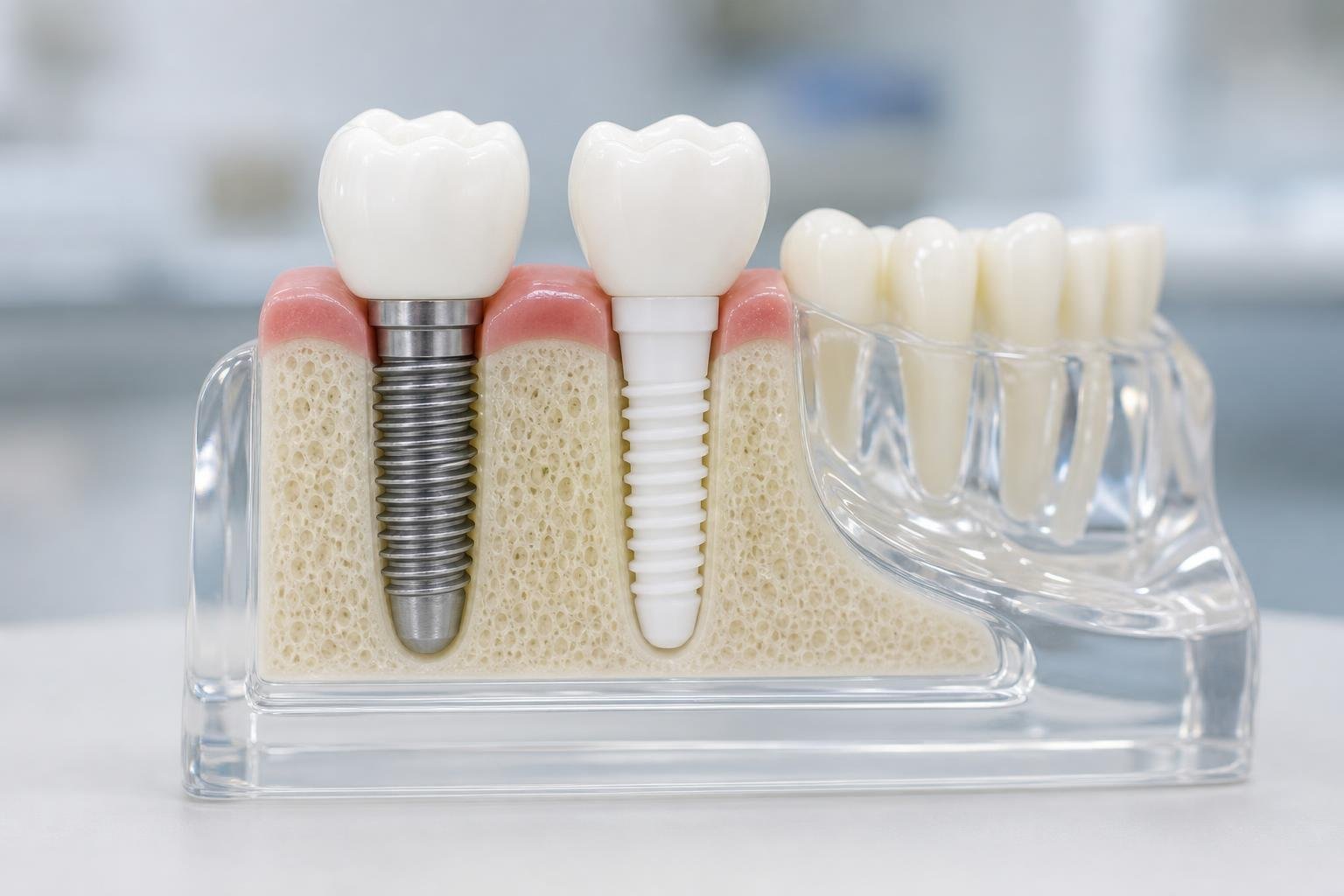
The Battle of the Beads: Titanium vs Zirconia Dental Implants
The Real Difference Between Titanium and Zirconia Dental Implants
Choosing between a dental implant titanium vs zirconia is one of the most important decisions you'll make for your smile — and the answer isn't the same for everyone.
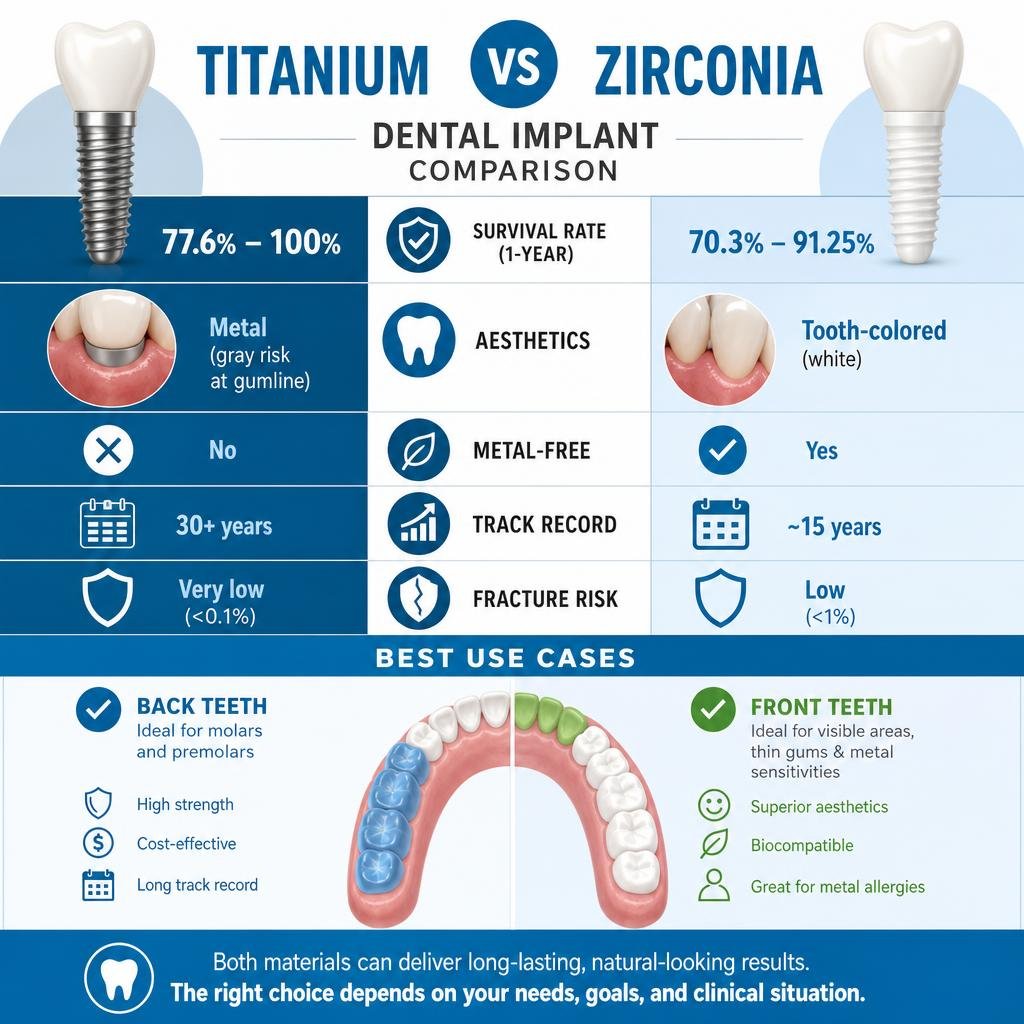
Here's a quick side-by-side to help you decide:
Feature Titanium Zirconia Survival rate (1-year) 77.6% – 100% 70.3% – 91.25% Marginal bone loss (12 mo.) 0.18 mm 0.42 mm Appearance Metal (gray risk at gumline) Tooth-colored (white) Metal-free No Yes Best for Back teeth, budget-conscious patients Front teeth, thin gums, metal allergies Track record 30+ years ~15 years Fracture risk Very low (<0.1%) Low (<1%)
Bottom line: Titanium has the longer track record and slightly better survival data. Zirconia wins on aesthetics and is the right call for patients with metal sensitivities or visible front-tooth replacements.
Both materials can give you a natural-feeling, long-lasting smile. The best choice depends on where the implant goes, what your gums look like, and your health history.
I'm Dr. Tariq Sawaqed, CEO of Arvada Implants and Cosmetic Dentistry, with over 20 years of experience placing and restoring dental implants — including both dental implant titanium vs zirconia restorations across hundreds of patients. In this guide, I'll walk you through exactly what the clinical evidence says, so you can make a confident, informed decision.
Clinical Outcomes: Dental Implant Titanium vs Zirconia
When evaluating the choice between a dental implant titanium vs zirconia, we must look beyond marketing claims and examine the hard clinical data. Both materials have been scrutinized in rigorous randomized controlled trials (RCTs) to determine how they perform in real human mouths over time.
To understand their performance, scientists measure two primary metrics: survival rates (whether the implant remains in the mouth and functions correctly) and marginal bone loss (how much bone around the top of the implant recedes over time). Bone preservation is vital because the bone acts as the foundation for both the implant and your surrounding facial structure.
According to a comprehensive meta-analysis of randomized controlled trials published in the Comparative Clinical Behavior of Zirconia versus Titanium Dental Implants, titanium implants continue to hold a slight clinical edge in early bone preservation and survival.
To see how these clinical findings fit into the actual surgical process, you can Learn the Dental Implant Process Step by Step, which details how we prepare the bone and place these materials for optimal longevity.
Survival Rates of Dental Implant Titanium vs Zirconia
In head-to-head clinical trials, titanium implants consistently demonstrate superior short-term and long-term survival rates. At the 1-year mark, meta-analyses show that titanium implants achieve a statistically significant higher survival rate of 77.6% compared to 70.3% for zirconia implants in challenging clinical setups (such as supporting overdentures).
When expanding the scope to a broader systematic review of randomized controlled trials, such as the one detailed in Clinical Performance Comparing Titanium and Titanium–Zirconium or Zirconia Dental Implants, the survival rates across various follow-up periods (ranging from 1 to 6.7 years) tell a similar story:
Titanium Implants: Survival rates ranged from 92.6% to 100%.
Zirconia Implants: Survival rates ranged from 87.5% to 91.25%.
While zirconia's success rates are highly acceptable and make it a very viable alternative, it carries a slightly higher risk of early-stage failure during the critical osseointegration phase (when the bone fuses to the implant). In one notable study reviewed, 26.03% of zirconia implants were lost during the follow-up period, compared to just 8.48% of titanium implants. This is why precise surgical placement and careful patient selection are absolutely paramount when opting for ceramic.
Marginal Bone Loss in Dental Implant Titanium vs Zirconia
Marginal bone loss (MBL) is a key indicator of implant health. When an implant is placed, a small amount of bone remodeling naturally occurs. However, keeping this bone loss to an absolute minimum is essential to prevent the implant from loosening or exposing its threads to bacteria.
The clinical data reveals a clear winner in bone preservation:
Titanium Implants: Showed significantly less marginal bone loss at 12 months, averaging just 0.18 mm ± 0.47. Across longer-term studies (1 to 6.7 years), the MBL ranged from -0.125 mm to -1.17 mm.
Zirconia Implants: Showed a higher average marginal bone loss of 0.42 mm ± 0.40 at 12 months. Over the 1 to 6.7-year span, MBL for zirconia ranged from -0.25 mm to -1.38 mm.
This difference is statistically significant (p < 0.001), meaning titanium's ability to preserve the surrounding bone level at the 1-year mark is scientifically proven to be superior. For patients with limited bone density, this minor difference can be a deciding factor in material selection.
Aesthetic Outcomes and Soft Tissue Health
While titanium is the undisputed champion of bone preservation, dental implants are not just about mechanics—they are also about how you look and feel when you smile. This is where the debate surrounding a dental implant titanium vs zirconia becomes incredibly interesting.
In the "aesthetic zone" (the highly visible front teeth), the visual properties of the implant material are crucial. Titanium is a dark gray metal. If you have a thin or translucent gingival biotype (thin gum tissue), or if your gums recede slightly as you age, a titanium implant can cast a dark, gray shadow through the gums. Zirconia, being a bright white ceramic, completely eliminates this issue, mimicking the natural look of a tooth root.
According to the Clinical effectiveness of Zirconia versus titanium dental implants in anterior region, zirconia is highly favored in the front of the mouth for its ability to blend seamlessly with natural teeth. If you want to dive deeper into how ceramic implants are utilized, you can Read our Zirconia Dental Implants Complete Guide.
Pink Esthetic Score (PES) and Visual Appeal
To objectively measure how natural an implant looks, dentists use the Pink Esthetic Score (PES). The PES evaluates several soft-tissue parameters around the implant, including:
The curvature of the gumline.
The height of the gum tissue between the teeth (papillae).
The color, texture, and natural contour of the gums.
Interestingly, clinical trials show no statistically significant difference in the overall Pink Esthetic Score between titanium and zirconia implants when placed by skilled surgeons. Both can achieve outstanding, life-like results.
However, zirconia provides an aesthetic safety net. If gum recession occurs over the years, the exposed white margin of a zirconia implant remains virtually invisible, whereas an exposed titanium collar would require surgical revision or crown replacement. If you are planning a smile makeover, you can Explore Cosmetic Dentistry Options to see how we combine implant materials with custom cosmetic crowns to achieve the ultimate aesthetic outcome.
Peri-Implant Tissue Health and Plaque Accumulation
An implant is only as healthy as the soft tissue surrounding it. If plaque accumulates around the implant, it can cause gum inflammation (peri-implant mucositis), which can progress to bone loss and implant failure (peri-implantitis).
Zirconia has a unique biological advantage here: lower bacterial adhesion. Because zirconia is a highly polished ceramic, bacterial plaque struggles to stick to its surface.
In clinical studies, the differences in soft tissue health between the two materials are subtle but favorable to zirconia:
Bleeding on Probing (BoP): Zirconia implants showed slightly lower bleeding rates (0.26% ± 0.36) compared to titanium (0.34% ± 0.42), though this difference did not reach statistical significance (p > 0.05).
Plaque Index: Plaque accumulation was remarkably similar, with titanium scoring 0.46 ± 0.47 and zirconia scoring 0.44 ± 0.49 (p > 0.05).
While both materials support excellent soft tissue health under healthy oral hygiene conditions, zirconia’s resistance to plaque makes it slightly more forgiving for patients who are prone to gum inflammation.
Material Innovations: Titanium-Zirconium Alloys
If titanium has the best bone-fusing properties but zirconia has the best aesthetic and biocompatibility properties, is there a way to combine them? Yes.
Enter Titanium-Zirconium (Ti-Zr) alloys, which typically consist of 85% titanium and 15% zirconium. This hybrid material represents a massive leap forward in dental technology. By alloying these two elements, manufacturers have created an implant that is mechanically stronger than pure titanium while maintaining superb biological compatibility.
Clinical performance metrics for Titanium-Zirconium alloy implants are highly impressive:
Survival Rates: Ti-Zr alloys show survival rates between 95.8% and 100% at 1-year follow-up, outperforming both pure titanium and pure zirconia in several clinical trials.
Narrow Diameters: Because the alloy is incredibly strong, we can use narrow-diameter implants in tight spaces (like the lower front teeth) without worrying about the implant fracturing under biting forces. This often allows us to avoid complex bone grafting procedures.
If you are interested in exploring these advanced hybrid options right here in Colorado, you can read about Which Dental Centers in Arvada Offer Advanced Options Like Zirconia Dental Implants to see how we utilize cutting-edge materials to simplify your care.
Patient Factors, Complications, and Longevity
The success of any dental implant is a partnership between the material chosen and the patient's unique body. No matter how advanced the implant is, patient-related risk factors play a massive role in whether the implant successfully fuses with the bone.

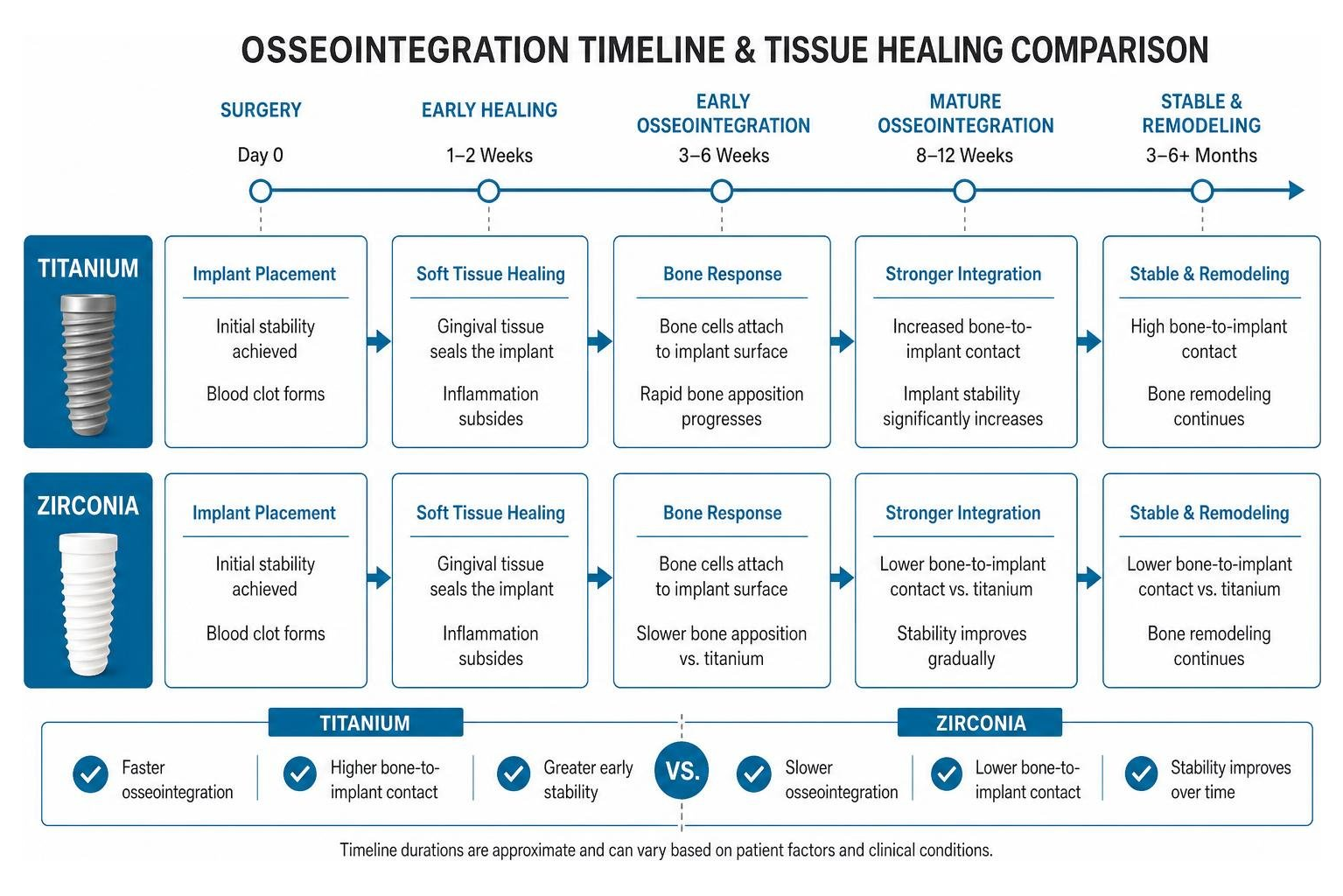
When we plan a treatment, we must look closely at your overall health, lifestyle choices, and anatomical structure. According to the comprehensive review of Zirconia vs. Titanium Dental Implants: Rejection Rates, Cost, and Longevity, choosing the right material is highly dependent on individual healing capabilities. To better prepare for your healing journey, it is highly recommended to Understand the Dental Implant Recovery Timeline so you know what to expect during the weeks following surgery.
Impact of Smoking and Bone Density
Two of the biggest threats to implant success are smoking and poor bone quality:
Smoking: Nicotine constricts blood vessels, drastically reducing the oxygen and nutrient delivery to the healing bone and gums. This significantly increases the risk of early osseointegration failure for both titanium and zirconia.
Bone Density: Titanium is highly forgiving in areas of lower bone density (such as the upper back jaw) because of its long-proven micro-textured surfaces that encourage rapid bone growth. Zirconia requires dense, high-quality bone for initial stability. If a patient has significant bone loss, we often recommend a bone graft or sinus lift prior to implant placement to ensure the implant has a stable foundation.
Mechanical Complications and Failure Rates
While biological failure (failure to fuse) is rare, mechanical complications can also occur. The physical characteristics of titanium and zirconia are fundamentally different:
Titanium (Ductile): Titanium is a metal, meaning it is slightly flexible and highly resistant to fracturing. The fracture rate of titanium implants is exceptionally low (less than 0.1%).
Zirconia (Brittle Ceramic): Zirconia has incredibly high flexural strength and fracture toughness, but it is still a ceramic. This makes it more brittle than metal. If subjected to extreme, uneven biting forces (such as severe teeth grinding, or bruxism), zirconia carries a slightly higher risk of structural cracking or fracture (under 1%).
Furthermore, zirconia can undergo a process called hydrothermal degradation (or low-temperature degradation). In the warm, moist environment of the mouth, zirconia's crystal structure can slowly transition from a stable tetragonal phase to a weaker monoclinic phase over many years. While modern engineering has minimized this risk, it remains a technical point of consideration for long-term mechanical stability.
Frequently Asked Questions About Dental Implant Materials
Which dental implant titanium vs zirconia option lasts longer?
Titanium dental implants have the longest-proven clinical track record in modern dentistry, with documented success and survival rates exceeding 95% over 30+ years of clinical use. Zirconia implants are highly durable and show excellent 10-to-15-year success rates (ranging from 92% to 96%), but they do not yet possess the decades-long historical data that titanium does. For a younger patient looking for a lifetime restoration, titanium's track record is hard to beat.
Are zirconia implants completely metal-free?
Yes. Zirconia dental implants are made of zirconium dioxide (ZrO₂), which is a ceramic material. Although zirconium is a transition metal on the periodic table, oxidizing it into zirconium dioxide completely changes its structure, properties, and behavior—making it a non-corrosive, non-metallic ceramic. It is the perfect choice for patients with documented titanium allergies (which affect roughly 0.5% to 1% of the population) or those who prefer holistic, metal-free dentistry.
What is the cost difference for dental implant titanium vs zirconia?
Zirconia implants generally cost more than traditional titanium implants due to the complex manufacturing processes required to mill ceramic and the specialized training needed to place them. On average, the implant portion for titanium ranges from $1,500 to $3,000, while zirconia implants typically range from $2,500 to $4,000 (representing about a $1,000 upgrade cost).
Insurance coverage varies, but most plans cover zirconia at the same rate as titanium, leaving the patient to cover the material upgrade cost out of pocket. To budget accurately for your procedure, you can Review the Cost of One Dental Implant to see how our local pricing structures work.
Conclusion
In the battle of dental implant titanium vs zirconia, there is no single "best" material—only the best material for your unique mouth, health history, and aesthetic goals.
Titanium remains the gold standard for mechanical strength, bone preservation, and decades of proven longevity, making it the premier choice for back teeth and complex full-mouth restorations. Zirconia is the ultimate aesthetic champion, offering a beautiful, metal-free, and plaque-resistant solution that is ideal for the front smile zone and patients with metal sensitivities.
At Arvada Implants and Cosmetic Dentistry, we believe in affordable, highly personalized treatments. We don't believe in one-size-fits-all solutions. Our in-house custom lab allows us to craft unique, beautiful smiles tailored specifically to your facial structure and biological needs. Whether you choose titanium, zirconia, or a high-strength alloy, our expert team is here to guide you every step of the way.
Ready to take the next step toward a confident, healthy smile? Schedule a Consultation for Cosmetic Dentistry with us in Arvada, CO today, and let's design your perfect smile together.