A Practical Guide to Choosing Dentures for Seniors
What Every Senior Should Know About Dentures
Dentures for seniors are removable dental appliances that replace missing teeth and restore the ability to eat, speak, and smile with confidence. Here is a quick overview of what you need to know:
Topic Quick Answer Most common types Complete, partial, immediate, and implant-supported dentures Average cost $1,000 to $2,800 for upper and lower; up to $5,000 for premium options Does Medicare cover them? Original Medicare does not; some Medicare Advantage plans do How long do they last? 5 to 7 years with proper care Adjustment period Most people feel comfortable within a few weeks Best for bone health Implant-supported dentures (conventional dentures do not prevent bone loss)
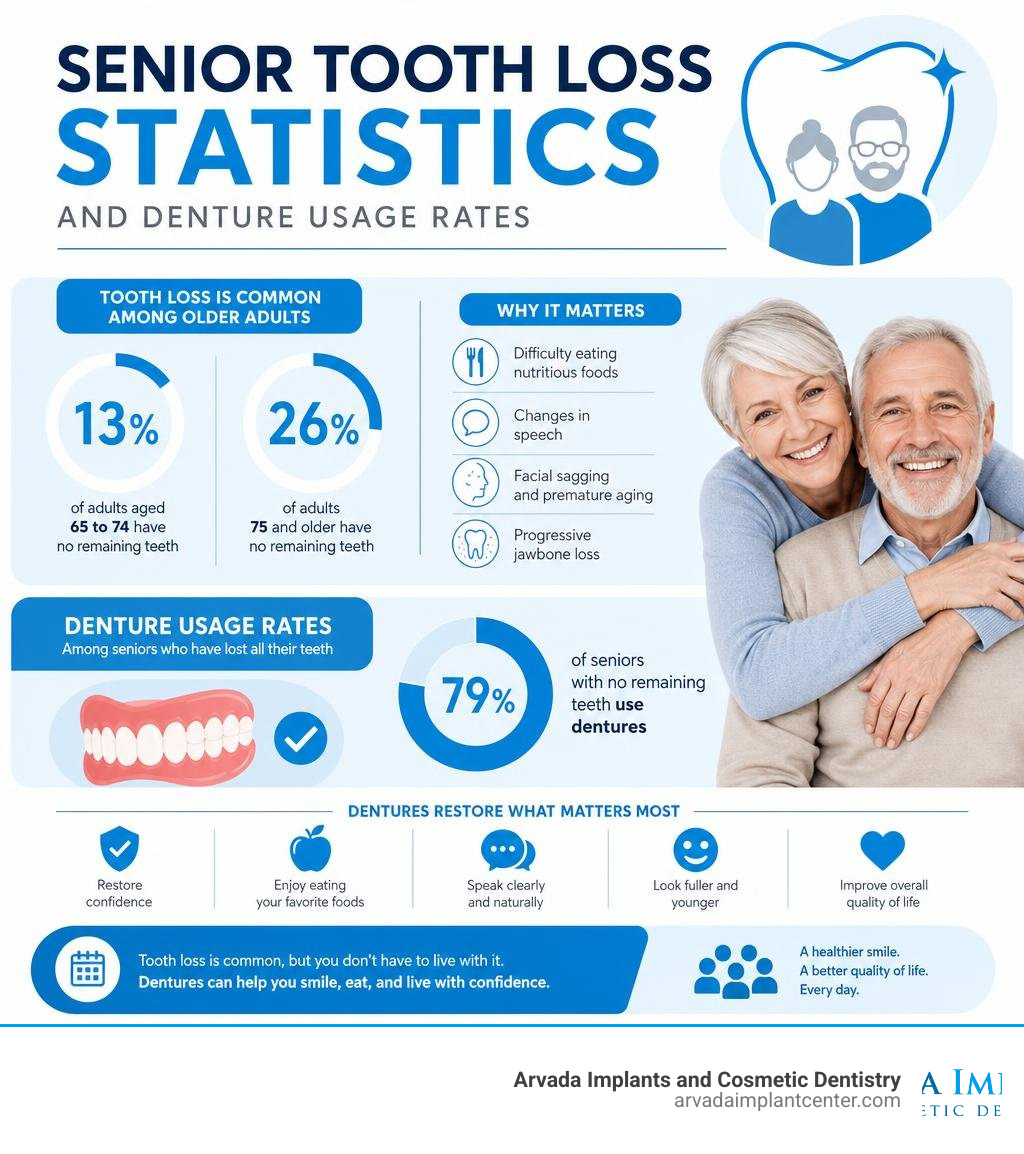
Tooth loss is more common among older adults than most people realize. According to the CDC, 13% of adults aged 65 to 74 have no remaining teeth, and that number rises to 26% for adults 75 and older. Yet many seniors delay treatment because of cost fears or dental anxiety — even though leaving missing teeth untreated can lead to serious consequences: difficulty eating nutritious foods, changes in speech, facial sagging, and progressive jawbone loss.
The good news? Modern dentures are more comfortable, more natural-looking, and more affordable than ever before. Whether you are missing one tooth or all of them, there is a solution that fits your health needs and your budget.
I'm Dr. Tariq Sawaqed, founder of Arvada Implants and Cosmetic Dentistry, and with over 20 years of clinical experience I have helped thousands of patients restore their smiles with custom-fitted dentures for seniors and implant-supported restorations. In this guide, I will walk you through every option available so you can make a confident, informed decision.
Comparing the Best Types of Dentures for Seniors
When it comes to selecting the right tooth replacement option, there is no one-size-fits-all answer. Your choice will depend on how many natural teeth you have left, the health of your jawbone, your lifestyle, and your budget. Modern prosthodontics has evolved far beyond the heavy, unnatural-looking false teeth of the past. Today, we utilize advanced digital imaging and lightweight, durable materials to create custom appliances that blend seamlessly with your natural facial features.
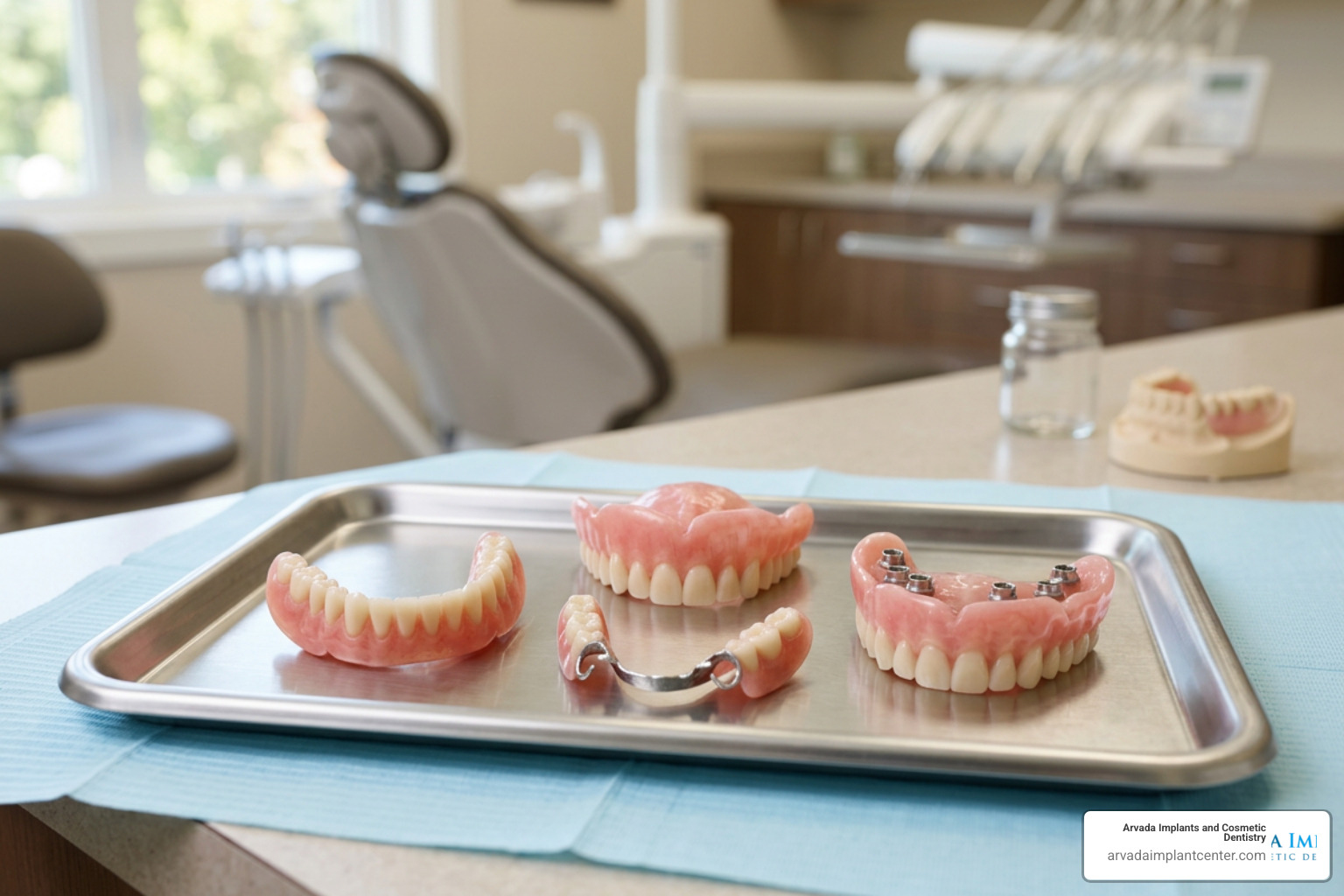
To help you understand the landscape, we have broken down the primary types of dentures available. Each serves a specific clinical purpose, and choosing the right one is the first step toward reclaiming your quality of life. For a deeper dive into aesthetics, you can also explore our guide to most realistic full and partial dentures.
Complete and Partial Dentures
Traditional complete and partial dentures remain the most common and accessible solutions for older adults.
Complete Dentures: If you have lost all your teeth on either your upper or lower arch (or both), complete dentures are designed to restore the entire smile. They consist of a flesh-colored acrylic base that rests over your gums. The upper denture covers the roof of your mouth and is held in place by natural suction, while the lower denture is shaped like a horseshoe to accommodate your tongue and relies on muscle coordination and gravity to stay put.
Partial Dentures: If you still have some healthy remaining teeth, partial dentures are an excellent way to fill the gaps. These appliances consist of replacement teeth attached to a pink acrylic or metal frame. They are secured to your remaining natural teeth using discreet metal clasps or precision attachments. Partials not only restore your bite but also prevent your remaining teeth from shifting out of alignment.
If you are currently navigating tooth loss, we encourage you to learn about full & partial dentures to see how these classic, non-invasive treatments can quickly restore your smile.
Implant-Supported Dentures
For seniors seeking the ultimate level of stability and comfort, implant-supported dentures—often called overdentures—represent the gold standard of modern restorative dentistry.
Unlike traditional dentures that sit loosely on top of the gums, implant-supported models snap securely onto titanium posts that are surgically placed into the jawbone. These posts act as artificial tooth roots.
The benefits of this approach are life-changing:
Enhanced Stability: No more slipping, sliding, or embarrassing clicking noises when you speak or laugh.
Superior Biting Force: While traditional dentures only restore about 25% to 50% of your natural biting force, implant-supported dentures can restore up to 90%. This means you can return to enjoying hard, nutritious foods like apples, nuts, and steak.
Bone Preservation: The titanium implants stimulate the jawbone through chewing pressure, preventing the bone resorption (shrinkage) that naturally occurs after tooth loss.
To find out if this state-of-the-art solution is right for you, read about dentures with dental implants and how they can revolutionize your daily life.
Dentures vs. Dental Implants: Which Is Right for You?
Choosing between conventional dentures and dental implants is a significant decision. While traditional dentures are non-invasive and highly affordable upfront, dental implants offer unmatched longevity, bone preservation, and a feel that is virtually indistinguishable from natural teeth.
When you lose a tooth, the underlying jawbone no longer receives the physical stimulation of chewing. Over time, this leads to a biological process called resorption, where the bone tissue is broken down and reabsorbed by the body. Conventional dentures do not stop this process; in fact, the constant pressure of a loose denture rubbing against the ridge can sometimes accelerate it. Dental implants, on the other hand, fuse directly with your bone to keep your jaw strong and preserve your youthful facial structure.
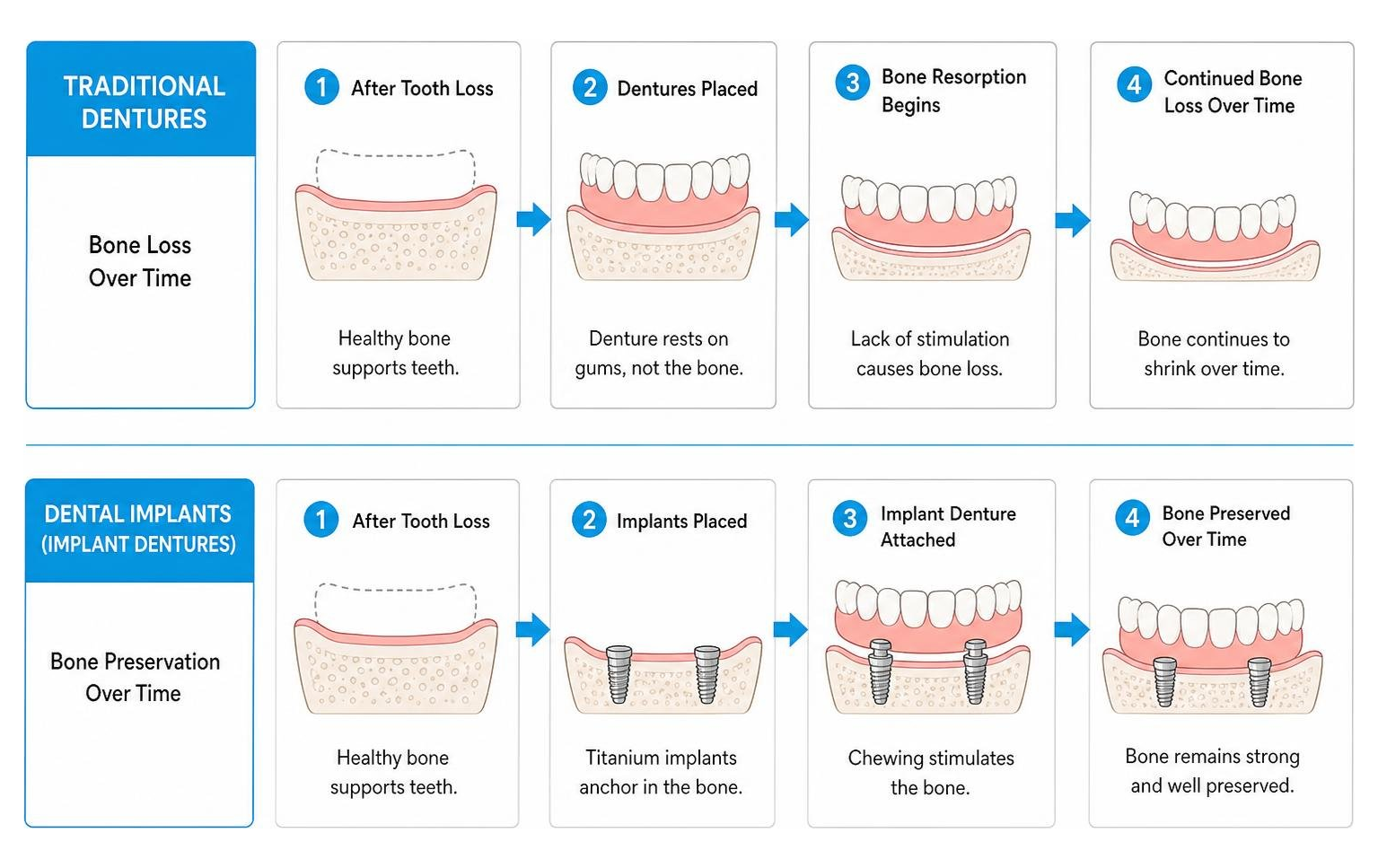
To help you weigh your options, here is a direct comparison of traditional dentures versus dental implants:
Feature Traditional Dentures Dental Implants / Implant Dentures Surgical Procedure None required (unless extractions are needed) Requires minor surgical placement of titanium posts Stability May slip or shift; often requires adhesives Fixed securely; zero slipping or sliding Biting Power Restores 25% to 50% of natural biting force Restores up to 90% of natural biting force Bone Health Does not prevent jawbone resorption Actively preserves and stimulates jawbone growth Lifespan Needs replacement or relining every 5 to 7 years Implants can last a lifetime; the overdenture lasts 10+ years Maintenance Must be removed nightly and soaked Brushed in the mouth (fixed) or snapped out for easy cleaning
To evaluate the financial aspect of this choice, we invite you to compare dentures vs implants cost to determine which investment aligns best with your long-term goals.
Understanding the Cost of Dentures for Seniors
Navigating the financial side of dental care can feel overwhelming, especially for seniors living on fixed incomes. The average cost of traditional dentures typically ranges from $800 to $5,000 per arch, with most standard sets coming in around $1,500. A complete set of upper and lower dentures generally costs between $1,000 and $2,800 out-of-pocket.
Unfortunately, dental coverage can be a major hurdle. 65% of Medicare beneficiaries lack dental coverage, and Original Medicare (Parts A and B) does not cover routine dental care or dentures. However, there are several pathways to make treatment affordable:
Medicare Advantage (Part C): About 50% of Medicare Advantage plans offer comprehensive dental benefits that may cover a portion of your dentures, though they often limit replacement to one set every 5 years and carry annual maximum benefit caps (averaging around $1,300).
State Assistance Programs: Here in Colorado, eligible low-income older adults can access the Colorado Dental Health Care Program for Low-Income Seniors, which provides state-funded dental services to low-income seniors who do not qualify for Health First Colorado (Colorado's Medicaid program).
Private and Stand-Alone Plans: Specialized senior dental insurance can significantly reduce out-of-pocket expenses.
For a comprehensive breakdown of insurance policies and hidden costs, read our guide to dentures for seniors on Medicare and find out how to maximize your benefits. You can also review general Medicare and dental coverage options to understand national policy structures.
Finding Affordable Tooth Replacement Options
At Arvada Implants and Cosmetic Dentistry, we believe that everyone deserves to eat, laugh, and live confidently, regardless of their financial situation. If you are worried about the upfront cost of treatment, there are several pathways to explore:
Flexible Financing: We partner with leading third-party healthcare lenders to offer flexible monthly payment plans with high approval rates, allowing you to pay for your smile over time.
State and Local Resources: Programs like the Older Adult Oral Health Services in Colorado help bridge the gap for seniors who need high-quality dental care but face financial barriers.
Dental Schools: Local university dental clinics sometimes offer discounted treatments supervised by licensed prosthodontic faculty.
No matter your budget, we can customize a treatment plan that fits your financial comfort zone. Learn about affordable dentures and dental implants to discover how we make world-class restorative care accessible to our Arvada community.
The Step-by-Step Process of Getting Dentures
Getting custom dentures is a collaborative journey designed to ensure your new smile fits comfortably and looks incredibly natural. We utilize advanced digital technology to streamline this process, minimizing the number of visits and eliminating the need for uncomfortable, goopy impression trays.
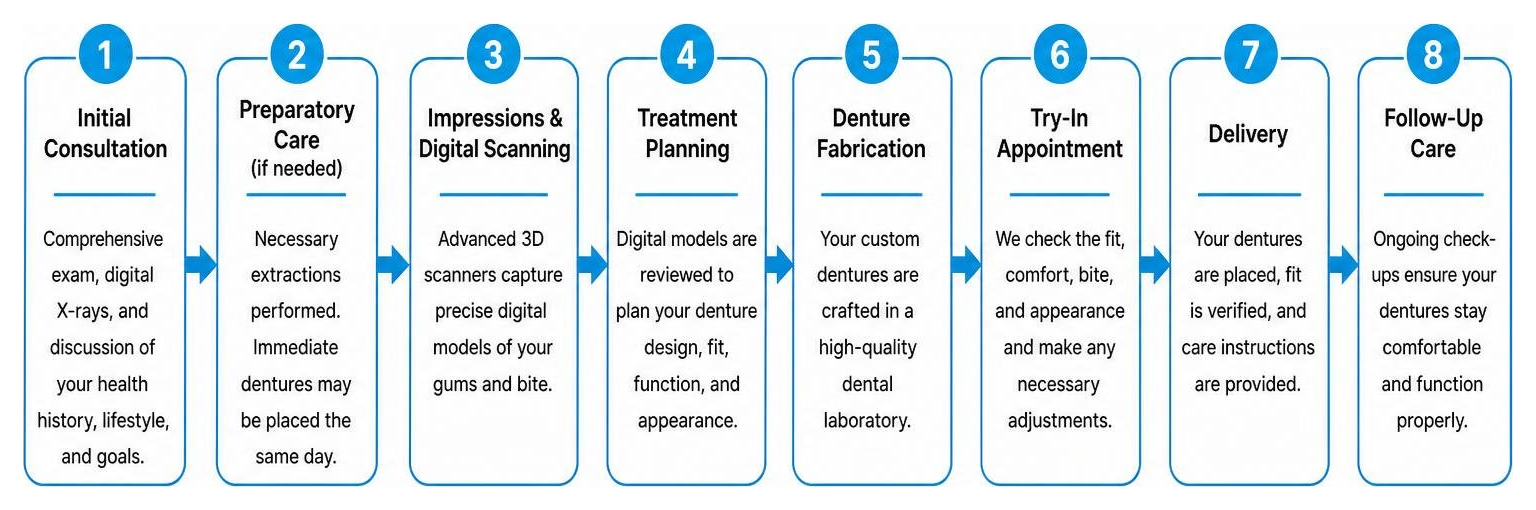
Here is what you can expect during the process:
Initial Consultation: We perform a comprehensive exam, take digital X-rays, and discuss your health history, lifestyle, and aesthetic goals.
Preparatory Care (If Needed): If you have damaged or decaying teeth that cannot be saved, we will gently perform the necessary extractions. If you qualify for immediate dentures, these can be placed on the same day so you never have to go public without teeth.
Impressions & Digital Scanning: We use advanced 3D scanners to capture precise digital models of your gums and bite.
Wax Try-In: We create a mock-up of your dentures in wax. This allows you to "test drive" your new smile, verifying the shape, shade, and fit of the teeth before the final appliance is fabricated in our custom lab.
Final Fitting & Adjustments: Once your custom dentures are ready, we place them in your mouth, check your bite, and make fine adjustments to eliminate any tight spots.
Ready to take the first step? Schedule a denture consultation in Arvada to meet with our compassionate team.
Daily Maintenance and Care of Dentures for Seniors
Taking proper care of your dentures is essential to protect your oral health and extend the lifespan of your appliance. Poor denture hygiene can lead to a painful inflammatory condition called denture-induced stomatitis or fungal infections like oral thrush.
Brush Daily: Clean your dentures at least once a day using a soft-bristled brush and a non-abrasive denture cleanser or mild dish soap. Never use regular toothpaste, as its abrasive particles can scratch the acrylic, creating microscopic crevices where harmful bacteria thrive.
Soak Overnight: Always remove your dentures for 6 to 8 hours daily (ideally while you sleep) to give your delicate gum tissues a chance to rest and recover. Soak them in cool water or a specialized denture solution to prevent them from drying out and warping. Never use hot water, as it can permanently warp the dental acrylic.
Clean Your Mouth: Before putting your dentures back in, use a soft toothbrush to gently clean your gums, tongue, and the roof of your mouth. This stimulates blood circulation and removes plaque.
Handle with Care: Always wash your dentures over a soft, folded towel or a sink filled with water. If you accidentally drop them, the cushioned surface will prevent the acrylic or teeth from chipping.
For a complete checklist of tips, read our denture home care instructions.
Frequently Asked Questions About Dentures
How long does it take to get used to new dentures?
The adjustment period varies, but most seniors feel completely comfortable within two to four weeks of consistent wear. Initially, your brain may perceive the dentures as foreign objects, resulting in increased saliva flow or minor sore spots. To speed up muscle adaptation, we recommend starting with a diet of soft foods (such as scrambled eggs, yogurt, and mashed potatoes) and practicing reading aloud from a book or newspaper to train your tongue and cheek muscles to speak clearly with the new appliance.
What are the signs that dentures need adjustment or replacement?
Even the highest-quality traditional dentures have an average lifespan of 5 to 7 years. Because your jawbone and gums naturally shrink over time, your dentures will eventually lose their tight fit. Warning signs that your dentures need a professional reline or replacement include:
Frequent slipping or sliding when you speak or laugh
Persistent sore spots or gum irritation
Difficulty chewing foods you used to eat easily
Changes in your speech, such as a slight lisp
Unpleasant odors that do not go away after cleaning
Can dentures help prevent bone loss?
Traditional conventional dentures do not prevent bone loss. Because they simply rest on top of the gums, they do not provide the physical stimulation required to trigger the body's natural bone-remodeling process. Over time, this lack of stimulation leads to progressive bone resorption and facial sagging.
The only way to actively prevent bone loss is with implant-supported dentures. The titanium implant posts mimic natural tooth roots, transferring chewing pressure directly into the jawbone to preserve your bone density and youthful facial contours.
Conclusion

Losing your teeth does not have to mean losing your quality of life, your favorite foods, or your self-esteem. At Arvada Implants and Cosmetic Dentistry, we combine advanced digital technology with compassionate, personalized care to create custom dentures that look, feel, and function beautifully. Whether you are looking for classic, budget-friendly partials or life-changing implant-supported restorations, our custom lab creations are tailored to fit your unique smile and facial structure.
If you are ready to rediscover the joy of eating, speaking, and smiling with total confidence, we are here to help. Explore our options for Natural Looking Dentures or take the first step today and schedule a consultation for full & partial dentures at our Arvada, CO office. Your best smile is still ahead!