Everything You Need to Know About Dentures with Dental Implants
Why So Many People Are Switching to Dentures with Dental Implants
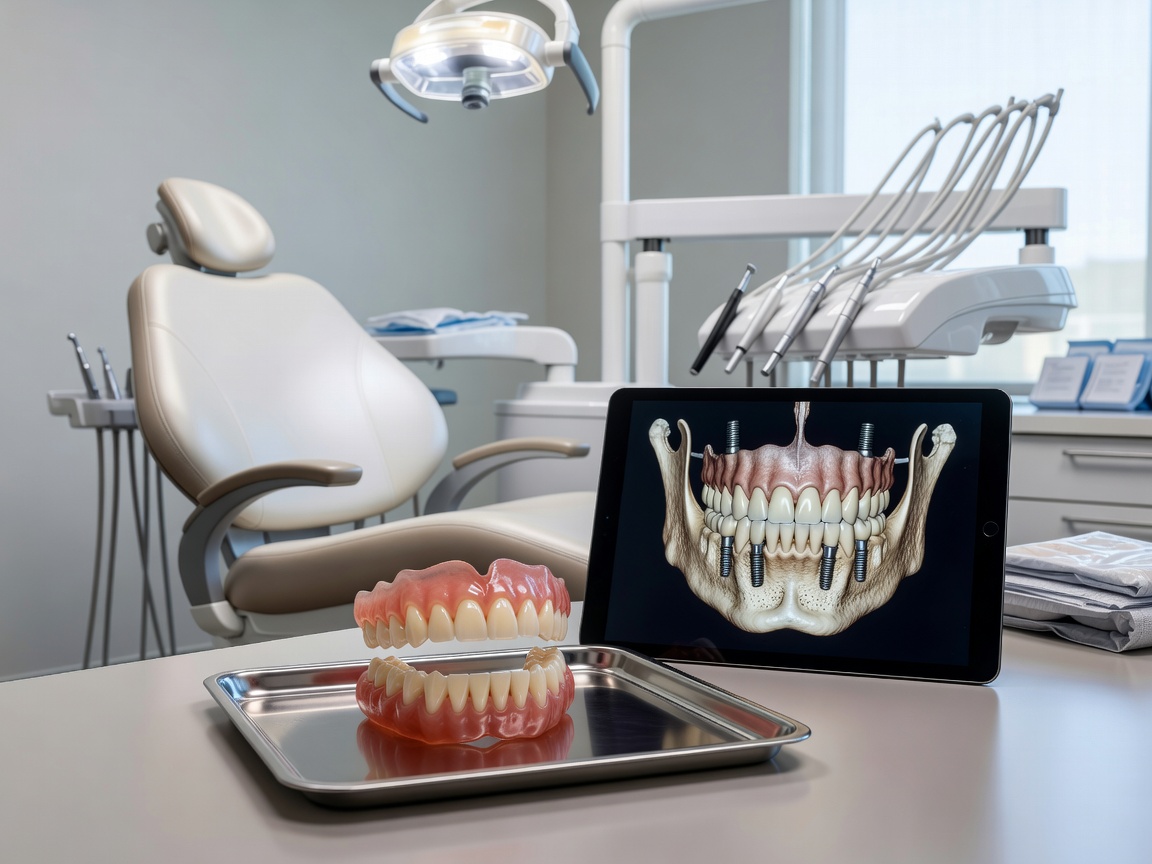
Dentures with dental implants are a tooth replacement solution that anchors a denture directly to your jawbone using titanium implant posts — giving you far more stability, comfort, and chewing power than traditional dentures.
Here's a quick summary of what you need to know:
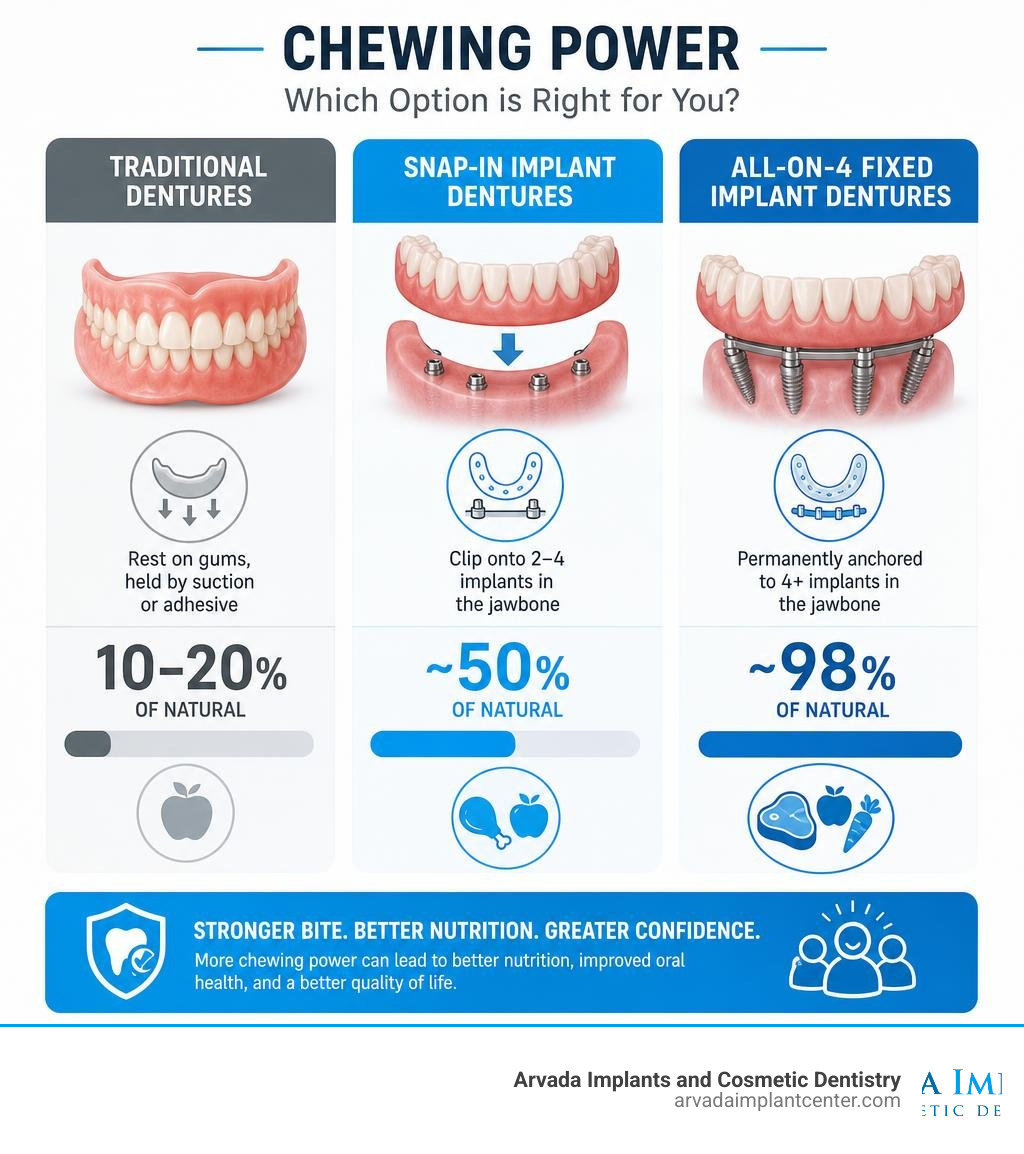
Option How It Works Chewing Power Removable? Traditional dentures Rest on gums, held by suction or adhesive 10–20% of natural Yes Snap-in implant dentures Clip onto 2–4 implants in the jawbone ~50% of natural Yes (by you) Fixed implant dentures (All-on-4) Permanently anchored to 4+ implants ~98% of natural No (dentist only)
You're not alone if you're struggling with missing teeth. More than 35 million Americans have no teeth at all, and 178 million are missing at least one. Traditional dentures are often the first solution people try — but they slip, require messy adhesives, and only restore a fraction of your natural chewing ability.
That means millions of people are eating soft foods, avoiding social situations, and losing jawbone density — all because they don't know better options exist.
Implant-supported dentures change that equation entirely.
I'm Dr. Tariq Sawaqed, CEO of Arvada Implants and Cosmetic Dentistry, and over my 20+ years of clinical experience I've helped thousands of patients replace failing or missing teeth with dentures with dental implants that look, feel, and function far closer to natural teeth. In this guide, I'll walk you through everything you need to make a confident, informed decision.
What Are Dentures with Dental Implants?
To put it simply, dentures with dental implants (often called implant-supported dentures) are a hybrid solution. They combine the full-arch coverage of a classic denture with the rock-solid foundation of modern dental implants.
Instead of resting loosely on your delicate gum tissue, these dentures anchor directly to medical-grade titanium posts that we surgically place into your jawbone. Because titanium is biocompatible, your bone actually fuses with the implants over time through a natural process called osseointegration.
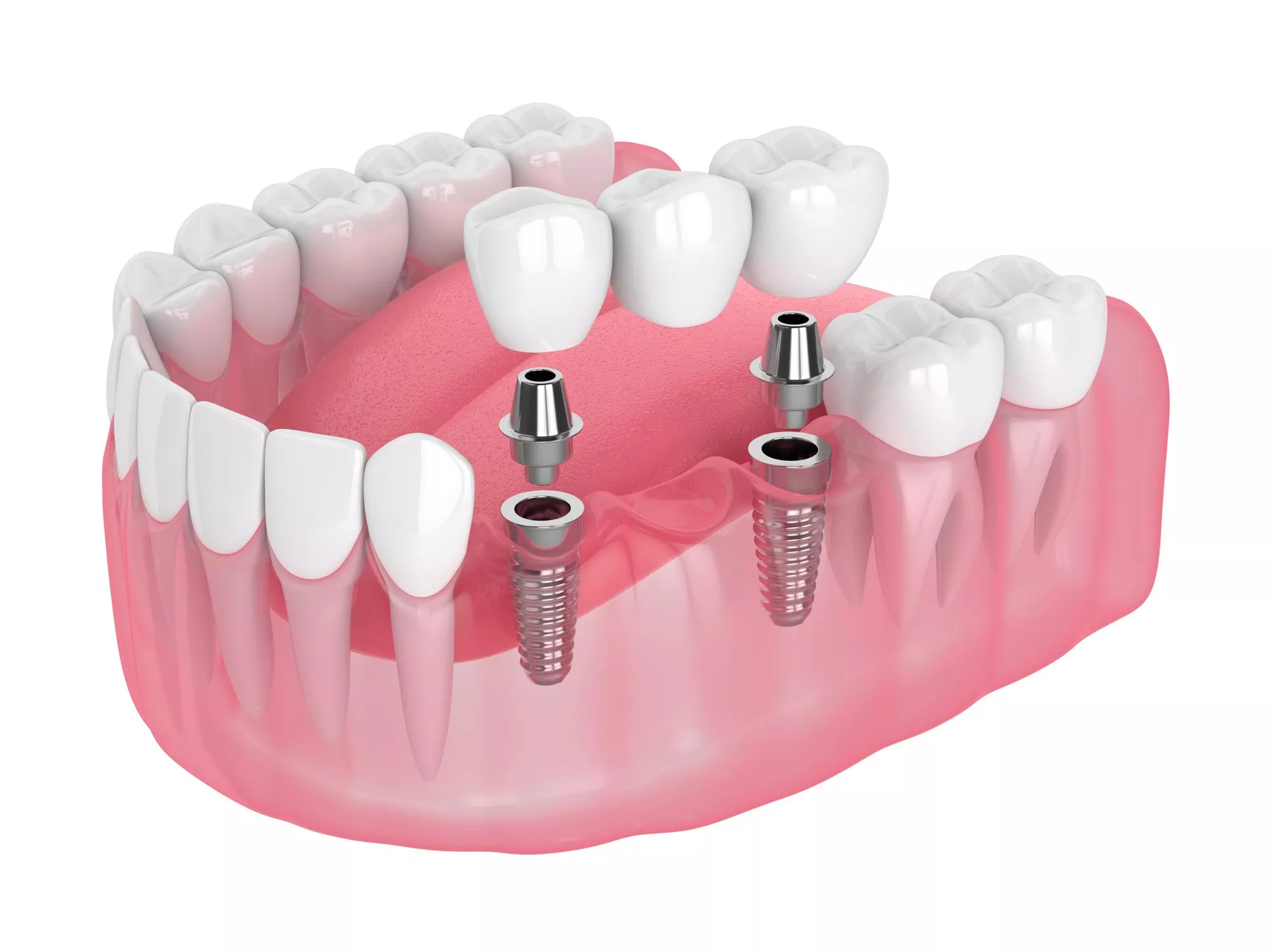
This fusion does something traditional dentures can never do: it provides vital jawbone stimulation. When you lose teeth, your jawbone naturally begins to shrink (resorb) because it no longer has tooth roots to support. Dental implants act as artificial tooth roots, keeping your bone strong, healthy, and intact.
To learn more about how this surgical foundation differs from traditional tooth replacement options, you can read the comprehensive Cleveland Clinic Guide on Implant-Supported Dentures or check out our detailed breakdown of more about dentures vs implants.
Removable vs. Fixed Dentures with Dental Implants
When choosing implant-supported dentures, you will generally decide between two main configurations: removable and fixed.
Removable Implant Dentures (Overdentures): These dentures snap securely onto the implants for daily wear but can be easily popped out by the patient at night for cleaning. They are highly stable, far more comfortable than traditional dentures, and represent an incredibly cost-effective way to transition to implant dentistry.
Fixed Implant Dentures (Hybrid Dentures / All-on-4): These are permanently screwed onto the dental implants. They do not come out at night, and you brush them just like natural teeth. Only a dentist can remove them for routine professional maintenance. They offer the absolute highest level of chewing power and feel indistinguishable from natural teeth.
If you are trying to decide which style fits your daily routine and budget, you can learn about hybrid dentures vs implants or explore types of dentures to see which option matches your lifestyle.
How Snap-In Dentures with Dental Implants Work
If you choose a removable option, you are looking at what we call "snap-in" dentures. But how exactly do they stay in place without sliding around?
The secret lies in the attachment mechanism. We place small, specialized connectors called locator abutments or ball attachments on top of the dental implants. Inside your custom-crafted denture, we embed corresponding metal caps fitted with small, medical-grade nylon inserts.
When you place the denture in your mouth and press down gently, the nylon inserts snap tightly over the locator abutments. This creates a secure, mechanical lock. The denture will not move when you speak or chew, yet you can easily snap it off at the end of the day using a specific upward motion.
Over time, these nylon inserts will naturally wear down from the friction of daily snapping. Fortunately, replacing them is a quick, painless, and highly affordable procedure that we can perform right here in our office during your routine cleanings. For a deeper dive, read our guide on how snap-in dentures work or review this evidence-based clinical management of lower edentulism to see why this is considered a modern standard of care.
Key Benefits of Implant-Supported Dentures
Making the switch to implant-retained dentures is about much more than just aesthetics—it is a massive upgrade to your physical health, self-esteem, and daily comfort.

Here are the most significant benefits our patients experience:
Unmatched Chewing Power: Traditional dentures restore only 10% to 20% of your natural chewing force, making foods like steak, apples, and raw vegetables nearly impossible to eat. Snap-in dentures raise that to about 50%, while fixed hybrid dentures restore an incredible 98% of your natural chewing power. You can confidently eat a steak-and-broccoli dinner without a second thought.
Facial Structure Support: When you lose teeth and jawbone density, your lower face begins to collapse, leading to premature aging, deep wrinkles around the mouth, and a sunken-in profile. By preserving your jawbone, implants maintain your natural facial contours.
No More Messy Adhesives: Say goodbye to expensive, gooey denture pastes that taste bad and fail halfway through a meal. Implant dentures lock in mechanically, meaning you will never need adhesive again.
Elimination of Painful Sore Spots: Traditional dentures rub against the gums as they shift, creating painful ulcers. Because implant-supported systems are anchored to bone, they remain stable and keep your gums irritation-free.
If you are currently struggling with a loose, uncomfortable prosthetic, we have put together practical advice on how to fix loose dentures and a comprehensive guide to natural looking dentures to help you understand what is possible.
The Treatment Process and Recovery Timeline
Getting dentures with dental implants is a multi-step journey designed to ensure your new smile is perfectly tailored, comfortable, and built to last. Here is what you can expect:
Initial Consultation & 3D Imaging: We begin with a comprehensive exam using advanced 3D CBCT scans. This guided technology allows us to evaluate your bone density, map your nerve pathways, and plan the exact placement of your implants with microscopic precision.
Preparatory Treatments: If you have remaining failing teeth, we will gently extract them. If your jawbone is too thin to support implants, we may perform a minor bone graft during this phase to build a stronger foundation.
Implant Surgery: Under comfortable local anesthesia or IV sedation, we carefully place the titanium posts into your jawbone. Most patients are pleasantly surprised by how straightforward this procedure is, often comparing the recovery to a simple extraction.
The Healing Phase (Osseointegration): Your implants will need 3 to 6 months to fully fuse with your jawbone. During this healing period, we will provide you with a temporary healing denture, so you never have to go a single day without teeth. We will also recommend a soft-food diet to protect the healing implants.
Final Fitting & Delivery: Once healing is complete, we take precise impressions and craft your final, custom-designed denture in our specialized lab. We will snap or screw it into place, make any necessary micro-adjustments, and send you home with a beautiful, fully functional smile.
To make sure your recovery goes as smoothly as possible, please review our official denture home care instructions and implants home care instructions. You can also read the University of Colorado Dental Implants Education resources to understand the science behind implant healing.
Comparing Implant Dentures to All-on-4 and Traditional Options
When planning your smile makeover, it helps to see how all your choices stack up side-by-side.
Feature Traditional Dentures Snap-In Dentures All-on-4 Fixed Implants Support Source Gum tissue & suction 2 to 4 implants 4 to 6 implants Chewing Force 10–20% ~50% 98%+ Bone Preservation None (causes bone loss) Moderate Excellent Removability Removable by patient Removable by patient Only removable by dentist Palate Coverage Full upper palate covered Open palate (better taste) Open palate (natural feel) Initial Cost Lowest Moderate Higher
While traditional dentures are budget-friendly upfront, they require regular relines and eventual replacement as your jawbone shrinks. Snap-in dentures offer a fantastic middle ground, giving you excellent stability and bone preservation at a lower price point than fixed options.
For patients seeking the absolute ultimate in comfort, convenience, and chewing power, the All-on-4 fixed restoration is the gold standard. To see which is right for you, learn more about All-on-4.
Cost, Financing, and Candidacy with Bone Loss
A common concern we hear from patients is, "I've been missing teeth for years and have experienced bone loss. Am I still a candidate?"
The short answer is: Yes, absolutely!
When teeth are missing, the jawbone naturally resorbs over time. However, modern dental technology offers several ways to work around bone loss. We can perform highly successful bone grafting procedures to rebuild your bone structure. Alternatively, we can use mini dental implants (which require significantly less bone density) or custom-splinted bar-supported systems that connect smaller implants together for maximum stability.
We also believe that financial concerns should never stand between you and a life-changing smile. While implant-supported systems have a higher upfront cost than traditional plastic dentures, they are a permanent investment in your health.
To help make this treatment affordable, we offer flexible payment plans and work with reputable third-party dental financing companies. In fact, 99% of patients who apply for third-party financing for implant dentures are approved.
To explore pricing in detail, check out our dentures vs implants cost comparison, read about clip-in denture cost details, or discover affordable denture alternatives in Arvada.
Frequently Asked Questions about Implant Dentures
How long do implant-supported dentures last?
The titanium dental implants themselves are designed to last a lifetime. Studies show that with proper oral hygiene and routine dental care, implants have a success rate of over 95% and can easily last 25 years or more.
The prosthetic denture that snaps onto the implants will experience normal wear and tear from chewing. Typically, the overdenture portion needs to be replaced or refurbished every 15 to 20 years. At Arvada Implants and Cosmetic Dentistry, we provide a 7-year implant denture warranty to give you ultimate peace of mind. To maximize the lifespan of your new smile, we recommend visiting us for regular 6-month checkups so we can inspect the attachments and clean the implants.
Is the surgical procedure for dental implants painful?
We take patient comfort incredibly seriously. During the implant placement procedure, we use localized numbing agents to ensure you do not feel any pain. We also offer advanced IV sedation options for patients who experience dental anxiety, allowing you to drift comfortably through your appointment.
After the procedure, most patients report only mild to moderate soreness, which is easily managed with over-the-counter pain relievers or temporary prescription medication. Most people feel completely back to normal within one week. For patients looking for the absolute gentlest surgical experience, mini dental implants offer an incredibly minimally invasive option with even faster healing times.
Can you get implant-supported dentures if you have bone loss?
Yes! Many of our patients have been told elsewhere that they aren't candidates for implants due to bone loss, only to find successful solutions at our office.
If you have experienced bone resorption, we can perform targeted bone grafting to rebuild the bone. We can also design custom splinted bar-supported systems that distribute chewing forces evenly across smaller implants, or utilize mini dental implants which are specifically designed for patients with limited bone volume.
Conclusion
Living with missing teeth or loose, uncomfortable dentures can take a massive toll on your health, your diet, and your confidence. But you do not have to live that way. Dentures with dental implants offer a secure, natural-looking, and permanent solution that can truly give you your life back.
At Arvada Implants and Cosmetic Dentistry, we specialize in providing affordable, highly personalized treatments. Because we utilize custom lab creations, we handcraft every smile to match your unique facial features, ensuring a natural look and an incredibly precise fit.
If you are ready to take the first step toward a stronger, more beautiful smile, we invite you to schedule a denture consultation in Arvada today. Let us help you restore your smile with full or partial dentures that you can truly smile about!