The Ultimate Guide to Full/Partial Dentures
Why Millions of Americans Choose Full/Partial Dentures to Restore Their Smile
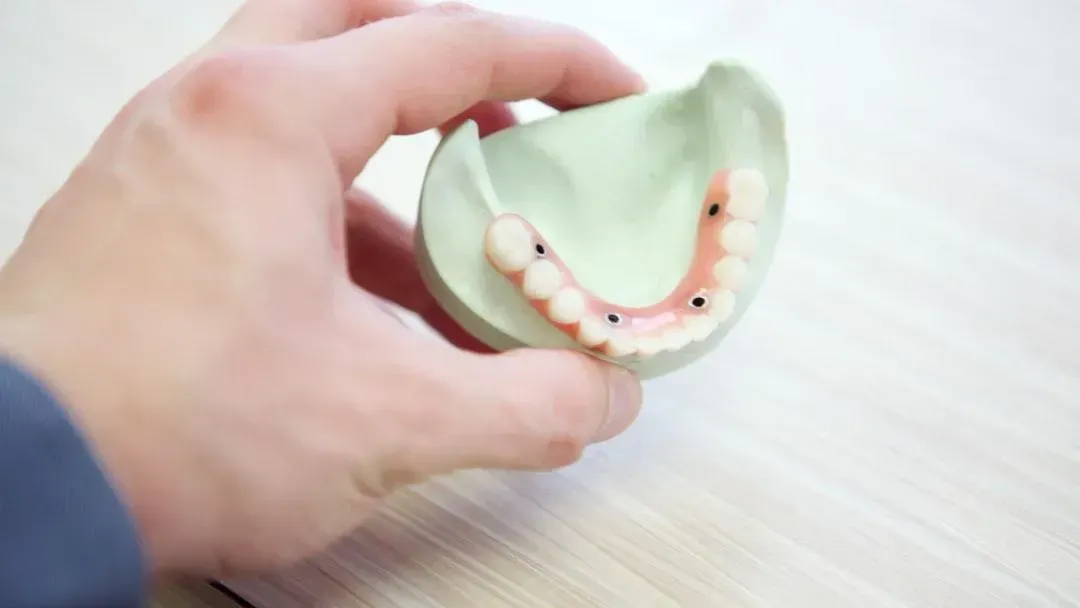
Full/partial dentures are removable dental appliances that replace missing teeth — either a few or an entire arch — restoring your ability to eat, speak, and smile with confidence.
Quick answer: What's the difference?
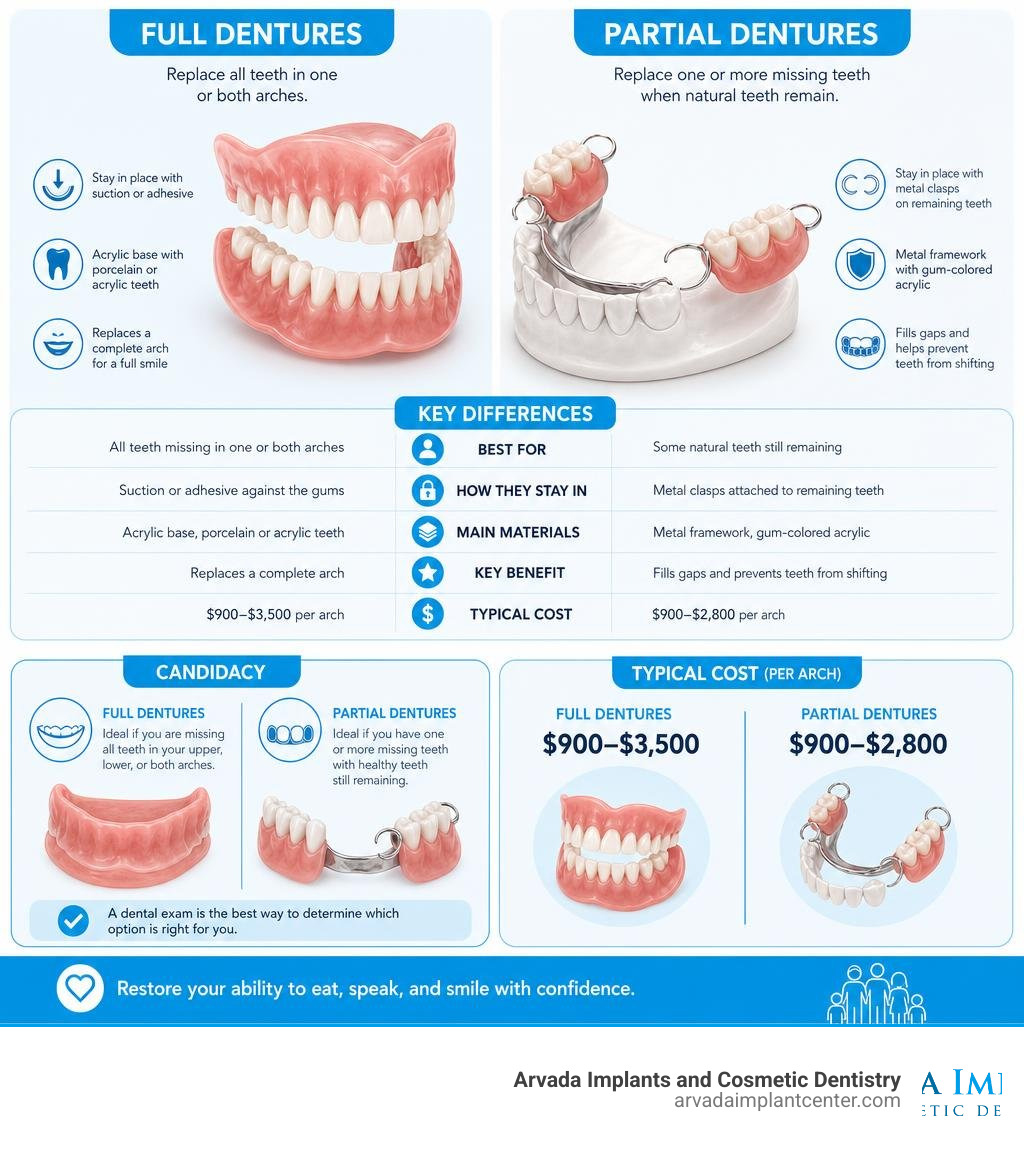
Full Dentures Partial Dentures Best for All teeth missing in one or both arches Some natural teeth still remaining How they stay in Suction or adhesive against the gums Metal clasps attached to remaining teeth Main materials Acrylic base, porcelain or acrylic teeth Metal framework, gum-colored acrylic Key benefit Replaces a complete arch Fills gaps and prevents teeth from shifting Typical cost $900–$3,500 per arch $900–$2,800 per arch Lifespan 7–10 years with proper care 5–10 years with proper care
Missing teeth are more common than most people think. About 41 million Americans currently wear dentures — across all age groups, not just older adults. Tooth loss affects confidence, makes eating painful, and can even change the shape of your face over time.
The good news? Modern dentures are lighter, more natural-looking, and more comfortable than ever before.
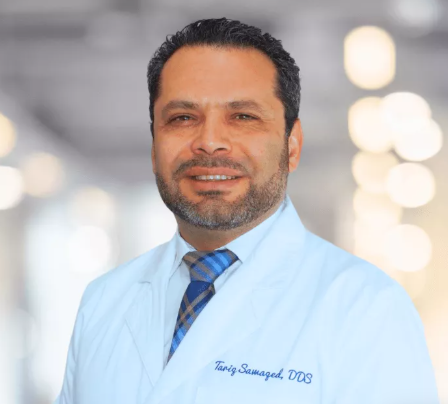
I'm Dr. Tariq Sawaqed, founder of Arvada Implants and Cosmetic Dentistry, with over 20 years of experience helping patients restore their smiles with full/partial dentures and advanced implant solutions. In this guide, I'll walk you through everything you need to know — from choosing the right type to what the process actually looks like.
Choosing Between Full/Partial Dentures: Key Differences
When you are looking to rebuild your smile, understanding the primary mechanical and structural differences between full and partial options is the first step. While both solutions are designed to restore function and aesthetics, they are engineered quite differently to suit different dental environments.
Full dentures (often called complete dentures) are designed for an arch that has no remaining natural teeth. They feature a flesh-colored acrylic base that fits snugly over your gums. The upper denture covers the roof of your mouth (the palate), relying on natural suction to stay in place, while the lower denture is shaped like a horseshoe to accommodate your tongue and relies heavily on the coordination of your cheek and lip muscles. The artificial teeth embedded in this acrylic base are typically made of high-quality porcelain or acrylic resin, customized to match your facial features.
Partial dentures, on the other hand, are designed for patients who still have some healthy, natural teeth remaining. Instead of resting entirely on the gums, a partial denture utilizes a thin, highly durable metal framework or a flexible polymer base. This framework connects to your remaining natural teeth using custom-designed clasps or attachments. These clasps provide excellent retention, ensuring the appliance does not wobble or shift while you chew or speak.
Feature Full Dentures Partial Dentures Primary Support Gums, jawbone ridge, and natural suction (upper palate) Remaining natural teeth and underlying gum tissue Retention Method Natural suction, muscle control, or denture adhesive Metal clasps, precision attachments, or flexible friction-fit Structural Base Thick, pink acrylic customized to match your gum shade Thin metal framework (cobalt-chromium) or flexible nylon Main Functional Role Complete oral rehabilitation after total tooth loss Fills gaps, prevents shifting, and preserves remaining teeth
By choosing the correct option, you not only restore your ability to eat and speak comfortably, but you also protect your overall oral anatomy from the consequences of empty dental spaces.
Who is a Candidate for Full/Partial Dentures?
Deciding which option is right for you comes down to a comprehensive evaluation of your remaining teeth, your jawbone structure, and your overall oral health status.
You are generally a prime candidate for full dentures if you have already lost all of your teeth in an arch, or if your remaining teeth are severely compromised by advanced gum disease (periodontitis) or deep tooth decay. When remaining teeth are loose, painful, or structurally unsound, keeping them can actually jeopardize your systemic health. In these cases, extracting the remaining teeth and transitioning to a full denture is often the most predictable path to a pain-free, functional smile.
Conversely, you are an ideal candidate for partial dentures if you still have healthy, strong natural teeth on either side of your missing spaces. These remaining teeth act as crucial "anchor teeth." To qualify for a traditional partial, your anchor teeth must have stable root systems and healthy surrounding bone structure to withstand the mild forces exerted by the denture clasps.
Your jawbone density also plays a major role in this decision. When you lose teeth, the alveolar bone that once supported them begins to resorb (shrink) over time. If you have experienced significant bone loss but still have several healthy teeth, a partial denture is highly beneficial because those remaining teeth help preserve the surrounding bone density. If you want to dive deeper into how these oral appliances interact with your oral tissues, you can Learn more about full and partial dentures to understand their medical benefits and structural designs.
Types of Full and Partial Dentures
Dentistry has come a long way from the heavy, uniform plates of the past. Today, we utilize a variety of modern materials and techniques to craft appliances tailored specifically to your lifestyle and comfort preferences.
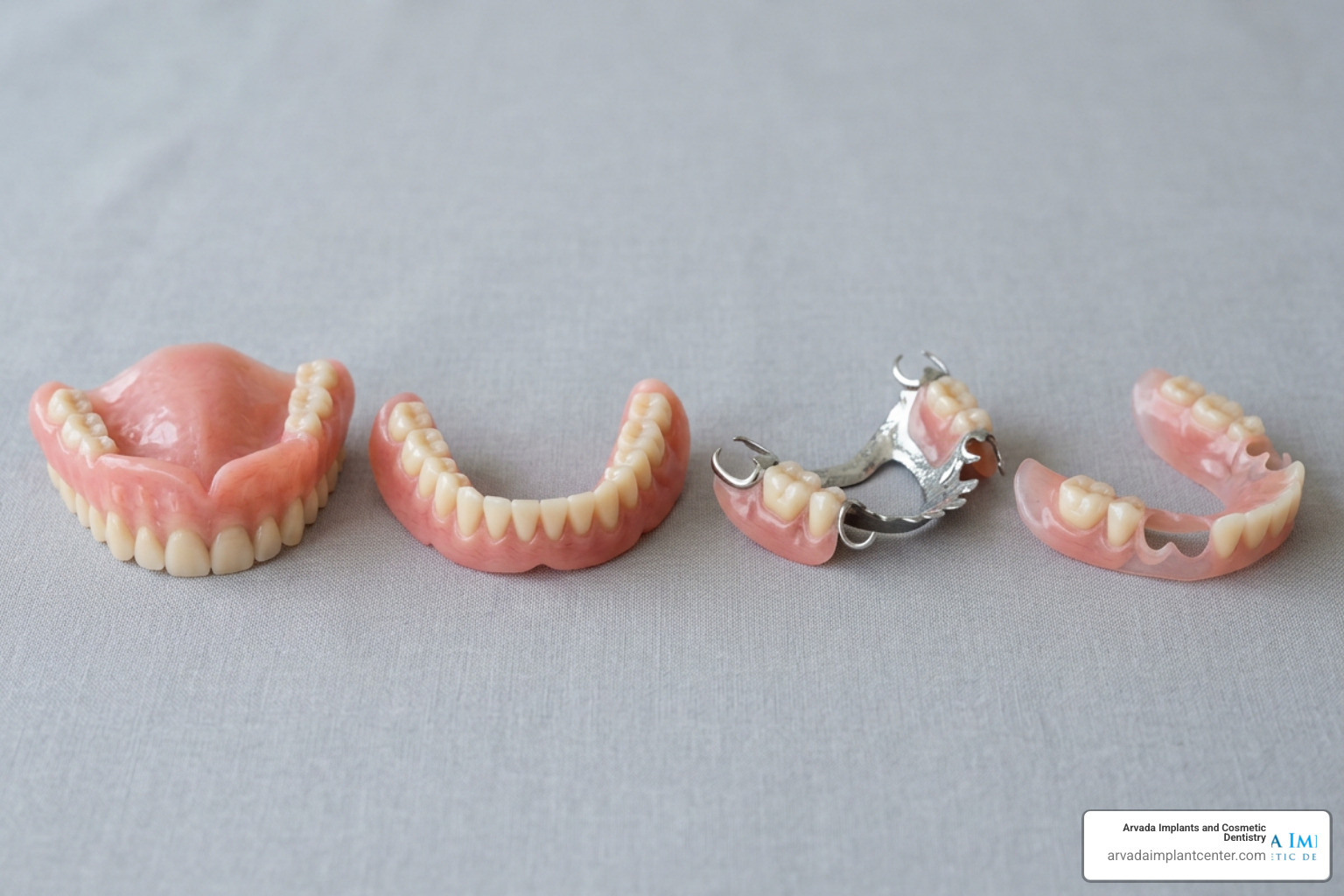
When exploring your options, you will encounter several distinct styles:
Conventional Full Dentures: These are fabricated and placed in your mouth after all remaining teeth have been extracted and your gum tissues have had adequate time to heal—typically around 4 to 8 weeks. This healing period ensures that the tissues have stabilized, resulting in a highly accurate, long-lasting fit.
Immediate Full Dentures: We understand that the idea of going weeks without teeth can be daunting. Immediate dentures are fabricated beforehand and inserted into your mouth the exact same day your teeth are extracted. While they act as a wonderful temporary cosmetic solution, they will require multiple adjustments and professional relines as your swelling subsides and your gums shrink during the healing process.
Cast Metal Partial Dentures: This is the gold standard for traditional partials. They feature a strong, ultra-thin cobalt-chromium metal framework that supports beautiful, custom-shaded acrylic teeth. They are incredibly durable, conduct temperature well (making eating more natural), and offer superb stability. To understand their structure and benefits fully, you can Read our ultimate partial dentures guide.
Acrylic Partials (Flippers): These are lightweight, all-acrylic appliances often used as temporary space maintainers while a patient waits for a permanent bridge or implant to heal. They are cost-effective but less durable for long-term chewing.
Flexible Partial Dentures: Made from high-tech, thermoplastic nylon polymers, these partials contain no metal clasps. They are translucent, letting your natural gum color show through, and bend slightly to adapt to the contours of your mouth. If comfort and aesthetics are your top priorities, you can Explore our ultimate flexible partial dentures guide.
Premium and Natural-Looking Options
Our primary goal at Arvada Implants and Cosmetic Dentistry is to create restorations that blend seamlessly into your face, making it impossible for others to tell you are wearing an appliance.
Premium dentures utilize advanced, multi-layered acrylics and flexible polymers that mimic the natural, light-reflecting properties of real teeth and living gum tissue. Instead of a solid, artificial pink block, premium bases feature subtle capillaries, color variations, and textured surfaces that match your natural oral anatomy.
We also focus heavily on custom shading and tooth arrangement. Natural teeth are not perfectly straight, stark white chicklets. They have character, slight rotations, and varying translucent edges. By carefully selecting the shape, size, and shade of each tooth to harmonize with your age, skin tone, and facial structure, we achieve true aesthetic harmony. If you want to see how lifelike modern dental technology can be, we invite you to Discover natural looking dentures and read our tips on finding the Best dentures for precise fit and natural look.
The Step-by-Step Process of Getting Dentures
Restoring your smile is a collaborative, highly detailed journey. We want you to feel comfortable and informed at every stage of the fabrication process. Here is what you can expect when you partner with our Arvada team:
Initial Consultation & Exam: We begin with a comprehensive clinical examination, digital X-rays, and a discussion of your personal goals, budget, and medical history. We assess the health of your remaining teeth, gum tissues, and underlying bone.
Preparatory Treatments: If you require extractions, gum therapy, or minor bone shaping (alveoloplasty) to create a smooth foundation, these procedures are scheduled and performed with your comfort in mind.
3D Digital Scanning & Impressions: We use advanced intraoral scanners to capture highly precise, three-dimensional digital impressions of your arches. No messy, gag-inducing putty required! These digital models are sent to our custom laboratory partners to begin crafting your appliance.
Bite Registration & Wax Try-In: We measure how your upper and lower jaws relate to one another to ensure a comfortable bite. We then create a temporary wax mockup of your dentures. During this exciting appointment, you get to try on the wax model, look in the mirror, and evaluate the tooth color, shape, and overall appearance before the final version is processed.
Final Fitting: Once our laboratory finishes the custom fabrication, you return to our office. We place your new premium dentures, verify the suction and clasp retention, check your bite, and make any immediate adjustments to eliminate high spots.
Subsequent Adjustments: It is completely normal to experience minor sore spots during the first couple of weeks as your oral tissues adapt. We schedule follow-up visits to fine-tune the fit and ensure absolute comfort.
Ready to take the first step toward a functional, beautiful smile? You can easily Schedule a denture consultation in Arvada with our experienced team today.
The Cost of Full/Partial Dentures in 2026
When planning your smile restoration, it is important to understand the financial variables involved. In 2026, the typical cost of traditional dentures ranges from $900 to $3,500 per arch for full dentures, and $900 to $2,800 per arch for partial dentures.
Several factors influence where your treatment falls within this range:
Material Quality: Premium, highly customized materials (such as high-impact acrylics, flexible nylon polymers, and hand-layered porcelain teeth) carry a higher upfront cost but offer vastly superior durability, comfort, and realism than basic, mass-produced options.
Geographic Location: Dental care costs reflect local economic factors. Receiving treatment in our state-of-the-art Arvada, CO facility ensures you get competitive local pricing paired with highly personalized, advanced clinical care.
Preparatory Procedures: If you require dental extractions, bone grafting, or periodontal treatment before your dentures can be fitted, these steps will add to the overall investment.
Insurance Coverage: Many dental insurance plans treat dentures as a major restorative procedure, frequently covering up to 50% of the cost up to your annual maximum. Our administrative team will gladly help you navigate your benefits to maximize your coverage.
Financing Options: We believe financial constraints should never stand between you and a healthy smile. We offer flexible, third-party financing plans to help break your out-of-pocket expenses into manageable, interest-free monthly payments.
To help you weigh your long-term options and budget effectively, we encourage you to Compare dentures vs implants cost to see which solution provides the best value for your lifestyle.
Daily Care, Maintenance, and Adjusting to Your New Smile
Adapting to a new dental appliance is a physical and psychological transition that takes time, patience, and proper habits. Just like natural teeth, your new smile requires dedicated daily care to keep your mouth healthy and prevent bad breath, staining, and oral infections.
To keep your appliance in pristine condition, follow this simple daily routine:
Rinse After Meals: Take your dentures out after eating and rinse them under lukewarm water to flush away loose food particles.
Brush Daily: Brush your appliance at least once a day using a soft-bristled brush and a specialized, non-abrasive denture cleanser. Regular toothpaste is too abrasive and will create microscopic scratches that harbor bacteria and plaque.
Give Your Gums a Rest: Never wear your dentures 24 hours a day. It is vital to remove them for at least 6 to 8 hours (ideally while you sleep) to allow your gum tissues to rest, breathe, and recover. This significantly reduces your risk of developing fungal infections like denture stomatitis.
Soak Overnight: When your dentures are out of your mouth, they must remain moist to prevent them from drying out, warping, and losing their shape. Soak them overnight in a mild denture cleaning solution or plain water.
Clean Your Mouth: Before putting your dentures back in, use a soft toothbrush to gently clean your tongue, roof of your mouth, cheeks, and any remaining natural teeth to stimulate circulation and remove plaque.
For a complete, easy-to-follow breakdown of how to protect your investment, Review our denture home care instructions.
Lifespan, Relines, and Adjustments
With proper care and diligent maintenance, the average lifespan of a high-quality denture is seven to ten years. However, while your denture is highly durable, your mouth is constantly changing.
Once natural teeth are lost, the underlying jawbone no longer receives the chewing stimulation it needs to maintain its volume, leading to gradual jawbone shrinkage (resorption). As the bone and overlying gum tissues remodel, your once-snug dentures will gradually begin to feel loose, slip, or cause random sore spots.
To combat this natural tissue remodeling, you will need periodic professional adjustments. A denture reline is a common procedure where we add new acrylic material to the underside of your existing denture base to perfectly match the updated shape of your gums. Relines are typically recommended every one to two years to maintain proper suction, comfort, and function.
If you are currently struggling with a slipping appliance, read our guide on How to fix loose dentures. You can also expand your knowledge of academic denture standards by taking a moment to Learn about denture care at CU Anschutz.
Modern Alternatives: Implant-Supported Dentures vs. Traditional Options
While traditional full/partial dentures are a time-tested, budget-friendly way to replace missing teeth, they do have inherent limitations. Traditional dentures rely on suction or clasps and only restore about 20% of your natural chewing function. Fortunately, modern implant dentistry offers a alternative.
Dental implants are small titanium posts surgically placed directly into your jawbone, acting as artificial tooth roots. Through a natural process called osseointegration, your bone fuses permanently with the titanium, creating an incredibly stable anchor.
We can utilize these implants to secure your dentures in two primary ways:
Implant-Retained (Snap-In) Dentures: These appliances utilize two to four dental implants. The underside of the denture features special attachments that snap securely onto the implants. This eliminates shifting, wobbling, and the need for messy denture adhesives, restoring up to 60% of your natural chewing strength. They are still removable at night for easy cleaning.
Implant-Supported (Fixed) Dentures: These are non-removable appliances anchored permanently to four or more implants. They do not cover the roof of your mouth, leaving your palate open so you can fully taste your food and speak completely naturally.
By stabilizing your jawbone, implants prevent the facial collapse and bone loss associated with traditional dentures. To see which path fits your goals, you can Compare dentures vs implants and Understand how snap-in dentures work.
Hybrid Dentures and Fixed Full-Arch Solutions
For patients seeking the absolute pinnacle of comfort, stability, and aesthetics, we offer fixed full-arch hybrid solutions, often referred to as All-on-4® or zirconia implant bridges.
Unlike removable appliances, hybrid dentures are screwed directly onto four to six strategically placed dental implants. They can only be removed by a dental professional during your routine cleanings. These state-of-the-art bridges are typically milled from solid zirconia—an incredibly strong, biomimetic material that does not chip, stain, or wear down over time.
Because they are anchored solidly into the bone, they restore over 98% of your natural bite force. You can confidently eat steak, bite into apples, and laugh without ever worrying about your teeth moving. To explore these life-changing options, you can Compare hybrid dentures vs implants and Explore affordable denture alternatives in Arvada to find a solution that matches your budget and lifestyle.
Frequently Asked Questions about Dentures
Transitioning to dentures brings up many practical questions. Here are the answers to some of the most common concerns our patients share during their consultations.
Can I sleep with my dentures in?
As a general rule, no. We strongly advise against sleeping with your dentures in your mouth. Your gums and jawbone support the appliance all day long, enduring constant pressure from speaking and chewing. Removing your dentures for at least 8 hours gives your tissues a much-needed rest, allowing normal blood circulation to keep your gums healthy.
Furthermore, wearing dentures overnight creates a warm, moist environment underneath the acrylic base—the perfect breeding ground for bacteria and yeast. This can quickly lead to painful gum irritation, bad breath, and fungal infections like thrush. Take them out, clean them, and let them soak overnight in a glass of water or mild denture solution while your mouth recovers.
How long does it take to get used to new dentures?
The adjustment period varies from person to person. For partial dentures, it typically takes a few days to two weeks because the natural anchor teeth provide immediate stability. For full dentures, the adjustment period usually lasts 4 to 8 weeks.
During the first few weeks, your brain will perceive the new dentures as a foreign object, which temporarily increases saliva flow. Your tongue, cheeks, and lip muscles must also learn new coordination patterns to keep the appliance in place. You may experience minor sore spots as the tissues adapt; simply visit us for a quick, painless adjustment to resolve any discomfort.
Will dentures change how I speak or eat?
Yes, but only temporarily! When you first receive your dentures, pronouncing certain words (especially those containing "S," "F," or "V" sounds) can feel a bit awkward. We recommend practicing by reading aloud or singing along to your favorite music in the car—you'll be speaking clearly again in no time.
When it comes to eating, start with a soft food diet (scrambled eggs, fish, pasta, cooked vegetables) and cut your food into small, bite-sized pieces. Try to chew bilaterally—meaning you chew on both sides of your mouth simultaneously. This distributes pressure evenly and prevents the denture from tipping. Avoid incredibly sticky, hard, or tough foods until your muscles have fully adapted to your new bite.
Conclusion
Losing your teeth can feel overwhelming, but it is also an opportunity to rebuild a smile that is healthier, more functional, and more beautiful than ever before. Whether you choose traditional full/partial dentures or opt for the life-changing stability of implant-supported restorations, the key to success is a personalized treatment plan designed around your unique facial features and lifestyle.
At Arvada Implants and Cosmetic Dentistry, we pride ourselves on utilizing custom lab creations, cutting-edge 3D digital technology, and a warm, compassionate approach to deliver natural-looking smiles that truly fit. We look forward to helping you regain your confidence, your bite, and your quality of life.
Ready to start your journey? Schedule your consultation for full/partial dentures today and let us give you a reason to smile again!