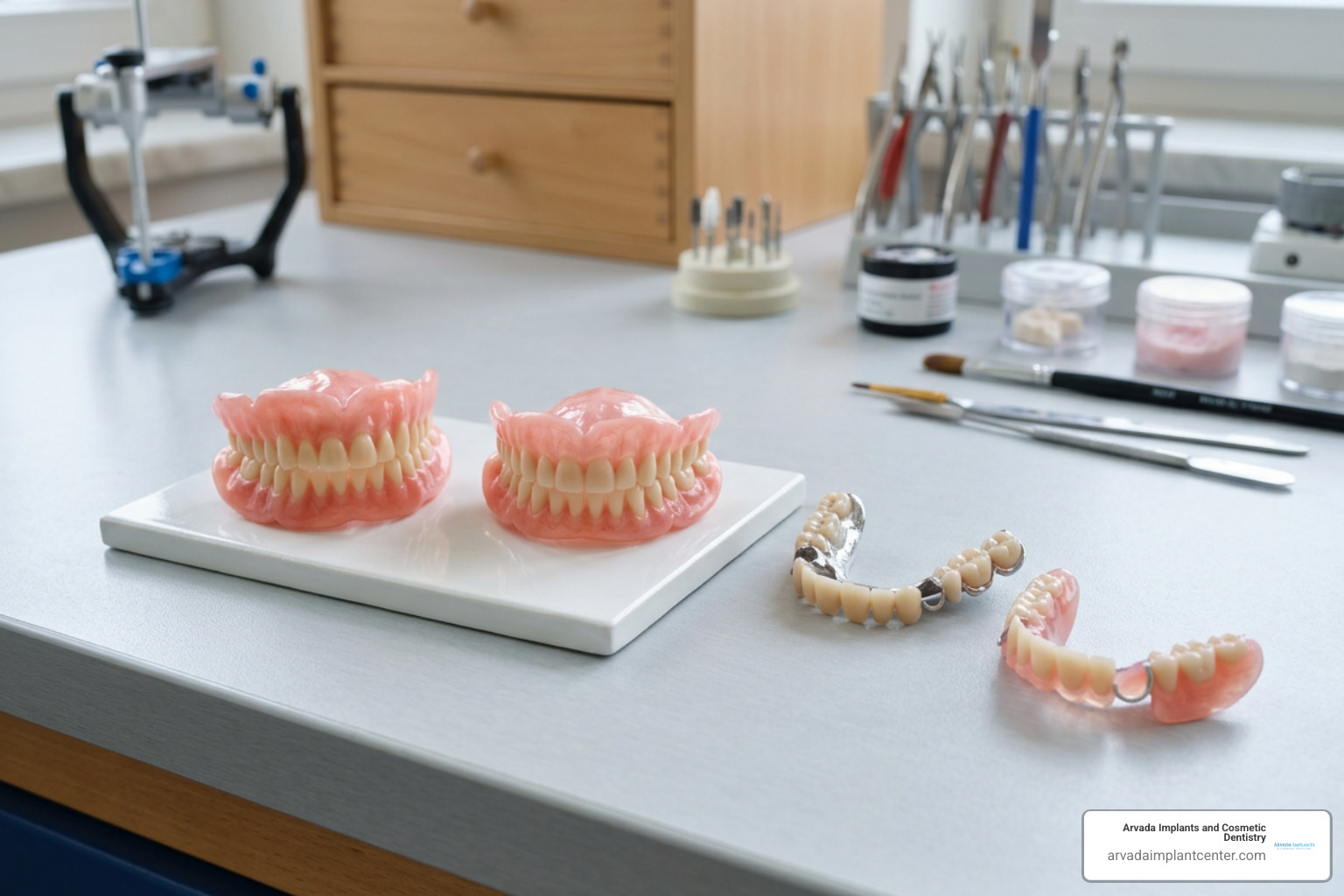
The Ultimate Guide to Types of False Teeth
Primary Types of False Teeth: Full, Partial, and Beyond
When people hear the term "false teeth," they often picture traditional complete sets soaking in a glass on a nightstand. While full dentures remain a vital treatment, modern dental technology offers a wide spectrum of options designed for different stages of tooth loss and jawbone health. Understanding these classifications helps you choose a solution that fits your lifestyle.
The main options range from traditional removable appliances to advanced fixed prosthetics supported by dental implants. For a comprehensive overview of how these options compare, you can review this Overview of denture options.
Removable Types of False Teeth: Full vs Partial
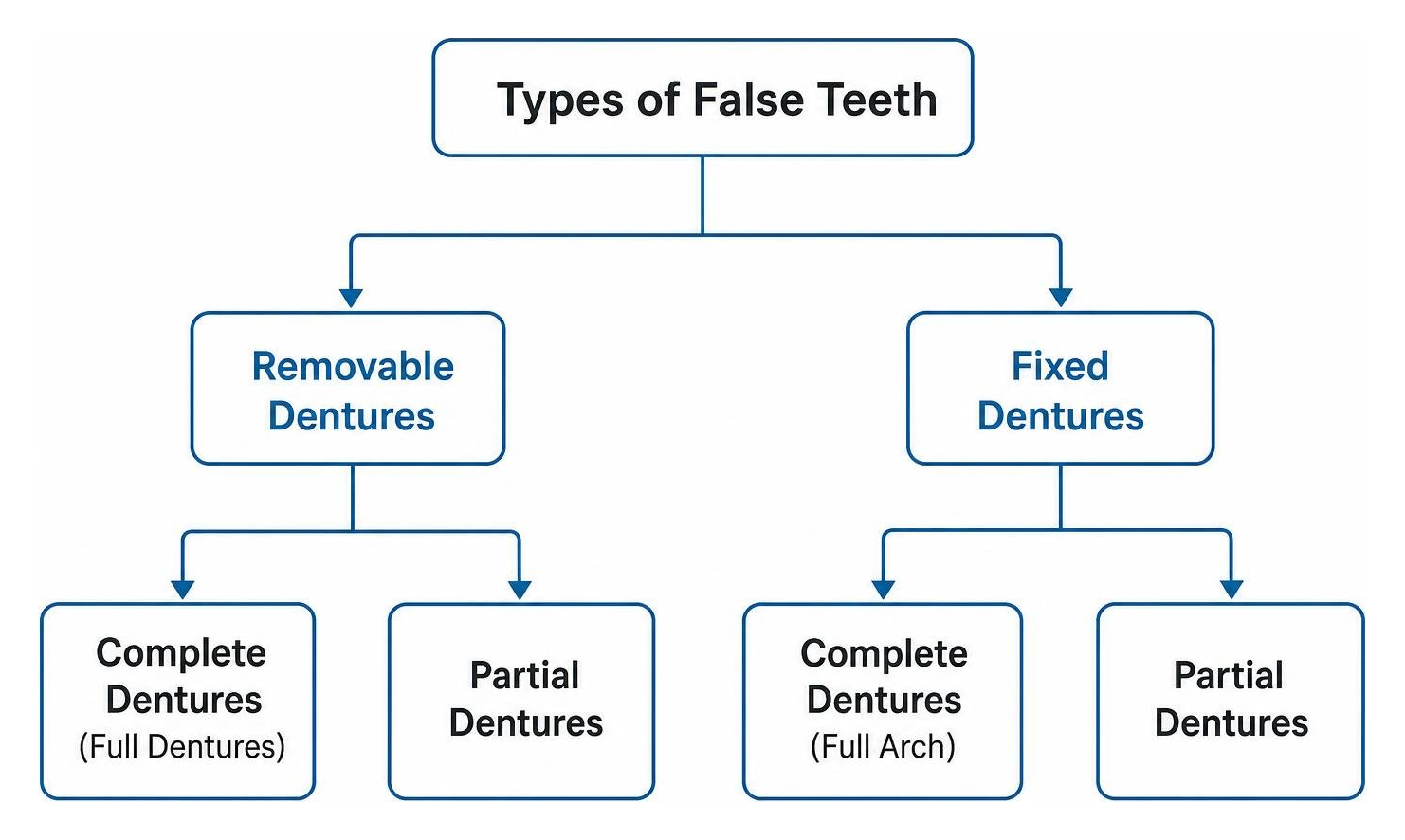
Removable false teeth remain the most common choice for replacing missing teeth. They are divided into two major categories depending on how many natural teeth you still have:
Complete Dentures (Full Dentures): Complete dentures replace an entire arch of missing teeth in either the upper or lower jaw. An upper complete denture features a pink acrylic resin base that covers the roof of your mouth (palate), creating a natural palatal suction seal that keeps the appliance in place. Lower dentures, on the other hand, are shaped like a horseshoe to make room for your tongue. Because they rely entirely on the lower jawbone ridge for support without the benefit of suction, lower full dentures can be trickier to keep stable. To learn more about full arch replacements, read our Complete Guide Full Partial Dentures 2026 or explore our Full Partial Dentures page.
Partial Dentures: If you still have healthy natural teeth remaining, partial dentures fill in the gaps while keeping your original teeth intact. A partial denture typically consists of replacement teeth attached to a pink or gum-colored acrylic base, often reinforced by a strong cobalt-chromium metal framework. The appliance uses subtle metal or tooth-colored clasps that hook onto your adjacent natural teeth for retention, stopping remaining teeth from shifting into open spaces.
Immediate vs Conventional Dentures
The timeline of your extractions plays a big role in how your false teeth are made and fitted:
Immediate Dentures: These are fabricated before your remaining natural teeth are pulled. On the day of extraction, we place the immediate denture directly over the fresh socket sites. The primary advantage is clear: you never have to leave the office without teeth. Additionally, immediate dentures act like a surgical bandage, controlling bleeding and protecting sensitive gum tissue. However, as the jawbone heals and reshapes over the following weeks, tissue swelling subsides and the bone shrinks. As a result, immediate dentures are best viewed as a temporary functional bridge. They require frequent adjustments and temporary relines until healing is complete.
Conventional Dentures: Conventional complete dentures are made after your extractions have fully healed—a process that usually takes 8 to 12 weeks. During this period, your jawbone undergoes natural ridge remodeling. Waiting for the tissue to settle allows us to take a highly accurate custom impression, ensuring a far precise, comfortable, and long-lasting final fit.
Fixed and Advanced Types of False Teeth: Implants and Overdentures
For patients seeking greater bite strength and stability, implant-assisted prosthetics offer a life-changing step up from traditional removable dentures. You can find detailed clinical insights on these systems in this Clinical guide to dentures.
Implant-Supported Overdentures (Snap-On Dentures): Also known as snap-in dentures, these appliances snap directly onto two to four titanium implant posts embedded in your jawbone. They offer dramatically better stability than traditional dentures, eliminating slipping while speaking or eating. While you still remove them at night for cleaning, they restore much higher chewing function. Check out our detailed guides on Dentures with Dental Implants and Snap-In Dentures vs All-on-4 Implants for a complete comparison.
Hybrid Dentures (Fixed Full Arch): Hybrid dentures are permanently secured to four or more dental implants. Unlike removable options, only a dentist can remove a hybrid denture. Because they are anchored firmly to the bone, they preserve jawbone density, require no palate coverage on the upper arch, and look and function almost exactly like natural teeth.
Flexible Partial Dentures and Temporary Flippers
When replacing just a few teeth, specialized lightweight appliances provide specific advantages:
Flexible Partial Dentures: Made from a thin, medical-grade thermoplastic nylon, flexible dentures contain no rigid metal frameworks or clips. The thin material is translucent, allowing your natural gum color to shine through. Flexible dentures are highly fracture-resistant, comfortably flex with your mouth's natural movements, and do not cause metal allergy issues. Learn more in our Ultimate Flexible Partial Dentures Guide.
Flipper Dentures: A flipper is a light, temporary acrylic partial denture designed to replace one or two missing teeth, most often in the front of the mouth. They are inexpensive and quick to make, serving as a short-term filler while waiting for a permanent bridge or implant to heal.
Material Choices, Aesthetics, and Durability
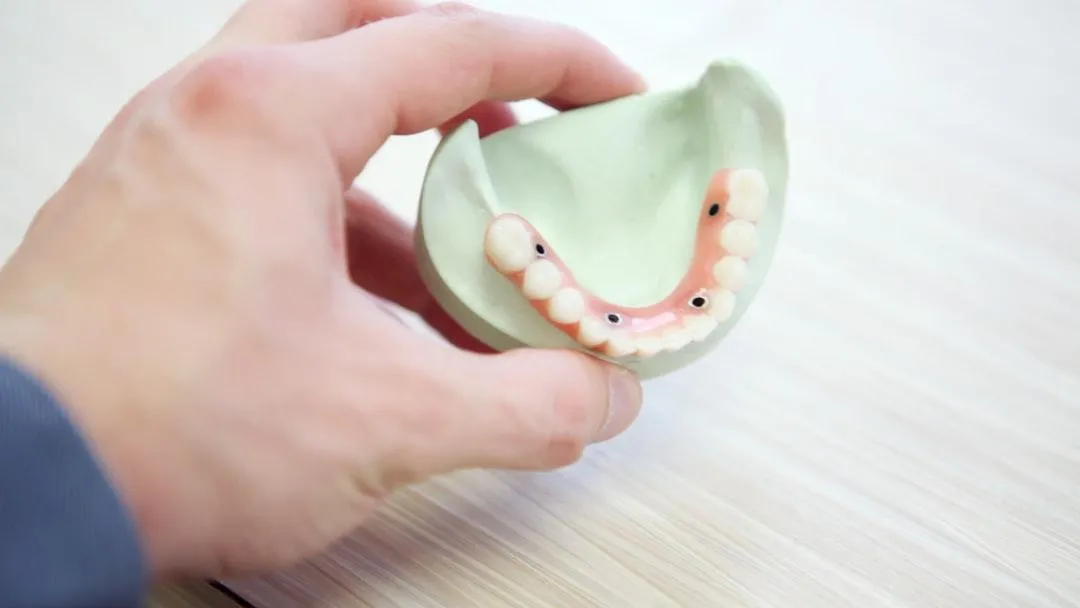
The performance, appearance, and life expectancy of your types of false teeth depend heavily on the materials used to construct both the base and the artificial teeth.
Modern polymethyl methacrylate (PMMA) acrylic resin allows us to match the exact shade and contours of your natural gums. Combining high-grade acrylics or composite resin teeth with precision shading ensures your smile looks authentic rather than artificial. For deeper insight into custom craftwork, explore our articles on Most Realistic Full and Partial Dentures and Natural Looking Dentures.
Costs, Lifespan, and Financial Expectations for False Teeth
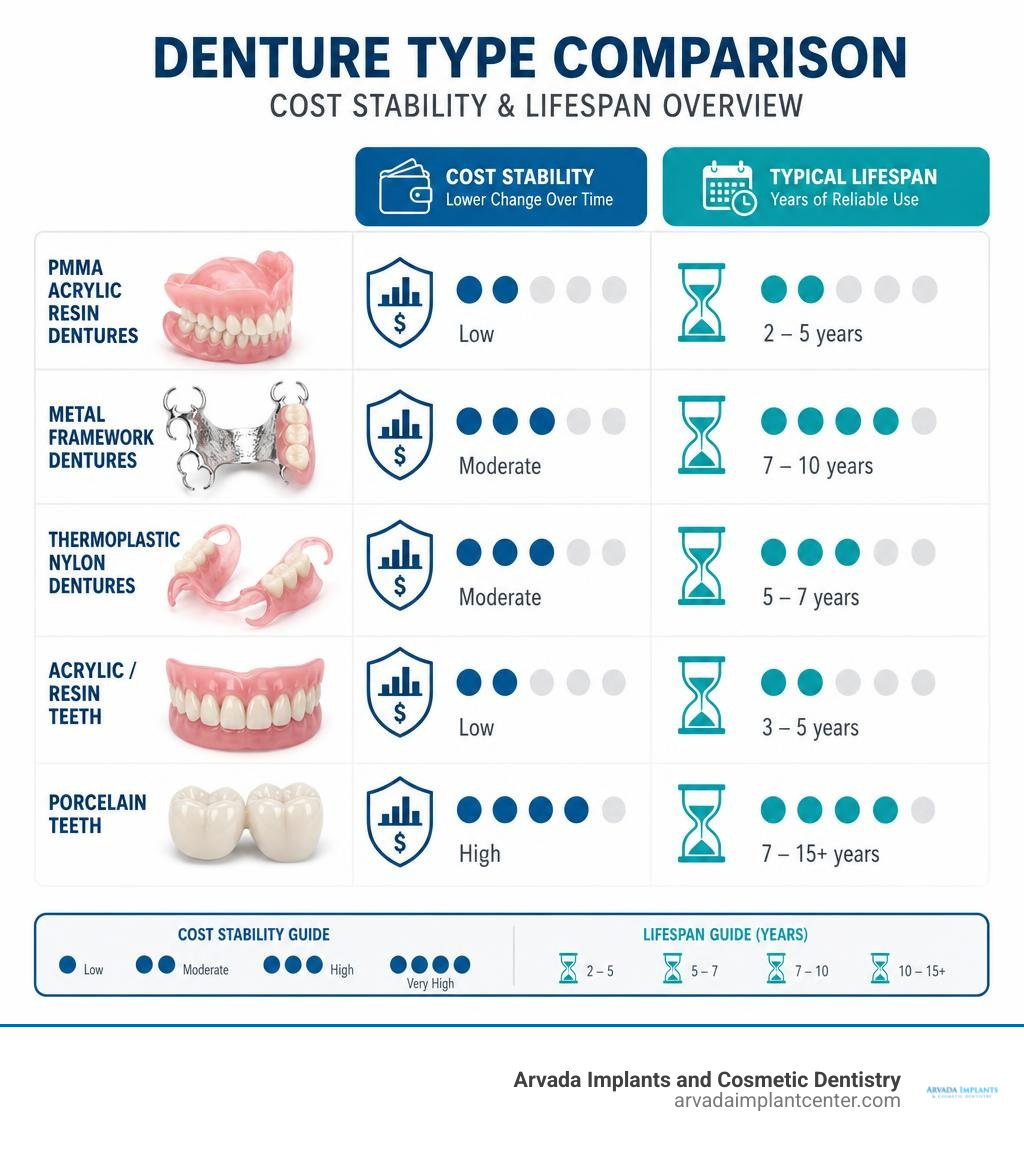
The investment required for false teeth varies significantly based on material quality, the number of teeth being replaced, and whether surgical implant placement is involved. Geographic location and custom lab work also play major roles in overall pricing.
Denture Type Average National Cost Range Jaw Stability Typical Lifespan Economy Dentures $348 – $883 per arch Low 2 – 5 years Traditional Full Dentures $1,520 – $3,648 per arch Moderate 7 – 10 years Premium Custom Dentures $5,000 – $12,438 per arch Moderate to High 7 – 10+ years Partial Resin / Metal Dentures $1,333 – $4,203 Moderate 5 – 10 years Flipper Dentures $471 – $1,164 Low Temporary (1–2 yrs) Flexible Nylon Partial $1,360 – $3,451 Moderate 5 – 8 years Implant-Supported Overdentures $3,055 – $7,294 (prosthetic) High 10 – 15+ years Complete Implant Arch / Hybrid $5,000 – $30,000+ per arch Exceptional Lifetime (implants)
For a broader financial breakdown across different states and options, read this detailed Financial guide to denture types and costs. You can also review our local guides on Dentures vs Implants Cost and finding reliable Low Cost False Teeth.
Most traditional complete and partial dentures last roughly 7 to 10 years. Over time, natural jawbone resorption alters the shape of your ridge, causing appliances to loosen. Periodic professional relines every 1 to 2 years help maintain a snug, comfortable fit. Dental insurance often partially covers traditional full and partial dentures, though implant coverage varies by policy.
Care Routine, Fit Problems, and Tooth Replacement Alternatives
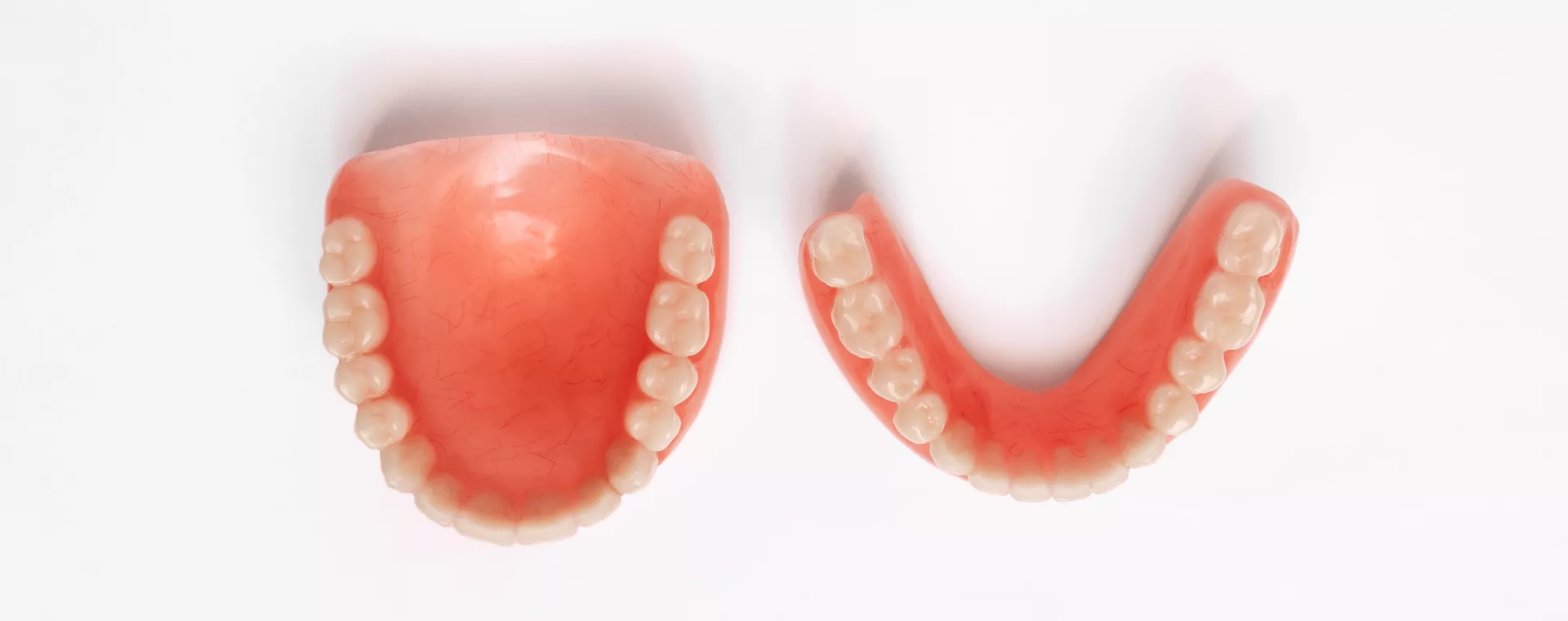
Proper home care is vital to protect your oral tissues and extend the lifespan of your false teeth.
Daily Cleaning & Maintenance
Brush Daily: Clean your prosthetics every day using a soft-bristled denture brush and a non-abrasive denture cleanser or baking soda. Avoid regular toothpaste, which creates micro-scratches where odor-causing bacteria thrive.
Rinse After Meals: Take your appliances out and rinse them thoroughly under warm water after eating to clear away loose food debris.
Overnight Soaking: Never let acrylic dentures dry out, as they can warp and lose their shape. Keep them submerged in plain water or a mild denture cleaning solution overnight.
Common Complications and How to Fix Them
Poor Fit and Slipping: Loose dentures cause sore spots and make chewing difficult. If your appliance begins to slip, visit your dentist for a reline. Learn how to address these issues in our guide to Fix Loose Dentures.
Denture Stomatitis and Candida Infections: Leaving dentures in 24 hours a day or failing to clean them regularly can cause inflammation and fungal overgrowth beneath the acrylic base. Resting your gums for at least 8 hours every night significantly cuts down on infection risks. For comprehensive medical guidance on appliance hygiene, consult the Merck Manual guide on dental appliances and care.
Fixed Tooth Replacement Alternatives
If removable appliances aren't ideal for your lifestyle, non-removable alternatives offer great stability:
Fixed Dental Bridges: Best suited for replacing 1 to 3 missing teeth in a row. A bridge uses artificial crowns anchored to neighboring natural teeth to suspend a fake tooth in the gap. Read our breakdown on Dental Bridge vs Implant to see which fits your needs.
Single Dental Implants: A titanium post replaces the root of an individual tooth without needing to touch or reshape adjacent natural teeth. Compare long-term benefits in our guide to Dentures vs Implants.
Frequently Asked Questions About False Teeth
How long do different types of false teeth typically last?
Most removable conventional complete and partial dentures last between 7 and 10 years. Over time, the natural jawbone shrinks through a process called resorption, causing the denture to lose its original tight fit. Regular relines every 1 to 2 years help restore retention, but eventual replacement is necessary to protect your jaw structure and health.
Can you safely sleep with false teeth in your mouth?
It is strongly recommended to remove your false teeth every night before going to sleep. Removing your appliances gives your gum tissues a vital 8-hour period to rest and recover from daytime pressure. Sleeping with false teeth increases the risk of gum inflammation, jawbone resorption, and fungal infections like denture stomatitis (Candida).
How much chewing capacity do full false teeth restore compared to natural teeth?
Traditional removable complete dentures restore less than 20 percent of the natural bite force and chewing ability provided by healthy original teeth. Soft food choices and smaller bites are usually required. In contrast, upgrading to implant-supported overdentures or fixed hybrid prosthetics can restore 70 to 90 percent of your natural chewing capability.
Conclusion
Finding the right types of false teeth isn't a one-size-fits-all process. Whether you need a simple partial, a flexible appliance, or a life-changing implant-supported full arch, selecting the best option depends on your unique anatomy, health goals, and budget.
At Arvada Implants and Cosmetic Dentistry, we pride ourselves on delivering highly personalized treatment plans paired with custom lab craftsmanship. If you are struggling with complex tooth loss or ill-fitting appliances, consulting with an experienced team ensures your new smile looks natural, fits comfortably, and functions exceptionally well. Read more about our approach to Quality Dentures Arvada and schedule your personalized Denture Consultation Arvada today.
Ready to take the next step toward a stable, confident smile? Explore full and partial denture solutions with our expert team today!